

Principle and Working Scene Characteristics of Steel and Limestone Pneumatic Conveying
The pneumatic conveying technology for steel and limestone is a critical component in modern industrial processes, particularly in the steel and chemical sectors. As a leading provider in this field, Shandong HeadPowder Engineering Co., Ltd. (referred to as HeadPowder) specializes in designing and implementing efficient pneumatic conveying systems tailored to the unique demands of steel and limestone handling. This article explores the fundamental principles behind this technology and highlights the key characteristics of its working scenarios.

Pneumatic Conveying Principle for Steel and Limestone
The core principle of pneumatic conveying involves the use of air or gas to transport bulk materials like steel and limestone particles through a pipeline system. There are two primary types of pneumatic conveying: dilute-phase and dense-phase. Dilute-phase systems rely on high-velocity air to suspend particles, allowing them to travel through the pipeline with minimal pressure drop. In contrast, dense-phase systems use lower air velocities and higher pressure to move materials in a more compact form, reducing the risk of material degradation and pipeline blockages. For steel and limestone, the choice between these systems depends on factors such as material properties, particle size, and the required conveying distance.

Working Scene Characteristics Analysis
The working scene characteristics of pneumatic conveying for steel and limestone are defined by several critical parameters that ensure optimal performance. These include the material's bulk density, flowability, and abrasiveness, which directly impact the system's design and operational efficiency. For instance, steel particles are often more abrasive than limestone, necessitating the use of high-quality materials for pipeline components to prevent wear and tear. Additionally, the system's pressure and air flow rates must be precisely controlled to maintain consistent material transport without causing excessive energy consumption or equipment damage.

Application Scenarios and Operational Advantages
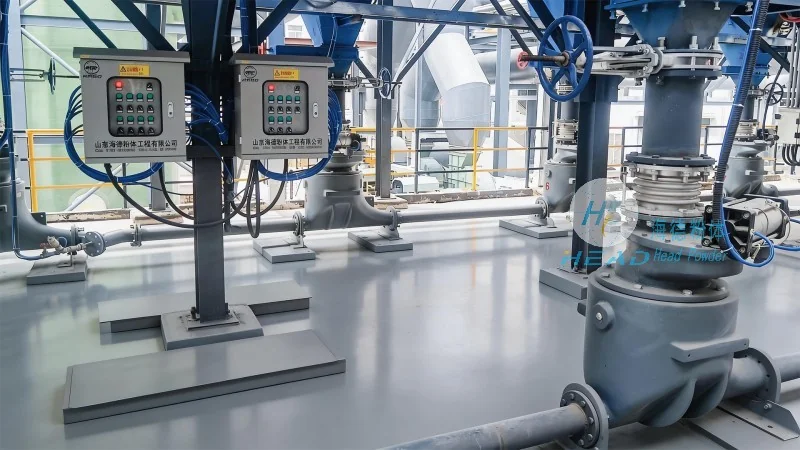
HeadPowder's pneumatic conveying systems are widely applied in various industrial settings, including steel mills, limestone processing plants, and chemical manufacturing facilities. In steel mills, these systems efficiently transport raw materials such as limestone to the blast furnace, ensuring a steady supply of flux material for steel production. In limestone processing plants, the technology facilitates the movement of crushed limestone from storage to processing units, enhancing production throughput and reducing manual handling risks. The versatility of the system allows it to adapt to different operational scales, from small-scale operations to large industrial complexes.
The operational advantages of pneumatic conveying for steel and limestone include improved safety, reduced labor costs, and enhanced material handling efficiency. Unlike traditional methods like belt conveyors or bucket elevators, pneumatic systems eliminate the need for physical contact between materials and equipment, minimizing the risk of dust exposure and material contamination. This is particularly beneficial in handling limestone, which can generate fine dust that poses health hazards. Furthermore, the automated nature of pneumatic conveying reduces the need for manual labor, leading to lower operational costs and increased productivity. The system's ability to handle abrasive materials without significant wear also extends the lifespan of equipment, resulting in long-term cost savings.
Conclusion
In conclusion, the pneumatic conveying of steel and limestone is a sophisticated technology that combines engineering principles with practical application to meet the demands of modern industrial processes. Shandong HeadPowder Engineering Co., Ltd. leverages its expertise to design customized solutions that optimize material transport while ensuring safety and efficiency. By understanding the fundamental principles and working scene characteristics, industries can effectively implement pneumatic conveying systems to enhance their operational performance and reduce costs.