

Principle and Working Scene Characteristics of Pneumatic Conveying Systems for Sintered Dust Materia
HeadPowder, a leading engineering company based in Shandong, China, specializes in the design and implementation of advanced pneumatic conveying systems tailored for sintered dust materials. This article explores the fundamental principles behind these systems and highlights the key working scene characteristics that make them indispensable in industrial applications.

Understanding Pneumatic Conveying Systems for Sintered Dust Materials
Pneumatic conveying systems utilize air or other gases to transport bulk materials, such as sintered dust, from one location to another. The core principle involves creating a pressure differential that propels the material through a pipeline. There are primarily two types of pneumatic conveying systems: pressure and vacuum. Pressure systems use compressed air to push the material, while vacuum systems employ a vacuum to pull it. For sintered dust, which often has fine particles and varying moisture content, the choice of system type and design parameters is critical to ensure efficient and reliable transport.
The system typically consists of several key components, including a material feeder, a conveying line, a separation unit, and a dust collector. The material feeder ensures a consistent flow of sintered dust into the system, preventing blockages and maintaining uniform particle size distribution. The conveying line, usually made of stainless steel or other corrosion-resistant materials, is designed to handle the abrasive nature of sintered dust. The separation unit, often a cyclone or a baghouse, separates the conveyed material from the air stream, while the dust collector ensures compliance with environmental regulations by capturing fine particles.
Key Working Scene Characteristics of Pneumatic Conveying Systems
The effectiveness of pneumatic conveying systems for sintered dust materials is heavily influenced by the working scene characteristics. These include the material's physical properties, such as particle size, density, and moisture content, as well as the operational environment, including temperature and humidity. For instance, sintered dust often contains fine particles that can cause clogging in traditional conveyor systems, making pneumatic conveying a preferred solution due to its ability to handle fine powders without significant loss of efficiency.

Another critical characteristic is the system's scalability and adaptability. Industrial facilities often require conveying systems that can handle varying material volumes and flow rates. Pneumatic conveying systems can be designed to accommodate these fluctuations, ensuring smooth operation even during peak production periods. Additionally, the system's integration with existing infrastructure is a key consideration. HeadPowder's expertise lies in customizing systems to fit seamlessly into existing industrial setups, minimizing downtime and maximizing operational efficiency.
Applications and Benefits in Industrial Settings
Pneumatic conveying systems for sintered dust materials find widespread application in various industries, including steel production, mining, and chemical processing. In steel plants, for example, these systems are used to transport sintered ore from storage silos to the blast furnace, ensuring a continuous and reliable supply of raw materials. The benefits of using such systems include reduced labor costs, improved safety by eliminating manual handling of dust, and enhanced environmental compliance through effective dust control measures.
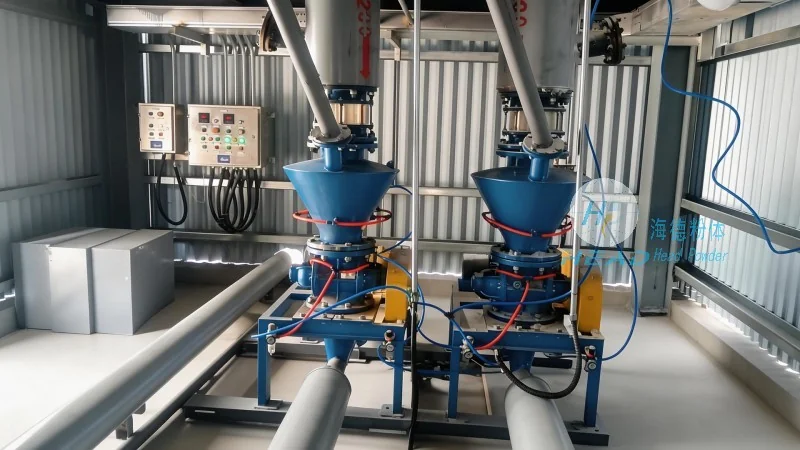
Furthermore, the systems offer flexibility in material handling. They can transport sintered dust over long distances, often without the need for intermediate storage or transfer points. This reduces the risk of material degradation and contamination, which is crucial for maintaining product quality. The ability to handle different material types and sizes also makes these systems versatile, allowing them to be adapted for various industrial needs.
Conclusion and Company Expertise
HeadPowder Engineering Co., Ltd., with its headquarters in Shandong, China, is a trusted partner in the design and implementation of pneumatic conveying systems for sintered dust materials. The company's expertise in material handling engineering, combined with its commitment to innovation and customer satisfaction, ensures that clients receive tailored solutions that meet their specific operational requirements. By leveraging advanced technology and rigorous testing protocols, HeadPowder delivers systems that are not only efficient and reliable but also environmentally friendly and cost-effective.
For industrial facilities seeking to optimize their material transport processes, pneumatic conveying systems for sintered dust materials represent a superior solution. With HeadPowder's comprehensive approach to system design, installation, and maintenance, businesses can enhance their operational efficiency, improve safety standards, and comply with environmental regulations. The company's focus on understanding the unique challenges of sintered dust materials ensures that each system is optimized for performance, making it a valuable asset in any industrial setting.