

What is a Powder Silo and Powder Conveying Line? And What Are Its Design Principles?
For industrial applications that require the handling and transportation of bulk powders, the powder silo and powder conveying line represent a critical system. These systems are designed to store, manage, and transport materials such as chemicals, food ingredients, and other dry powders efficiently and safely. Understanding the components and design principles of such a system is essential for optimizing operational performance and ensuring product integrity.
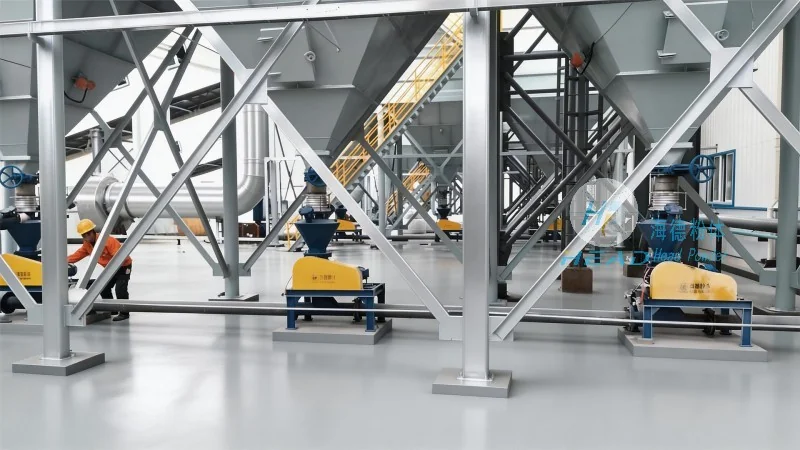
Powder Silo: The Storage Component
The powder silo is the primary storage vessel in a powder conveying line. It is typically a large, cylindrical or rectangular container made from materials like stainless steel, carbon steel, or specialized polymers, depending on the nature of the powder being handled. The design of the silo is crucial for preventing material degradation, caking, or segregation. Key features include a conical bottom for easy discharge, a top-mounted hopper with a discharge valve, and sometimes a venting system to control pressure and moisture. The silo's capacity is determined by the volume of the material and the space available, with considerations for bulk density and storage duration.
Powder Conveying Line: The Transportation Component
Attached to the powder silo is the powder conveying line, which is responsible for moving the stored material from the silo to processing equipment or packaging units. This line typically consists of components like a feeder (e.g., a rotary valve or screw feeder), a conveyor (e.g., a pneumatic or mechanical conveyor), and a control system. The choice of conveying method depends on the properties of the powder—such as particle size, flowability, and moisture content—and the distance and height of the transport. For example, pneumatic conveying systems use air to transport powders, while mechanical systems like screw or belt conveyors rely on mechanical force.

Design Principles for Efficient Operation
The design of a powder silo and conveying line follows several key principles to ensure efficiency and safety. First, material compatibility is critical: the silo and conveying components must be resistant to the chemical and physical properties of the powder to prevent corrosion or degradation. Second, flow control is essential to prevent issues like bridging or rat-holing in the silo. This is often achieved through the use of agitators or vibrators in the silo and controlled feeding rates from the feeder. Third, dust control is a major consideration to maintain a safe working environment and comply with regulations. Enclosures, filtration systems, and proper ventilation are common solutions. Fourth, the system must be scalable and adaptable to accommodate changes in production volume or material types. This flexibility is achieved through modular design and adjustable components.

Applications and Benefits
Powder silos and conveying lines are widely used in industries such as pharmaceuticals, food processing, chemicals, and agriculture. The benefits of these systems include improved material handling efficiency, reduced labor costs, enhanced product quality through controlled handling, and increased safety by minimizing manual handling of powders. For example, in the pharmaceutical industry, precise control over powder flow and storage is vital to maintain product purity and consistency. In the food industry, the systems help ensure that ingredients are handled hygienically and without contamination.
Conclusion
In summary, a powder silo and powder conveying line is a sophisticated system designed to handle bulk powders efficiently and safely. The design principles, including material compatibility, flow control, dust management, and scalability, are crucial for optimizing performance. Companies like Shandong HeadPowder Engineering Co., Ltd., with their expertise in engineering such systems, provide tailored solutions to meet the specific needs of various industries. By understanding these components and principles, businesses can enhance their operational efficiency and product quality.