

What is Sand and Soil Pneumatic Conveying? Introduction to the Working Principle of Powder Handling
Sand and soil pneumatic conveying is a technology that utilizes compressed air or gas as a driving force to transport solid particulate materials (such as sand, soil, and powders) from one location to another. This conveying method is widely applied in industrial production, especially for processes requiring efficient, non-contact, and clean powder material handling. This article will introduce the basic working principle of sand and soil pneumatic conveying systems, helping readers understand its technical characteristics and application value.

Overview of Sand and Soil Pneumatic Conveying Systems
Sand and soil pneumatic conveying systems mainly consist of feeding devices, conveying pipelines, air source equipment, separation equipment, and receiving devices. The core of this system is to suspend and transport solid particulate materials (sand and soil) using gas flow, avoiding wear, blockage, or contamination issues that may occur in traditional mechanical conveying. The working process typically includes material feeding, gas-solid mixing, pipeline conveying, separation, and material collection.

Detailed Explanation of Working Principles
The working principle of sand and soil pneumatic conveying is based on the suspension conveying theory in fluid mechanics. When compressed air flows through the conveying pipeline, it forms a high-speed airflow that mixes with solid particulate materials (sand and soil), creating a gas-solid two-phase flow. During the conveying process, the particulate materials are carried along with the airflow in the pipeline. By controlling the gas pressure, flow rate, and pipeline layout, the conveying distance, speed, and flow rate of the material can be precisely controlled. At the end of the conveying process, separation equipment (such as cyclone separators or bag filters) separates the material from the gas, and the collected material is sent to the designated location, while the gas is treated and either discharged or recycled through purification devices.

Key Equipment and Technical Points
Key equipment in sand and soil pneumatic conveying systems includes air source equipment (such as air compressors), feeding devices (such as star feeders or screw conveyors), conveying pipelines (typically made of metal or plastic, selected based on material properties), and separation equipment. Technical points involve selecting appropriate gas velocity and pressure based on the physical properties of the material (such as particle size, density, and moisture) to avoid pipeline blockage or particle settling. At the same time, the system's sealing and airtightness are crucial for ensuring conveying efficiency and preventing gas leakage that could lead to material loss or environmental pollution. Additionally, for long-distance or complex path conveying, intermediate pressure stations or gas-solid separation stations may be required to maintain the stability of the gas flow and the suspension state of the material.
Application Scenarios and Advantages
Sand and soil pneumatic conveying systems are widely applied in industries such as construction, mining, chemical engineering, and food processing. For example, in the construction industry, they are used for conveying sand, soil, and cement powders; in the mining field, for conveying crushed ore and screened powders; and in the chemical industry, for conveying various powder raw materials. Compared to traditional mechanical conveying methods, sand and soil pneumatic conveying has the following advantages: first, non-contact conveying avoids material wear and contamination, especially for fragile or sensitive materials; second, the conveying process is clean, reducing dust dispersion and improving the working environment; third, the system layout is flexible, allowing adjustment of the conveying path according to actual needs to adapt to complex production processes; finally, the system has high automation levels, enabling remote control and monitoring to improve production efficiency and management levels.
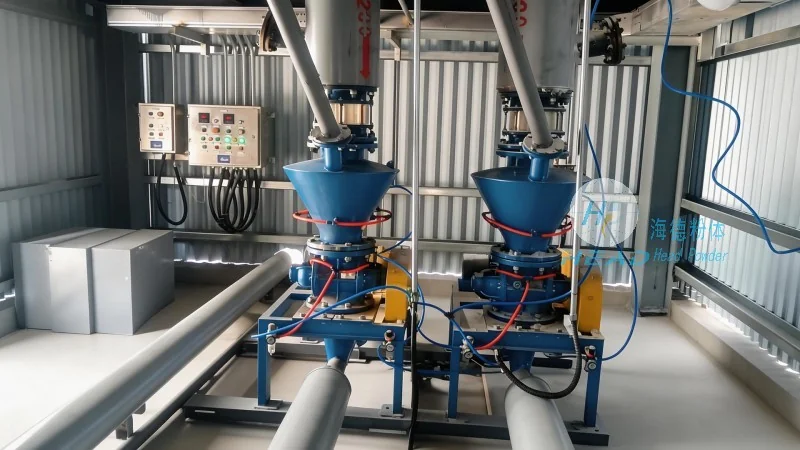
HeadPowder's Solutions
Shandong HeadPowder Engineering Co., Ltd. (referred to as HeadPowder) is a company specializing in powder engineering technology, committed to providing efficient and reliable sand and soil pneumatic conveying solutions for users. The company's headquarters is located in Shandong Province, China, with a professional R&D team and advanced production equipment, capable of designing customized conveying systems based on customer-specific requirements. HeadPowder's sand and soil pneumatic conveying systems employ advanced fluid dynamics design and material selection to ensure the stability of materials during conveying and the long-term reliability of the system. The company offers integrated services from system design, equipment manufacturing to installation and commissioning, helping customers solve various technical challenges in powder conveying and improve production efficiency and management levels. Through continuous technological innovation and customer service, HeadPowder is committed to becoming a leading enterprise in the powder conveying field, providing quality technical support and services for industrial production.