

Design and Equipment Selection for Micron Powder Pneumatic Conveying
For industries dealing with micron powders, efficient and reliable material handling is crucial. This article focuses on the design calculations and equipment selection for pneumatic conveying systems, providing insights into optimizing the process for various applications.
Introduction to Micron Powder Pneumatic Conveying
Micron powders, typically defined as particles with a particle size ranging from 1 to 100 micrometers, present unique challenges in transportation due to their fine particle characteristics. Traditional methods like bulk handling may not be suitable for these materials, as they can cause issues such as dust explosion risks, caking, and inefficient flow. Pneumatic conveying offers a solution by using air to transport the powder, ensuring safe and effective material transfer.
Key Design Considerations for Pneumatic Conveying Systems
When designing a pneumatic conveying system for micron powders, several critical factors must be considered to ensure optimal performance and safety. The first step is to assess the material properties, including particle size distribution, density, moisture content, and flowability. These parameters directly impact the selection of the conveying method—whether it's a dilute phase or dense phase system—and the required air velocity and pressure.
Another essential consideration is the system layout and the distance the powder needs to travel. The layout should minimize bends and changes in direction to reduce pressure losses and prevent particle segregation. The design also involves determining the appropriate air flow rate, which is calculated based on the material's specific gravity and the desired conveying velocity. For micron powders, a higher air velocity is often required to maintain particle suspension and prevent deposition.
Equipment Selection for Micron Powder Pneumatic Conveying
Shandong HeadPowder Engineering Co., Ltd., a leading provider in the field, offers comprehensive solutions for pneumatic conveying equipment selection. The company specializes in designing systems tailored to the specific needs of clients, ensuring that the chosen equipment meets both operational efficiency and safety standards.

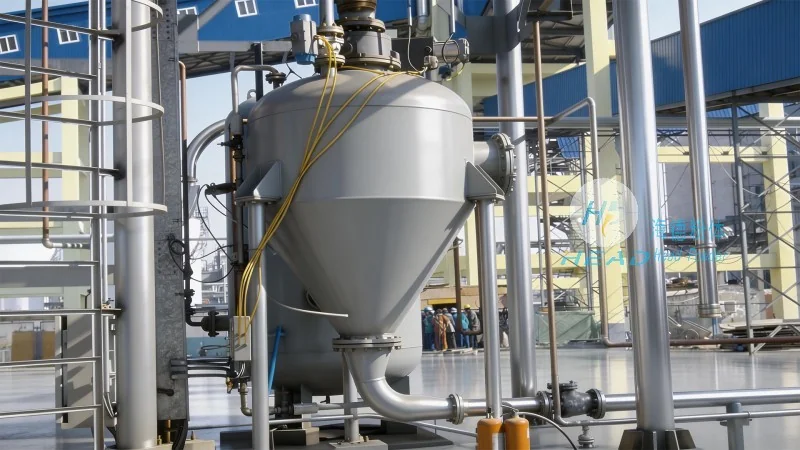
The primary equipment components for a pneumatic conveying system include the feed hopper, air compressor, conveying line, and receiver. The feed hopper is designed to handle the micron powder's flow characteristics, often incorporating features like vibrators or air knives to prevent clogging. The air compressor provides the necessary pressure and air volume, with options ranging from rotary lobe compressors to screw compressors depending on the system requirements.
The conveying line is typically made of stainless steel or other corrosion-resistant materials to handle the abrasive nature of micron powders. For dilute phase systems, the line diameter and length are carefully calculated to maintain the required air velocity. In dense phase systems, the line may include expansion chambers or pulse jets to ensure the powder is conveyed in a slurry-like state, reducing particle breakage and wear on the equipment.
The receiver, or discharge hopper, is designed to collect the conveyed powder and prevent air leakage. It often includes a filter or dust collector to capture any fine particles that may escape, ensuring compliance with environmental regulations. The selection of each component is based on the material's properties, system capacity, and the desired conveying distance, with Shandong HeadPowder Engineering Co., Ltd. providing expert guidance throughout the process.

Design Calculations for Pneumatic Conveying Systems
Accurate design calculations are essential to ensure the pneumatic conveying system operates efficiently and safely. The calculations involve determining the required air velocity, pressure drop, and power consumption. The air velocity is calculated based on the material's particle size and density, ensuring that the powder remains suspended in the air stream. The pressure drop across the system is calculated by considering the friction losses in the conveying line, bends, and fittings, as well as the acceleration and deceleration of the powder.
Power consumption is another critical factor, as it directly impacts operational costs. The power required is calculated based on the air flow rate and pressure, with the goal of minimizing energy usage while maintaining the required conveying performance. Shandong HeadPowder Engineering Co., Ltd. employs advanced software and engineering expertise to perform these calculations, ensuring that the final design meets all performance and safety requirements.
Benefits of Professional Equipment Selection and Design
Choosing the right pneumatic conveying system for micron powders requires a deep understanding of both the material properties and the equipment capabilities. Shandong HeadPowder Engineering Co., Ltd. combines years of experience with cutting-edge technology to provide customized solutions that enhance process efficiency, reduce downtime, and improve overall safety. By selecting the appropriate equipment and following the recommended design calculations, industries can achieve reliable and cost-effective material handling for their micron powders.
The company's expertise in pneumatic conveying design and equipment selection ensures that clients receive systems that are tailored to their specific applications. Whether for pharmaceuticals, food processing, or chemical manufacturing, the solutions provided by Shandong HeadPowder Engineering Co., Ltd. help businesses optimize their material handling processes, leading to improved productivity and reduced operational costs.