

Design of Pneumatic Conveying Systems for Synthetic Rubber
Efficient material handling is a critical factor in the synthetic rubber manufacturing and processing industry. Among various conveying methods, pneumatic conveying systems have emerged as a preferred solution due to their ability to handle bulk materials like synthetic rubber with precision and minimal contamination. This article focuses on the design principles and considerations for pneumatic conveying systems specifically tailored for synthetic rubber applications, highlighting the expertise of Shandong HeadPowder Engineering Co., Ltd. (headpowder), a leading engineering firm based in Shandong, China.

Understanding Pneumatic Conveying for Synthetic Rubber
Synthetic rubber, with its diverse forms including granules, powders, and pellets, presents unique challenges in material transport. Traditional mechanical conveyors may not be suitable due to the risk of material degradation, dust generation, or equipment wear. Pneumatic conveying systems, which use air or other gases to transport materials, offer a solution by maintaining material integrity and ensuring a clean, dust-free environment. The design of such systems must account for the physical properties of synthetic rubber, such as particle size distribution, bulk density, and flow characteristics, to ensure optimal performance.
Key Design Considerations for Synthetic Rubber Pneumatic Conveying
Several critical factors must be considered when designing a pneumatic conveying system for synthetic rubber. First, the system must be capable of handling the specific flow characteristics of synthetic rubber, which can vary significantly based on the type of rubber (e.g., SBR, NBR, EPDM) and its processing state. The choice of conveying method—such as dilute phase or dense phase—depends on the material's properties and the required conveying distance. For example, dilute phase systems are suitable for short to medium distances and low to medium material flow rates, while dense phase systems are preferred for longer distances or when high material density is needed to minimize air consumption.
Second, the system design must address the risk of material degradation caused by friction or heat. Proper selection of materials for the conveying components, such as stainless steel or specialized polymers, is essential to prevent contamination and ensure the quality of the synthetic rubber. Additionally, the system must incorporate features like dust collection and filtration to maintain a clean environment, which is crucial in rubber processing facilities where air quality and product purity are paramount.
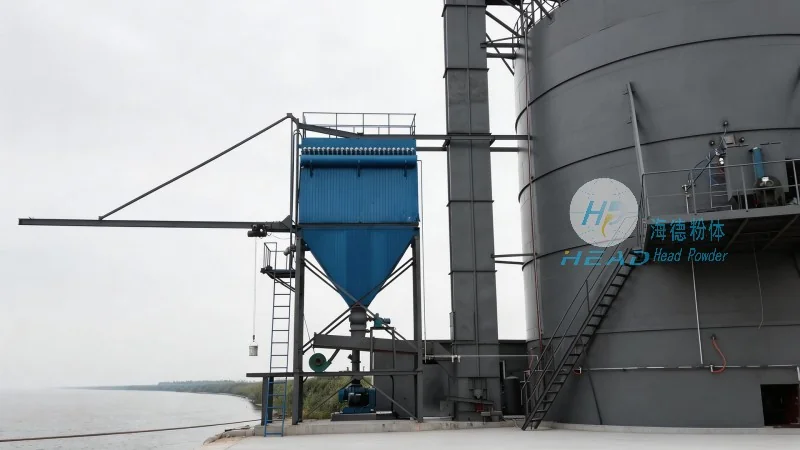
HeadPowder's Expertise in Pneumatic Conveying System Design
Shandong HeadPowder Engineering Co., Ltd., operating under the brand name headpowder, specializes in the design, manufacturing, and installation of customized pneumatic conveying systems tailored to the needs of the synthetic rubber industry. With years of experience and a deep understanding of material handling principles, headpowder's engineering team develops solutions that optimize material transport efficiency while minimizing operational costs and maintenance requirements. The company's approach involves a comprehensive analysis of the client's specific requirements, including production capacity, material characteristics, and facility layout, to create a tailored system that meets both current and future needs.
Headpowder's design process begins with a thorough assessment of the synthetic rubber properties, such as particle size, moisture content, and bulk density, to determine the most appropriate conveying method and equipment. The company utilizes advanced computational fluid dynamics (CFD) and simulation tools to model the material flow and air dynamics, ensuring that the system operates at peak efficiency. This approach allows headpowder to provide clients with systems that are not only effective but also cost-efficient and easy to maintain.
Customization and Integration in Synthetic Rubber Pneumatic Conveying
Every synthetic rubber processing facility has unique requirements, and headpowder recognizes the importance of customization in pneumatic conveying system design. The company offers a range of customizable solutions, from simple conveying lines to complex multi-stage systems, to accommodate different production scales and operational needs. For instance, a small-scale rubber processing plant may require a basic dilute phase system, while a large industrial facility might need a combination of dense phase and dilute phase systems to handle varying material volumes and distances.
Integration with existing equipment is another key aspect of headpowder's design philosophy. The company works closely with clients to ensure that the new pneumatic conveying system seamlessly integrates with their current processing lines, minimizing downtime and disruption during installation. This includes coordinating with other equipment manufacturers and ensuring that the system complies with all relevant safety and environmental regulations.

Benefits of Implementing a HeadPowder Pneumatic Conveying System
Adopting a well-designed pneumatic conveying system for synthetic rubber processing offers numerous benefits. First, it improves material handling efficiency by reducing the time and labor required for manual transport. This leads to increased production throughput and lower operational costs. Second, the system minimizes material loss and contamination, ensuring that the synthetic rubber meets quality standards and reduces waste. Additionally, pneumatic conveying systems are more hygienic and easier to clean than traditional mechanical conveyors, which is critical in food-grade or pharmaceutical applications where synthetic rubber may be used.
Another significant benefit is the reduction in dust and airborne particles, which improves workplace safety and air quality. This is particularly important in facilities where synthetic rubber dust can be a health hazard or cause environmental issues. By implementing a headpowder-designed system, clients can enhance their operational safety and compliance with environmental regulations.
Conclusion
Designing an effective pneumatic conveying system for synthetic rubber requires a deep understanding of material properties, system dynamics, and industry-specific requirements. Shandong HeadPowder Engineering Co., Ltd. (headpowder), with its expertise and commitment to quality, provides comprehensive solutions that address these challenges and deliver reliable, efficient material handling systems. By leveraging advanced engineering techniques and a customer-centric approach, headpowder helps synthetic rubber manufacturers optimize their operations, improve product quality, and achieve long-term success in a competitive market.