

Design Considerations for Steel and Limestone Pneumatic Conveying System Solutions
For industrial applications involving the transport of steel and limestone, the design of a pneumatic conveying system is a critical step in ensuring efficiency, reliability, and safety. This article outlines key design considerations for such systems, presented by Shandong HeadPowder Engineering Co., Ltd., a leading provider in the field.
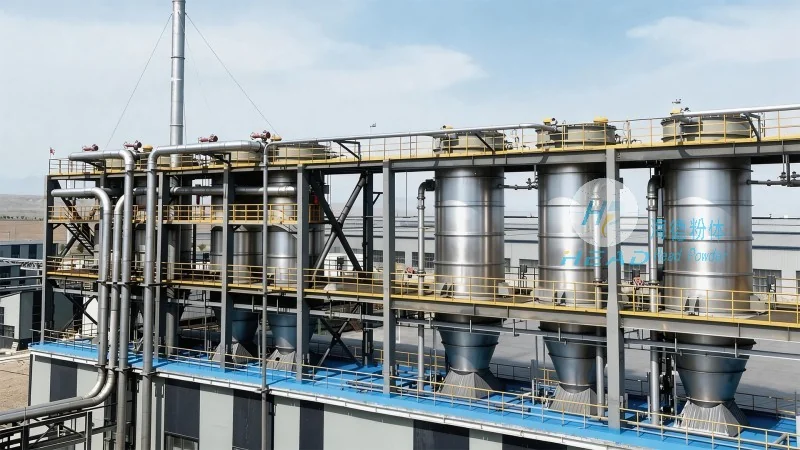
System Design Fundamentals for Pneumatic Conveying
The core of any pneumatic conveying system lies in its ability to move bulk materials through a pipeline using air or gas as the conveying medium. For steel and limestone, which are often abrasive and have varying particle sizes, the design must account for material properties, flow characteristics, and operational demands. A well-engineered system ensures minimal wear on components, consistent material transport, and reduced maintenance costs.
Material Properties and Flow Analysis
Steel and limestone present unique challenges due to their physical and chemical characteristics. Steel particles are typically hard and may have sharp edges, while limestone can be fine or coarse, affecting air resistance and flow velocity. Proper analysis of material density, particle size distribution, and moisture content is essential to determine the optimal air velocity and pressure required for effective conveying. This analysis helps in selecting the right type of conveying system—such as dilute phase or dense phase—and the appropriate equipment like blowers, cyclones, and filters.

Equipment Selection and Component Integration
Key components in a pneumatic conveying system include the air source (blower or compressor), material feeders, pipelines, separation devices, and dust collection systems. For steel and limestone applications, components must be selected to withstand abrasion and corrosion. For instance, pipelines may need to be made of stainless steel or other durable materials to prevent wear from abrasive particles. The integration of these components must ensure smooth material flow and efficient separation of the conveyed material from the air stream. This includes proper sizing of pipelines, selection of appropriate valves, and placement of cyclones or bag filters to capture fine particles and prevent environmental contamination.
System Sizing and Performance Optimization
Accurate system sizing is crucial to achieve the desired conveying capacity and pressure. Factors such as the distance between the source and destination, elevation changes, and the number of bends in the pipeline all impact the required air volume and pressure. Shandong HeadPowder Engineering Co., Ltd. employs advanced computational fluid dynamics (CFD) and empirical formulas to model system performance, ensuring that the designed system meets operational requirements while minimizing energy consumption. This optimization helps in reducing operational costs and extending the lifespan of the equipment.

Safety and Environmental Considerations
Given the industrial nature of steel and limestone handling, safety is a top priority. Pneumatic conveying systems must comply with local regulations regarding dust control, noise reduction, and material containment. Proper ventilation, dust collection systems, and emergency shut-off mechanisms are integral to ensuring workplace safety. Additionally, the system design should minimize the risk of material spillage or leakage, protecting both the environment and the surrounding infrastructure.

Customization and Project Execution
Every pneumatic conveying project is unique, and Shandong HeadPowder Engineering Co., Ltd. offers tailored solutions to meet specific client needs. From initial feasibility studies and system design to installation and commissioning, the company provides comprehensive project management services. Their expertise in handling abrasive materials like steel and limestone ensures that each system is optimized for the client's operational environment, whether it's a steel mill, limestone processing plant, or other industrial facility.
Conclusion
In conclusion, the design of a pneumatic conveying system for steel and limestone requires a thorough understanding of material properties, system components, and operational requirements. By addressing these factors, engineers can develop a system that is efficient, reliable, and cost-effective. Shandong HeadPowder Engineering Co., Ltd. leverages its experience and technical expertise to deliver high-quality solutions that meet the demands of modern industrial applications, ensuring safe and efficient material transport for clients worldwide.