

Operation Process and Working Principle of Flour Powder Material Pneumatic Conveying Machine
For companies in the flour and powder processing industry, efficient and reliable material handling is crucial to maintaining production efficiency and product quality. The pneumatic conveying machine, specifically designed for flour powder materials, is a key piece of equipment that ensures smooth and safe material transport. This article will explore the operation process and working principle of such a system, highlighting its advantages and practical applications.

Company Overview: Shandong HeadPowder Engineering Co., Ltd.
HeadPowder, as a professional manufacturer in the field of powder processing equipment, has been committed to providing high-quality pneumatic conveying solutions. With years of experience and technical expertise, the company focuses on the research, development, and production of advanced conveying systems tailored to the needs of the flour and similar powder industries. Based in Shandong, China, HeadPowder leverages local manufacturing advantages to deliver robust and cost-effective equipment to global markets.
Key Components of the Pneumatic Conveying Machine
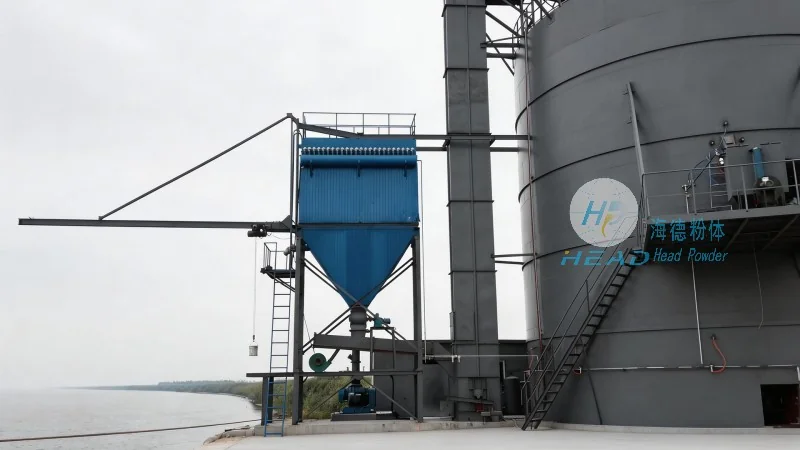
The pneumatic conveying machine for flour powder typically consists of several core components that work in concert to achieve efficient material transport. These components include the hopper for material storage, the air compressor or blower that generates the air flow, the conveying pipeline system, and the receiving hopper or silo. Each component plays a vital role in the overall operation, ensuring that the flour powder is moved from the source to the destination without loss or degradation.

The Operation Process of the Flour Powder Pneumatic Conveying Machine
The operation process of the flour powder pneumatic conveying machine begins with the loading of the flour powder into the hopper. The material is then fed into the conveying pipeline under the action of the air flow generated by the compressor. As the air flows through the pipeline, it carries the flour powder particles along, creating a suspension that moves through the system. The conveying process is controlled by adjusting the air pressure and flow rate, which can be monitored and adjusted in real-time to optimize the conveying efficiency. The material is then discharged from the receiving hopper, completing the transport cycle.
Working Principle of the Pneumatic Conveying System
The working principle of the flour powder pneumatic conveying machine is based on the principle of air suspension and fluidization. The air compressor provides a constant flow of air, which creates a low-pressure environment in the conveying pipeline. The flour powder is then introduced into this environment, where the air flow lifts and transports the particles. The key to efficient conveying lies in maintaining the appropriate air-to-material ratio, which ensures that the powder particles are fully suspended without clogging the pipeline. The system also incorporates features such as pressure regulation and material flow control to prevent issues like blockages or uneven flow.

Advantages of Using a Pneumatic Conveying Machine for Flour Powder
Compared to traditional conveying methods like belt conveyors or bucket elevators, the pneumatic conveying machine offers several advantages for flour powder handling. These include reduced risk of product contamination due to enclosed systems, lower maintenance requirements as there are fewer moving parts, and the ability to transport materials over long distances without the need for multiple transfer points. Additionally, the system can be easily integrated with other processing equipment, providing a seamless workflow from raw material intake to finished product packaging.
Application Scenarios and Customization Options
The flour powder pneumatic conveying machine is widely used in various industries, including food processing, pharmaceuticals, and chemical manufacturing. In the food industry, it is commonly used for transporting flour, sugar, and other dry ingredients in bakeries and flour mills. The system can be customized to meet specific production requirements, such as varying conveying capacities, different pipeline lengths, or special material handling needs. HeadPowder offers tailored solutions that can be adapted to the unique operational conditions of each client, ensuring optimal performance and reliability.