

Operation Process and Working Principle of Maltose Powder Pneumatic Conveying Line
HeadPowder, a leading provider in the field of powder handling solutions, specializes in the design, manufacturing, and installation of advanced pneumatic conveying systems. This article delves into the operation process and working principle of a maltose powder pneumatic conveying line, highlighting the key components, operational steps, and technical aspects that ensure efficient and reliable material transport.

Introduction to Maltose Powder Pneumatic Conveying
Maltose powder, a common sugar substitute and intermediate in the food and pharmaceutical industries, requires specialized handling due to its fine particle size and hygroscopic properties. Traditional bulk material handling methods may lead to issues such as dust accumulation, caking, and loss of product quality. Pneumatic conveying offers a solution by utilizing air to transport the powder in a closed system, minimizing contamination and ensuring product integrity. The system developed by Shandong HeadPowder Engineering Co., Ltd. is engineered to meet the stringent requirements of maltose powder transport, combining efficiency with safety.
Key Components of the Pneumatic Conveying System
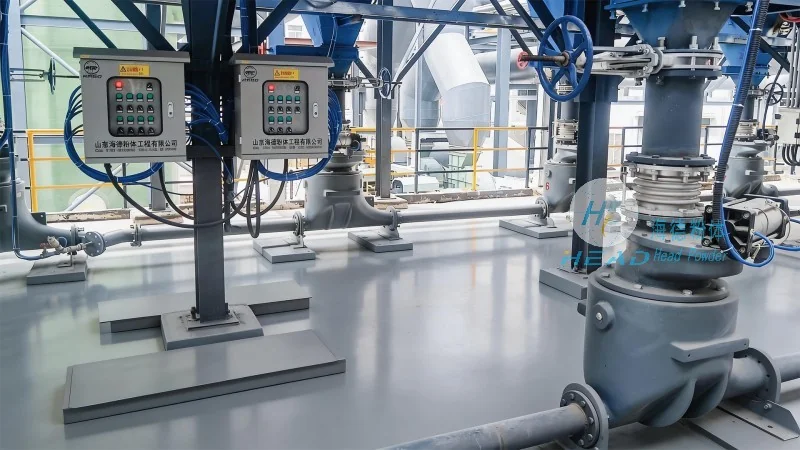
The maltose powder pneumatic conveying line consists of several critical components that work in tandem to achieve seamless material transport. These include the hopper for bulk storage, a rotary valve for controlled material discharge, a compressor to generate the necessary air pressure, a filter system to maintain air quality, and a conveying pipeline network. Each component is designed to handle the specific characteristics of maltose powder, ensuring optimal performance and longevity.

Operation Process: Step-by-Step Overview
The operation of the maltose powder pneumatic conveying line follows a systematic sequence of steps, starting from material loading to final discharge. The process begins with the loading of maltose powder into the storage hopper, where the material is stored under controlled conditions to prevent moisture absorption. Once the hopper is filled, the rotary valve is activated to regulate the flow of powder into the conveying pipeline. The compressor then generates high-pressure air, which is introduced into the pipeline through a venturi or eductor, creating a vacuum or pressure differential that pulls the powder particles along with the air stream.
The powder-air mixture travels through the pipeline network, which may include bends, elbows, and expansion joints, all designed to minimize pressure loss and maintain the flow velocity. The filter system at the receiving end separates the powder from the air, allowing the air to be recirculated or discharged while the maltose powder is collected in a designated container. This step ensures that the powder is delivered to the target location without any loss or contamination.

Working Principle: The Physics Behind Pneumatic Conveying
The working principle of the pneumatic conveying system is based on the fundamental physics of fluid dynamics and particle motion. When air is introduced into the conveying pipeline, it creates a low-pressure zone that draws the maltose powder particles into the air stream. The velocity of the air is maintained above the critical velocity required to keep the powder suspended, preventing settling or clogging. The system utilizes either pressure or vacuum modes, with pressure conveying being more suitable for long-distance transport and vacuum conveying for short-distance or point-to-point applications. The choice of mode depends on the specific requirements of the maltose powder handling process, including the distance between the source and destination, the volume of material to be transported, and the need for gentle handling.
Advantages of the Maltose Powder Pneumatic Conveying Line
The maltose powder pneumatic conveying line offers several advantages over traditional handling methods. Firstly, it provides a closed system that eliminates dust emissions and protects the product from environmental contaminants. This is particularly important for maltose powder, which is sensitive to moisture and can degrade if exposed to air. Secondly, the system allows for precise control over the flow rate and pressure, ensuring consistent and reliable transport. Thirdly, the equipment is designed for easy maintenance and cleaning, reducing downtime and operational costs. Finally, the system is scalable and can be customized to meet the specific needs of different production facilities, making it a versatile solution for various applications in the food and pharmaceutical industries.
Conclusion
Shandong HeadPowder Engineering Co., Ltd. has developed a sophisticated maltose powder pneumatic conveying line that combines advanced technology with robust engineering. By understanding the unique properties of maltose powder and applying the principles of pneumatic conveying, the system ensures efficient, safe, and reliable transport of the material. This solution not only enhances productivity in production lines but also maintains the quality and integrity of the maltose powder, making it an essential component for modern industrial operations. With its commitment to innovation and customer satisfaction, HeadPowder continues to provide cutting-edge powder handling solutions that meet the evolving needs of the industry.