

Operation Process and Working Principle of Powder Fertilizer Pneumatic Conveying Equipment
HeadPowder, a leading manufacturer based in Shandong, China, specializes in the design and production of advanced pneumatic conveying systems tailored for fertilizer powder handling. The equipment plays a crucial role in modern agricultural and industrial applications, ensuring efficient and safe transportation of bulk fertilizer materials from storage to processing or distribution points. This article provides a detailed overview of the operation process and working principles of such systems, highlighting their key components, operational workflow, and practical applications.
Key Components of the Pneumatic Conveying System
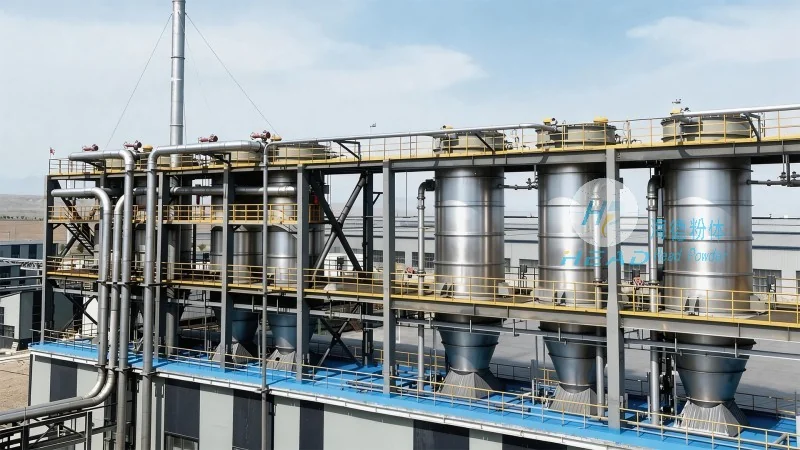
The pneumatic conveying equipment for fertilizer powder typically consists of several essential components that work in concert to achieve efficient material transport. These include a hopper or storage silo for holding the fertilizer, a conveying line (usually made of stainless steel or other corrosion-resistant materials to handle the abrasive nature of fertilizer particles), a fan or blower that generates the necessary air pressure, a control system for regulating airflow and pressure, and a discharge unit or receiver at the destination point. Each component is carefully designed to withstand the specific challenges posed by fertilizer powders, such as moisture content, particle size, and potential dust generation.

Operation Process: Step-by-Step Workflow
The operation of the fertilizer powder pneumatic conveying system follows a systematic sequence of steps to ensure smooth and reliable material transfer. Initially, the fertilizer is fed from the storage hopper into the conveying line via a feeder mechanism, which controls the flow rate to match the system's capacity. Simultaneously, the fan or blower starts, creating a low-pressure or high-pressure airflow within the conveying line. As the air flows through the line, it entrains the fertilizer particles, forming a dense mixture known as a "slurry" or "conveyed stream." The mixture travels through the pipeline under the force of the air, reaching the discharge point where the air and fertilizer are separated. The air is then filtered and recirculated back into the system, while the fertilizer is collected in the receiving hopper or silo. This continuous cycle allows for uninterrupted operation, minimizing downtime and maximizing productivity.
Working Principle: How the System Transfers Fertilizer
The core working principle of the pneumatic conveying system relies on the fundamental physics of fluid dynamics and particle transport. When the fan or blower generates airflow, it creates a pressure differential between the inlet and outlet of the conveying line. The pressure difference causes the air to move through the pipeline, and as it does so, it draws the fertilizer particles into the stream due to the drag force exerted by the moving air. The particles are then suspended and carried along with the air, maintaining a stable flow as long as the air velocity remains above the minimum conveying velocity required for the specific fertilizer characteristics. This velocity is determined by factors such as particle size, density, and moisture content, and is crucial for preventing particle deposition or blockage in the pipeline. The system's design ensures that the air velocity is maintained at an optimal level to achieve efficient transport without excessive energy consumption.
Advantages and Applications of the Equipment
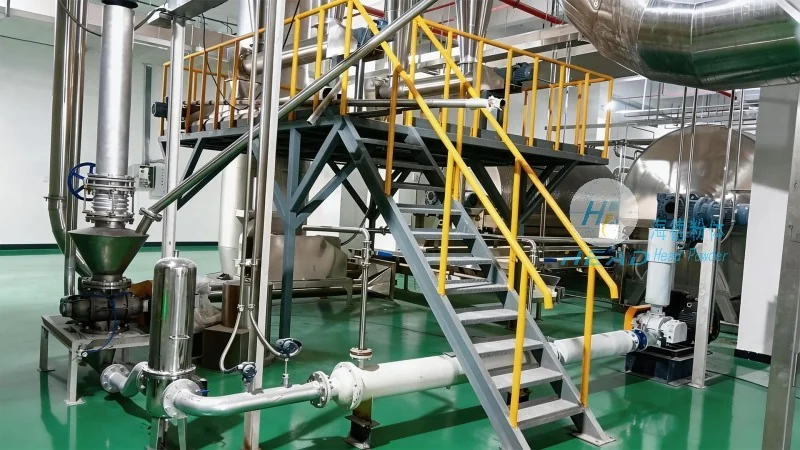
HeadPowder's pneumatic conveying equipment for fertilizer powder offers several advantages over traditional mechanical conveying methods, such as screw conveyors or belt conveyors. These include higher efficiency in terms of energy consumption and material handling speed, reduced risk of product contamination due to enclosed systems, and lower maintenance requirements as there are fewer moving parts. The equipment is particularly suitable for applications involving bulk fertilizer transportation in agricultural settings, fertilizer manufacturing plants, and distribution centers. It can handle various types of fertilizers, including nitrogen, phosphorus, and potassium compounds, as well as mixed fertilizers, making it a versatile solution for different production and logistics needs.