

Operation Process and Working Principle of Activated Carbon Powder Pneumatic Conveying System
HeadPowder, a leading manufacturer of industrial conveying systems, presents the activated carbon powder pneumatic conveying system. This specialized equipment is designed for the efficient transport of activated carbon powder from a storage silo or hopper to a processing unit or destination. The system is crucial in various industrial applications, including environmental treatment, chemical processing, and material handling, where the reliable and safe transfer of fine powders is essential. The system integrates several key components, including a hopper, a rotary valve, a conveying pipeline, a dust collector, and a control system, working in harmony to ensure smooth and continuous operation.

Key Components and Their Functions
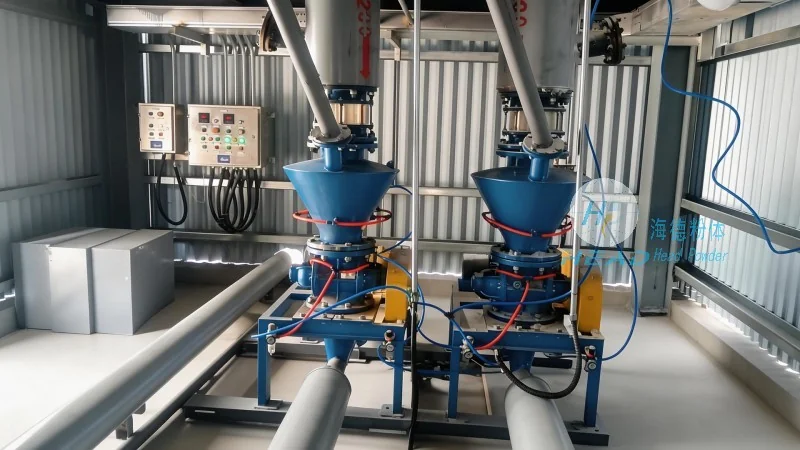
Each component of the pneumatic conveying system plays a vital role in the overall operation. The hopper serves as the storage container for the activated carbon powder, providing a stable feed source. The rotary valve, located at the bottom of the hopper, regulates the flow of powder into the conveying pipeline, preventing backflow and ensuring a controlled discharge rate. The conveying pipeline, typically made of stainless steel or other corrosion-resistant materials, transports the powder under pressure. The dust collector is integrated to capture any airborne particles, maintaining air quality and preventing dust contamination. The control system manages the operation of all components, monitoring pressure, flow rate, and other parameters to ensure optimal performance.

Operation Process: Step-by-Step Explanation
The operation of the activated carbon powder pneumatic conveying system follows a systematic process. Initially, the activated carbon powder is fed into the hopper from a bulk storage or production line. The rotary valve then opens to allow a controlled amount of powder to enter the conveying pipeline. Simultaneously, the system's blower or compressor generates a high-pressure air stream that propels the powder through the pipeline. As the powder travels, it is mixed with the air, forming a dense or dilute phase flow depending on the system design. The conveying pipeline may include bends, elbows, or expansion joints to navigate the path from the hopper to the destination. Upon reaching the processing unit or destination, the powder is discharged through a rotary valve or other outlet, and the air is filtered and returned to the system or released to the environment.
Working Principle: The Physics Behind Pneumatic Conveying
The working principle of the activated carbon powder pneumatic conveying system is based on the physics of fluid dynamics and particle transport. The system utilizes the kinetic energy of the air stream to lift and move the powder particles. In a dense phase conveying system, the air velocity is relatively low, and the powder is transported in a continuous stream, minimizing particle degradation and ensuring a stable flow. In contrast, a dilute phase system uses higher air velocities, where the powder is suspended in the air and transported as a cloud. The choice between dense and dilute phase depends on the powder characteristics, such as particle size, density, and moisture content, as well as the required conveying distance and capacity. The system's efficiency is determined by factors like air pressure, flow rate, and pipeline design, all of which are optimized to achieve the desired performance.
Advantages and Applications
The activated carbon powder pneumatic conveying system offers several advantages over traditional mechanical conveying methods. It provides a dust-free and enclosed environment, reducing the risk of dust explosions and improving workplace safety. The system is also flexible, allowing for easy integration with existing industrial processes and the ability to transport powders over long distances without the need for intermediate storage. Additionally, it minimizes product contamination and degradation, preserving the quality of the activated carbon powder. These benefits make the system suitable for various applications, including the treatment of industrial wastewater, air purification, and the production of activated carbon-based products. The system's adaptability and efficiency make it a preferred choice for industries requiring reliable and safe powder handling solutions.