

Operation Process and Working Principle of Tank Truck Pneumatic Conveying Equipment
Tank truck pneumatic conveying equipment is a critical component in modern material handling systems, designed to efficiently transport bulk materials from storage tanks to processing facilities or other destinations. This technology offers a flexible and efficient solution for handling various powders and granules, ensuring minimal product degradation and maintaining high operational reliability. The equipment operates by utilizing air pressure to move materials through a closed system, which is particularly advantageous for materials that are difficult to handle by traditional methods such as gravity or mechanical conveyors.

Key Components and Their Functions
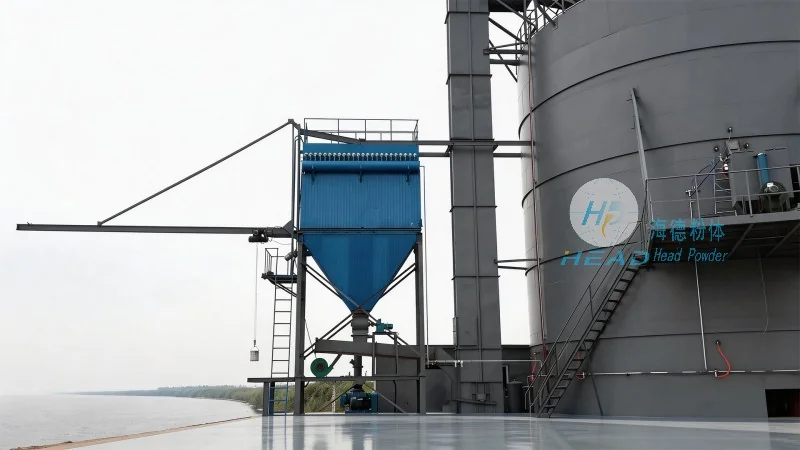
The core components of a tank truck pneumatic conveying system include the tank truck itself, a conveying line, a blower or compressor, a control system, and a dust collection unit. Each component plays a vital role in the overall operation. The tank truck, typically equipped with a hopper and a discharge valve, serves as the primary storage and loading unit. The conveying line, often made of stainless steel or other corrosion-resistant materials, transports the material from the truck to the destination. The blower or compressor generates the necessary air pressure to move the material, while the control system regulates the flow rate and pressure to maintain optimal performance. The dust collection unit ensures that the system operates in a clean and safe environment by capturing any airborne particles.
Operation Process: Step-by-Step Overview
The operation of tank truck pneumatic conveying equipment involves several key steps. First, the tank truck is positioned at the loading or unloading point, and the material is loaded into the truck's hopper. Once the loading is complete, the discharge valve is opened, allowing the material to enter the conveying line. Simultaneously, the blower or compressor is activated, creating a flow of air that propels the material through the system. The material is carried by the air stream, which may be under positive pressure (blow-through) or negative pressure (suction), depending on the system design. As the material travels through the conveying line, it reaches the destination point, where it is discharged into a storage bin or processing equipment. The control system continuously monitors the pressure and flow rates, adjusting the air supply as needed to maintain a consistent and efficient transfer. After the transfer is complete, the system is shut down, and the conveying line is cleaned to prevent material buildup and maintain system integrity.
Working Principle: Air Dynamics and Material Transport
The working principle of tank truck pneumatic conveying equipment is based on the fundamental physics of fluid dynamics and particle motion. In a positive pressure system, the blower generates high-pressure air that pushes the material through the conveying line. The air velocity is sufficient to lift and transport the particles, which are suspended in the air stream. The particle size, density, and moisture content affect the required air velocity and pressure. In a negative pressure system, the compressor creates a vacuum that draws the material from the truck into the conveying line. This method is often used for materials that are sensitive to pressure or for long-distance transfers. The air flow rate is carefully controlled to ensure that the material is fully entrained and transported without causing blockages or excessive wear on the system components. The system also incorporates features such as cyclone separators and filters to separate the material from the air, ensuring that the material is delivered in a clean and dry state.

Advantages and Applications
Tank truck pneumatic conveying equipment offers several advantages over traditional material handling methods. It provides a dust-free and enclosed transfer process, which is essential for handling materials that are hazardous or sensitive to contamination. The system is also flexible, allowing for changes in material type or transfer distance without significant modifications. Additionally, it reduces labor costs and improves safety by minimizing manual handling of bulk materials. The equipment is widely used in various industries, including pharmaceuticals, food processing, chemicals, and mining. For example, in the pharmaceutical industry, it is used to transfer active ingredients and excipients with high precision and minimal contamination. In the food industry, it is used to handle powders such as flour, sugar, and spices, ensuring that the products remain fresh and free from microbial growth. In the chemical industry, it is used to transport corrosive or abrasive materials, protecting the system components from damage and ensuring compliance with safety regulations.
Maintenance and Operational Considerations
Proper maintenance is crucial to ensure the long-term performance and reliability of tank truck pneumatic conveying equipment. Regular inspections of the conveying line, blower, and control system are necessary to identify and address any issues before they become major problems. The system should be cleaned regularly to prevent material buildup, which can lead to blockages and reduced efficiency. The air filter and dust collection unit should be checked and replaced as needed to maintain optimal air quality and system performance. Operational considerations include monitoring the air pressure and flow rates, as well as the material flow rate, to ensure that the system is operating within its design parameters. Proper training of operators is also essential to ensure that the equipment is used correctly and safely. By following these maintenance and operational guidelines, the equipment can provide reliable and efficient material transfer for years to come.