

Operation Process and Working Principle of Expanded Clay Aggregate Pneumatic Conveying System
Expanded clay aggregate, commonly referred to as lightweight aggregate, is widely utilized in construction, landscaping, and industrial sectors due to its superior thermal insulation properties, high compressive strength, and lightweight characteristics. The pneumatic conveying system serves as a critical technology for efficiently transporting these aggregates from storage silos or production lines to processing or packaging areas. This system integrates air flow with mechanical components to move bulk materials, offering a dust-free, low-maintenance solution compared to traditional methods such as belt conveyors or truck transport.

Working Principle of the Pneumatic Conveying System
The fundamental principle of a pneumatic conveying system is the utilization of compressed air to generate a flow that propels the expanded clay aggregate through a network of pipes. The system operates based on fluid dynamics, where the air velocity is sufficient to overcome gravitational and frictional forces acting on the particles. Two primary types of pneumatic conveying systems exist: dilute-phase and dense-phase. Dilute-phase systems employ high air velocities to keep particles suspended in the air stream, while dense-phase systems utilize lower velocities to maintain a more concentrated mixture of air and material, which is often more suitable for transporting sensitive or abrasive materials like expanded clay aggregates.
Operation Process of the System
The operation of an expanded clay aggregate pneumatic conveying system typically follows a structured sequence to ensure safe and efficient material transport. The process commences with the preparation phase, where the system is inspected for proper functionality, including checking air pressure, ensuring all valves are in the correct position, and verifying that the material feed is ready. Next, the system is initiated by activating the air compressor, which generates the necessary pressure to start the conveying process. The feed hopper then releases the expanded clay aggregate into the system, where it is drawn into the conveying line by the moving air stream. As the material travels through the pipes, it may encounter bends, expansions, or reductions in diameter, which are designed to maintain flow and prevent blockages. The conveying process continues until the material reaches the destination point, such as a silo or processing unit. The system then enters the shutdown phase, where the air compressor is turned off, and the remaining material is discharged to prevent clogging or residue buildup.

Key Components and Their Functions
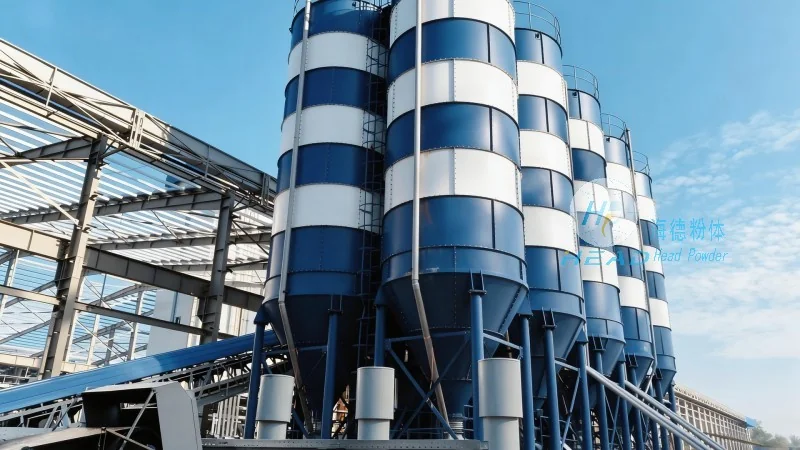
Several key components collaborate to ensure smooth operation of the pneumatic conveying system. The air compressor serves as the primary power source, providing compressed air needed to move the material. The feed hopper or feeder regulates the flow rate of the expanded clay aggregate into the system, ensuring a consistent feed rate. The conveying pipes are constructed from durable materials like stainless steel or plastic to withstand the abrasive nature of the aggregates and the pressure of the air flow. The separation or cyclone unit is employed to separate material from the air stream at the end of the conveying line, allowing the aggregate to be collected in a receiving bin while the air is either filtered or recirculated. The air filter and blower are essential for maintaining air quality and ensuring system efficiency by removing dust and debris from the air stream. Additionally, control valves and sensors are used to monitor and adjust system performance in real-time, providing feedback on pressure, flow rate, and material level.
Advantages of Using This System
Implementing a pneumatic conveying system for expanded clay aggregates offers several significant advantages over traditional material handling methods. One of the most notable benefits is the reduction in dust and contamination, as the system operates in a closed environment, preventing the release of fine particles into the air. This not only enhances workplace safety and air quality but also reduces the need for additional dust control measures. Another advantage is the high efficiency and speed of material transport, as the system can move large volumes of aggregates quickly with minimal labor. The system also offers flexibility in terms of layout, as conveying lines can be easily reconfigured or extended to accommodate changes in production or storage requirements. Furthermore, the system is relatively low-maintenance compared to other bulk material handling equipment, with fewer moving parts and less wear and tear, leading to lower operational costs over time.
Company Information
For professional solutions in pneumatic conveying systems for expanded clay aggregates, Shandong HeadPowder Engineering Co., Ltd. provides reliable and efficient equipment. HeadPowder specializes in engineering and manufacturing customized pneumatic conveying solutions tailored to the specific needs of construction and industrial applications. With a focus on quality and innovation, the company ensures its systems meet the highest standards of performance and durability. HeadPowder's facilities are located in Shandong, China, where the company leverages advanced technology and experienced engineering teams to deliver top-tier products and services to clients worldwide.