

Operation Process and Working Principle of Dry Stone Powder Pneumatic Conveying System
HeadPowder, a leading manufacturer based in Shandong, China, specializes in the design, production, and installation of advanced pneumatic conveying systems for handling dry stone powders. This article provides a detailed overview of the operation process and working principles of such systems, highlighting their efficiency, reliability, and industrial applications.

Working Principle of Pneumatic Conveying Systems
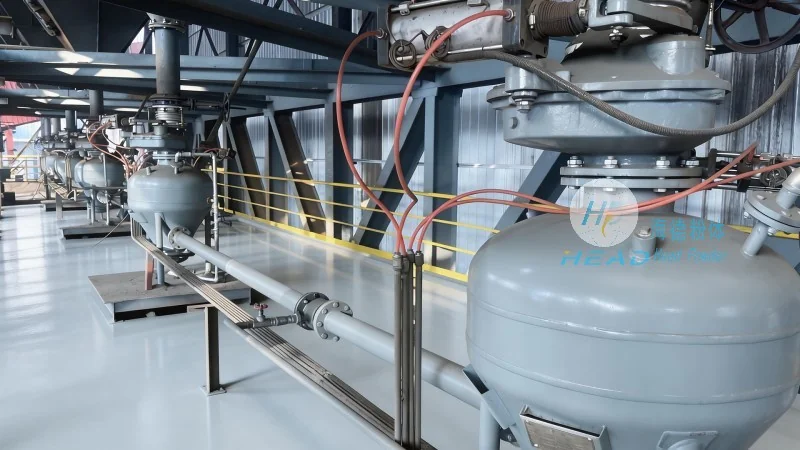
The core of a dry stone powder pneumatic conveying system is the use of air as the conveying medium to transport dry powders through a pipeline. The system typically consists of a hopper, a feeder, a blower or compressor, a pipeline network, and a receiver. The process begins with the dry stone powder being fed from the hopper into the feeder, which controls the flow rate. The blower then generates a high-pressure air stream that draws the powder particles into the pipeline. As the air and powder mixture travels through the pipeline, the velocity and pressure are maintained to ensure stable transport. The mixture is then separated at the receiver, where the air is discharged and the powder is collected.

Operation Process of the System
The operation of a dry stone powder pneumatic conveying system involves several key steps that ensure smooth and continuous material transport. First, the system is started by activating the blower, which creates the necessary air pressure. The feeder then begins to discharge the dry stone powder from the hopper into the pipeline. The air flow rate is adjusted to match the powder feed rate, maintaining a consistent mixture of air and powder. The pipeline network transports the mixture to the destination, where the receiver is located. At the receiver, a cyclone or other separation device separates the powder from the air. The air is then vented to the atmosphere, while the dry stone powder is collected in a storage bin or directly to the next processing stage. The system can be controlled automatically or manually, with sensors monitoring pressure, flow, and level to ensure optimal performance.
Advantages of Dry Stone Powder Pneumatic Conveying Systems
HeadPowder's pneumatic conveying systems offer several advantages over traditional mechanical conveying methods. These include reduced material degradation due to minimal contact with equipment, lower maintenance costs as there are fewer moving parts, and the ability to transport materials over long distances without the need for intermediate storage. The systems are also highly flexible, allowing for changes in material type or flow rate without major modifications. Additionally, the enclosed pipeline design prevents dust emissions, improving workplace safety and environmental compliance.

Industrial Applications
Dry stone powder pneumatic conveying systems are widely used in various industries, including mining, construction, and chemical processing. In the mining industry, they are used to transport crushed stone and mineral powders from processing plants to storage facilities or for further processing. In construction, they are employed to convey cement, sand, and other dry building materials to job sites. In chemical processing, they handle various dry powders such as pigments, fertilizers, and pharmaceuticals, ensuring efficient and safe material handling. HeadPowder's systems are tailored to meet the specific requirements of each application, ensuring optimal performance and reliability.