

Principles and Application Scenarios of Pea Powder Pneumatic Conveying
Pea powder, a widely used ingredient in the food industry, often requires efficient and reliable transportation methods to maintain its quality and integrity during processing and distribution. Pneumatic conveying, a technology that utilizes air to transport solid powders, offers a solution that is both effective and suitable for various industrial applications. This article delves into the fundamental principles of pea powder pneumatic conveying and explores key application scenarios where this technology excels, providing a comprehensive overview for professionals in the field.

The Core Principles of Pneumatic Conveying for Pea Powder
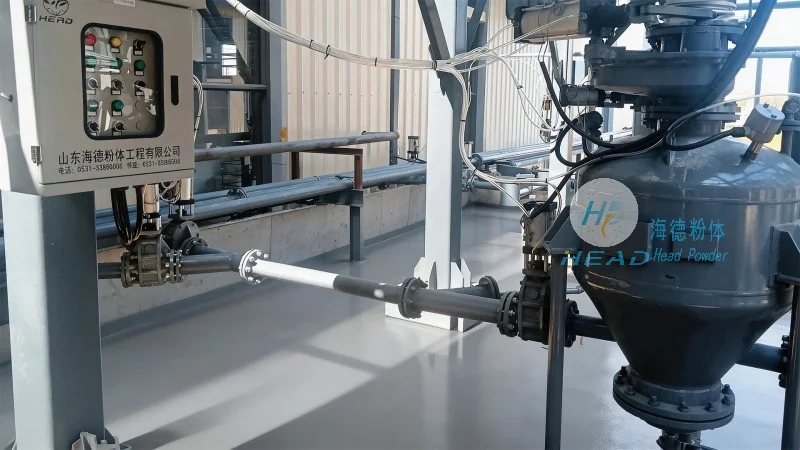
The principle of pneumatic conveying revolves around the use of a fluid, typically air, to move solid particles through a pipeline. In the context of pea powder, the system typically comprises several critical components: a hopper to store and feed the powder, an air mover (such as a blower or compressor) to generate the necessary airflow, and a pipeline network to direct the powder from the source to the destination. The process can be categorized into two primary types: dilute phase and dense phase, each with distinct operational characteristics and suitability for different scenarios.
Dilute phase pneumatic conveying employs a high-velocity air stream to suspend the pea powder particles, allowing them to travel through the pipeline in a dispersed state. This method is ideal for short to medium transportation distances and low to moderate powder loads. The air velocity is carefully controlled to maintain particle suspension, preventing clogging and ensuring smooth, unobstructed flow. Conversely, dense phase pneumatic conveying operates at lower air velocities and higher powder concentrations, where the particles move in a plug or slurry form. This approach is particularly advantageous for longer distances and higher powder loads, as it minimizes particle degradation, reduces system wear, and enhances overall efficiency.

Key Components and Their Functions in a Pea Powder Pneumatic Conveying System
A well-designed pea powder pneumatic conveying system integrates several essential components that work in harmony to achieve optimal performance. The first component is the hopper or feeder, which serves as the storage vessel for the pea powder and regulates the feed rate into the system. The hopper is engineered to prevent material bridging and ensure a consistent flow, which is crucial for maintaining system stability. The second component is the air mover, which can be a rotary lobe blower, a centrifugal fan, or a positive displacement blower, depending on the specific requirements of the application. The air mover generates the pressure and flow necessary to transport the powder through the pipeline. The third component is the pipeline system, which consists of straight sections, bends, and fittings that guide the powder and air mixture. Typically made from stainless steel or high-quality plastic, the pipeline is chosen for its resistance to corrosion and contamination, ensuring the purity of the pea powder. The fourth component is the control system, which monitors and regulates key parameters such as air flow, pressure, and powder feed rate. This system ensures that the conveying process operates within optimal conditions, preventing inefficiencies or damage to the equipment. Additionally, the system may include filters and cyclones to separate the pea powder from the air at the destination, collecting the powder in a clean and hygienic manner.

Application Scenarios Where Pea Powder Pneumatic Conveying is Ideal
Pneumatic conveying is particularly effective in scenarios where pea powder needs to be transported between processing stages or from storage to packaging lines. For instance, in a food processing facility, pea powder may be transported from a grinding and sieving unit to a mixing and blending area. The pneumatic system efficiently handles the powder, eliminating the need for manual handling and reducing the risk of contamination, which is critical in food production environments. Another common application scenario is the distribution of pea powder to retail outlets or other food manufacturers. The system can transport large quantities of powder over long distances, ensuring timely delivery and maintaining the quality of the product throughout the process. Furthermore, in research and development (R&D) settings, pneumatic conveying is utilized to transport small quantities of pea powder for testing and analysis. This allows for precise control over the powder flow and composition, enabling accurate data collection and product development. The flexibility of pneumatic conveying makes it suitable for a wide range of applications, from small-scale laboratory use to large-scale industrial production.
Advantages of Using Pneumatic Conveying for Pea Powder
Implementing a pneumatic conveying system for pea powder offers several significant advantages that enhance operational efficiency and product quality. First, the system operates as a closed loop, which prevents external contamination and maintains the high hygiene standards required in the food industry. This is particularly important for pea powder, as it is a food ingredient that must meet strict regulatory requirements. Second, pneumatic conveying is a continuous process, which reduces labor costs and increases overall production efficiency by minimizing downtime and manual intervention. Third, the system is highly flexible; it can be easily modified to accommodate changes in powder flow rates, destination locations, or processing requirements without major system overhauls. Fourth, pneumatic conveying is energy-efficient, as the air mover can be adjusted to operate at optimal levels, reducing energy consumption and operational costs. Finally, the method is inherently safe, as it eliminates the need for manual handling of powders, thereby reducing the risk of dust explosions and respiratory health issues associated with handling loose powders.
Considerations for Implementing a Pea Powder Pneumatic Conveying System
When planning to implement a pneumatic conveying system for pea powder, several key considerations must be addressed to ensure optimal performance, safety, and longevity. First, the system design must be tailored to the specific characteristics of the pea powder, including particle size distribution, density, moisture content, and flowability. These properties directly impact the air velocity and pressure required for efficient transport, and a mismatch can lead to system inefficiencies or blockages. Second, the system must be designed to prevent clogging and material bridging, which can occur due to agglomeration or improper hopper design. This can be mitigated by using appropriate hopper angles, air flow patterns, and pipeline configurations that promote smooth powder movement. Third, the system must incorporate essential safety features, such as pressure relief valves, dust collection systems, and emergency shut-off mechanisms, to prevent accidents and protect both personnel and the environment. Finally, regular maintenance and inspection of the system are critical to ensure long-term reliability and performance. This includes checking for wear and tear on components, cleaning filters, and verifying the proper functioning of the control system to maintain optimal operation.