

Principle and Working Scene Characteristics of Micro Silica Powder Material Handling Equipment
Micro silica powder, also known as fumed silica, is a high-purity, ultrafine powder with exceptional properties in various industrial applications. The efficient and reliable transportation of this material is crucial for maintaining production efficiency and product quality. This article explores the principle and working scene characteristics of specialized micro silica powder material handling systems, focusing on the technical aspects and practical applications in industrial settings.

Company Overview: HeadPowder
HeadPowder, formally known as Shandong HeadPowder Engineering Co., Ltd., is a leading manufacturer in the field of material handling solutions. With a base in Shandong, China, the company specializes in designing and producing equipment tailored for handling fine powders like micro silica. Their expertise lies in creating systems that ensure safe, efficient, and cost-effective material transport, catering to the diverse needs of industries such as construction, electronics, and chemical manufacturing.
The Principle of Micro Silica Powder Material Handling Equipment
The core principle of micro silica powder material handling systems revolves around the use of advanced pneumatic conveying technology. These systems typically employ a combination of pressure or vacuum to move the ultrafine powder from a storage silo or hopper to processing equipment. The equipment includes components like feeders, conveyors, and control valves that work in tandem to regulate the flow and pressure of the material. The design ensures minimal particle agglomeration and loss, which is critical for maintaining the powder's quality and preventing system blockages. Key components include a silo or hopper for storage, a rotary valve or feeder for controlled discharge, a conveying line with appropriate ductwork, and a receiver or processing unit at the destination. The system operates by creating a differential pressure that propels the powder through the pipeline, often using compressed air or a vacuum pump to achieve the desired flow rate. This pneumatic approach is preferred for micro silica due to its ability to handle fine particles without the need for mechanical contact, reducing wear and ensuring consistent performance.
Key Working Scene Characteristics
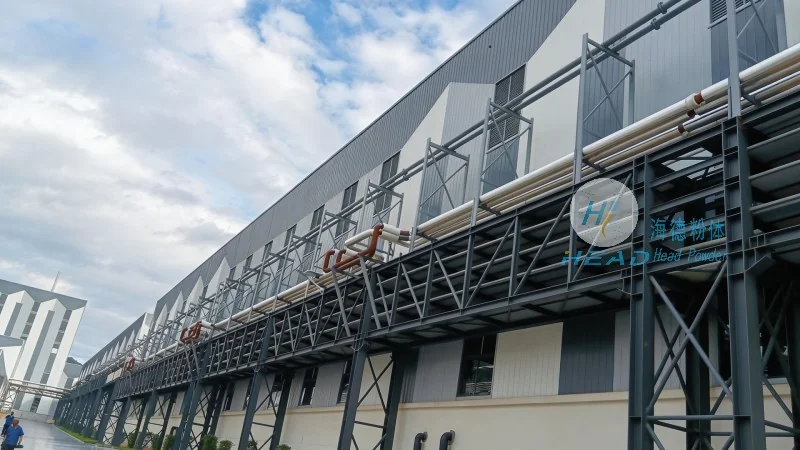
The working scene characteristics of micro silica powder material handling systems are tailored to the specific demands of industrial environments. These systems are designed to operate in settings where space is limited, and material purity is paramount. The equipment is often compact and modular, allowing for easy integration into existing production lines. In many applications, the system operates continuously, ensuring a steady supply of micro silica to downstream processes. The working environment may involve high temperatures or corrosive conditions, which the equipment is engineered to withstand. For example, in the construction industry, the system might be used to transport micro silica to concrete mixing plants, where it acts as a superplasticizer or admixture. In the electronics industry, the powder is used as a filler or coating material, requiring precise control over the conveying process to avoid contamination. The working scene also includes considerations for dust control and safety, as micro silica can be a respiratory irritant. Therefore, the systems are equipped with dust collection and filtration systems to maintain a safe working environment. The operational characteristics, such as flow rate, pressure, and particle size distribution, are carefully monitored to ensure optimal performance and product quality. The systems are designed for low maintenance, with easy access to components for cleaning and replacement, reducing downtime and operational costs.

Technical Advantages and Application Insights
Micro silica powder material handling systems offer several technical advantages that make them indispensable in modern industrial operations. The primary advantage is the ability to handle ultrafine particles efficiently without the need for mechanical agitation or high shear forces, which can degrade the powder's properties. The pneumatic conveying method ensures minimal product degradation, preserving the powder's surface area and reactivity. This is particularly important for micro silica, which is used in applications where its surface properties are critical, such as in rubber compounding or as a reinforcing agent in composites. Another advantage is the system's scalability, allowing it to be customized for different production capacities, from small-scale laboratory use to large-scale industrial manufacturing. The modular design enables easy expansion or modification as production needs change. In terms of application insights, these systems are widely used in industries where precise control over powder flow is essential. For instance, in the chemical industry, the system can transport micro silica to reactors for the production of silicone-based products. In the pharmaceutical industry, the equipment is used to handle micro silica as an excipient in drug formulations, requiring strict adherence to GMP (Good Manufacturing Practice) standards. The systems are also suitable for applications involving hazardous or sensitive materials, as they can be designed with explosion-proof features and sealed components to prevent contamination or leakage. Overall, the micro silica powder material handling systems developed by HeadPowder provide a reliable and efficient solution for industries that rely on high-purity, ultrafine powders, ensuring consistent performance and product quality across various working scenarios.