

Principles and Working Scene Characteristics of Long-Distance Material Transport
Long-distance material transport is a critical process in various industrial applications, involving the efficient movement of bulk materials over significant distances. The core principles of this technology revolve around understanding the physical properties of the materials being handled, such as particle size, density, and flow characteristics, as well as the mechanical design of the transport systems. These principles ensure that materials are moved safely, efficiently, and with minimal loss or degradation. The working scene characteristics of long-distance material transport vary widely across different industries, from mining and construction to food processing and pharmaceuticals, each requiring tailored solutions to meet specific operational demands.

Key Components and Mechanisms in Long-Distance Material Handling
The effectiveness of long-distance material transport systems depends on several key components and mechanisms. For instance, conveyor belts, pneumatic conveying systems, and screw conveyors are commonly used to move materials over extended distances. Each of these mechanisms operates based on different physical principles: conveyor belts rely on friction and gravity, pneumatic systems use air pressure to create a flow of material, and screw conveyors utilize rotational motion to push materials forward. The selection of the appropriate mechanism is crucial and is determined by factors like material type, distance, and required throughput. Additionally, the integration of sensors and control systems enhances the efficiency and reliability of these transport processes, allowing for real-time monitoring and adjustment to maintain optimal performance.

Application Scenarios and Industry-Specific Requirements
Long-distance material transport is widely applied in diverse industrial sectors, each with unique requirements that shape the design and implementation of the transport systems. In the mining industry, for example, large quantities of ore and rock are transported from extraction sites to processing facilities over long distances, often using heavy-duty conveyor systems capable of handling abrasive materials. The construction industry utilizes material transport for the delivery of aggregates, cement, and other building materials to job sites, where flexibility and adaptability are essential. In the food and pharmaceutical industries, the focus is on maintaining hygiene and preventing contamination, leading to the use of specialized equipment like enclosed conveyor systems and pneumatic conveying lines with filtration and cleaning features. These industry-specific requirements highlight the importance of customizing long-distance material transport solutions to meet the unique challenges and standards of each sector.

Technological Advancements and Efficiency Improvements
Advancements in technology have significantly improved the efficiency and reliability of long-distance material transport systems. Modern systems often incorporate automation and digital control, enabling precise management of material flow rates and system performance. For instance, variable speed drives allow for dynamic adjustment of conveyor speeds based on real-time demand, optimizing energy consumption and reducing operational costs. Additionally, the use of advanced materials in conveyor belts and components enhances durability and reduces maintenance needs. Furthermore, the integration of data analytics and predictive maintenance technologies helps in identifying potential issues before they lead to system failures, thereby minimizing downtime and maximizing productivity. These technological advancements not only improve the performance of long-distance material transport but also contribute to sustainability by reducing energy waste and operational costs.
Case Studies and Practical Implementations
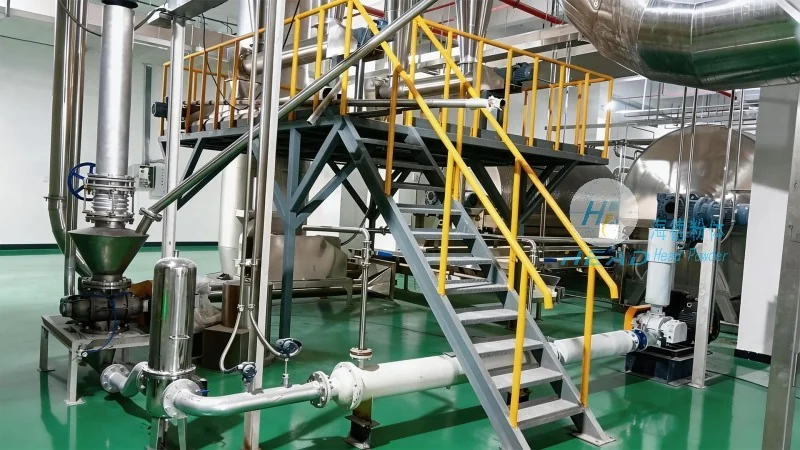
Real-world applications of long-distance material transport provide valuable insights into the effectiveness of various systems. One notable case involves a large-scale mining operation in Shandong, China, where a custom-designed conveyor system was implemented to transport ore from the mine to a processing plant over a distance of 5 kilometers. The system, engineered by Shandong HeadPowder Engineering Co., Ltd., utilized heavy-duty components and advanced control systems to handle the abrasive nature of the ore, resulting in a 20% increase in throughput compared to traditional methods. Another example is a food processing facility in the same region, where an enclosed pneumatic conveying system was installed to transport flour and other dry ingredients over a short distance within the plant. This system ensured product hygiene and reduced dust contamination, meeting stringent industry standards. These case studies demonstrate the practical benefits of well-designed long-distance material transport systems and the expertise of companies like Shandong HeadPowder Engineering Co., Ltd. in delivering tailored solutions for diverse industrial needs.