

Pneumatic Conveying Solutions for Soap Granules
Efficient material handling is a critical aspect of modern manufacturing processes, particularly in industries dealing with bulk materials like soap granules. Pneumatic conveying systems offer a reliable and flexible solution for transporting these granules from one location to another within a production facility. This article explores the key aspects of pneumatic conveying solutions tailored for soap granules, highlighting the technical advantages and practical applications of such systems.

Understanding Pneumatic Conveying Technology
Pneumatic conveying, also known as air conveying, utilizes compressed air or gas to move bulk materials through a pipeline system. In the context of soap granules, this technology provides a dust-free, low-maintenance, and hygienic method of material transport. The system typically consists of a hopper, a blower or compressor, a pipeline network, and a discharge point. As soap granules are fed into the hopper, the air flow propels them through the pipeline, ensuring smooth and continuous movement. This approach eliminates the need for mechanical components like belts or buckets, reducing the risk of contamination and wear.
Key Benefits of Pneumatic Conveying for Soap Granules
Implementing a pneumatic conveying system for soap granules brings several advantages that enhance operational efficiency and product quality. First, the system offers a hygienic and clean environment, which is essential for food and personal care products like soap. The enclosed pipeline prevents dust and moisture from contaminating the granules, maintaining their purity. Second, pneumatic conveying is highly flexible, allowing for changes in the layout of the production line without major structural modifications. This adaptability is crucial for manufacturers who may need to reconfigure their facilities to accommodate new production requirements or product lines. Third, the system is energy-efficient compared to traditional methods such as bucket elevators or belt conveyors. The use of compressed air can be optimized to minimize energy consumption while maintaining the required flow rate. Additionally, the low maintenance requirements of pneumatic conveying systems reduce downtime and operational costs, making them a cost-effective solution in the long run.

Components of a Pneumatic Conveying System for Soap Granules
A pneumatic conveying system for soap granules comprises several key components that work in tandem to ensure efficient material transport. The primary components include a material hopper, which serves as the storage and feeding unit for the soap granules. The hopper is designed with a smooth interior to prevent material buildup and ensure consistent flow. Next, a blower or compressor provides the necessary air pressure to move the granules through the pipeline. The choice of equipment depends on the system's capacity and the distance the material needs to travel. The pipeline network consists of straight sections and fittings such as elbows, tees, and reducers, which are made from materials like stainless steel or food-grade plastic to ensure durability and hygiene. At the discharge end, a receiver or silo collects the conveyed soap granules, allowing for further processing or packaging. The system may also include additional components like filters to remove any air contaminants and check valves to prevent backflow.
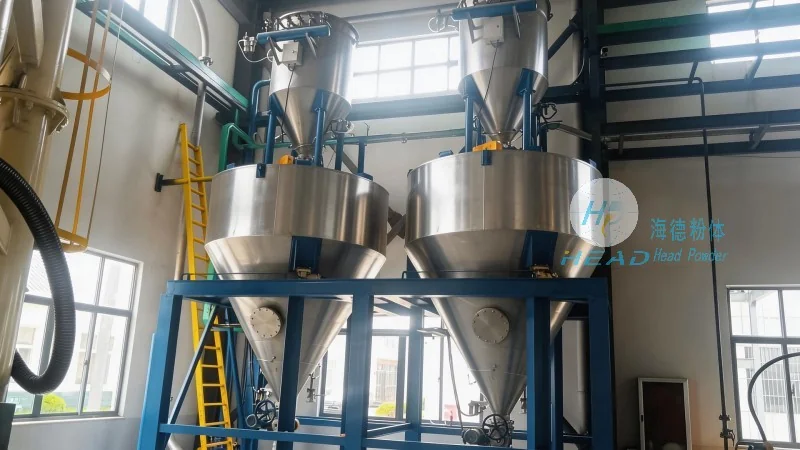
Design Considerations for Soap Granule Pneumatic Conveying
Designing an effective pneumatic conveying system for soap granules requires careful consideration of several factors to ensure optimal performance and longevity. One of the critical factors is the material's physical properties, such as particle size, density, and moisture content. Soap granules typically have a relatively uniform particle size, which facilitates smooth flow through the pipeline. However, variations in moisture content can affect the material's flowability and the system's air requirements. Engineers must consider these properties to determine the appropriate air velocity and pressure needed for conveying. Another important factor is the system's capacity and the distance between the feed and discharge points. The system's design must be scaled to handle the required flow rate while minimizing pressure drop along the pipeline. This involves selecting the right diameter of the pipeline and the appropriate blower capacity. Additionally, the system's layout should be designed to avoid sharp turns and high-pressure zones that could cause material degradation or equipment damage. Proper sealing of all connections is also essential to prevent air leaks and maintain the system's efficiency.
Applications of Pneumatic Conveying in Soap Manufacturing
Pneumatic conveying systems are widely used in various stages of soap manufacturing, from raw material handling to finished product packaging. In the raw material stage, the system can transport soap granules from storage silos to the mixing and processing units. This ensures a continuous supply of raw material without manual handling, reducing the risk of contamination and improving production efficiency. During the processing stage, the system can convey the soap granules to the molding or extrusion equipment, where they are shaped into bars or other forms. The hygienic nature of the system is particularly beneficial in this stage, as it prevents the introduction of foreign particles that could affect the final product's quality. In the packaging stage, the system can transport the finished soap granules from the processing line to the packaging machines, ensuring a smooth and continuous flow of product to the packaging line. This integration of pneumatic conveying with other manufacturing processes streamlines the overall production workflow and enhances the efficiency of the soap manufacturing facility.