

How to Select the Right Pneumatic Conveying System for Your Nanoparticle Calcium Carbonate Handling Process?
When it comes to handling nanoparticle calcium carbonate, selecting the appropriate pneumatic conveying system is crucial for maintaining product quality, ensuring efficient transport, and minimizing operational costs. The unique properties of nanoparticle calcium carbonate, such as its fine particle size and high purity, demand specialized equipment that can handle these characteristics without compromising performance. This article provides a comprehensive guide to help you choose the right pneumatic conveying system for your specific nanoparticle calcium carbonate handling process, with insights from Shandong HeadPowder Engineering Co., Ltd., a leading provider in the field.

Understanding the Requirements of Nanoparticle Calcium Carbonate Handling
Nanoparticle calcium carbonate (nCC) is widely used in various industries, including plastics, paper, and coatings, due to its excellent whiteness, opacity, and dispersibility. However, its fine particle size (typically 0.1-5 μm) and high surface area make it challenging to transport using traditional methods like bulk bags or conveyor belts. These characteristics can lead to issues such as agglomeration, caking, and increased friction, which may damage the particles and affect downstream processes. Therefore, a pneumatic conveying system is often the optimal solution as it offers a non-contact, clean, and efficient method for transporting nCC from storage to processing units.
Key Factors to Consider When Selecting a Pneumatic Conveying System
Choosing the right pneumatic conveying system for nanoparticle calcium carbonate involves evaluating several critical factors. The first consideration is the type of system: positive pressure, negative pressure, or a combination of both. Positive pressure systems use a blower to push air and material through the pipeline, while negative pressure systems use a vacuum to draw material into the system. The choice depends on the distance to be covered, the layout of the facility, and the need for containment. For example, if the nCC is to be transported over long distances or through complex layouts, a positive pressure system may be more suitable due to its ability to maintain consistent pressure and flow. Conversely, for short-distance transport or when integrating with existing vacuum systems, a negative pressure system could be more cost-effective.

Another crucial factor is the material's properties, particularly its particle size distribution, moisture content, and flowability. Nanoparticle calcium carbonate often has a narrow particle size range, which can affect how it behaves in the conveying system. Coarser particles may require higher air velocities to prevent blockages, while finer particles may need lower velocities to avoid excessive wear on equipment. Moisture content is also important, as it can impact the material's flowability and the risk of caking. Systems designed to handle moist or sticky materials may include features like heated pipelines or agitators to maintain optimal flow conditions.
Types of Pneumatic Conveying Systems for Nanoparticle Calcium Carbonate
Several types of pneumatic conveying systems are available, each with its own advantages and applications. The most common types include dilute phase, dense phase, and hybrid systems. Dilute phase systems operate at high air velocities (typically 20-30 m/s) and low material concentration, making them suitable for short to medium distances and low to medium capacity requirements. They are ideal for transporting nCC in a free-flowing state without significant pressure drops. Dense phase systems, on the other hand, operate at lower air velocities (5-15 m/s) and higher material concentrations, which reduces wear on equipment and allows for longer transport distances. This type is particularly useful for transporting nCC over long distances or when the material is prone to caking. Hybrid systems combine the benefits of both dilute and dense phase systems, offering flexibility in handling varying material conditions and transport requirements.
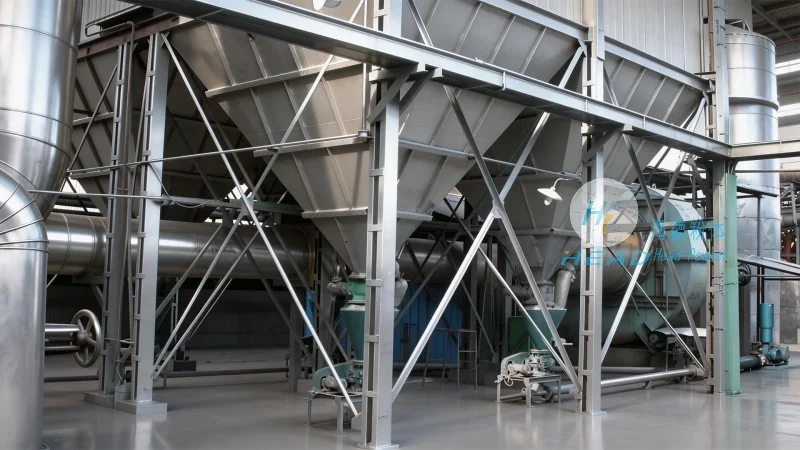
Role of Shandong HeadPowder Engineering Co., Ltd. in System Selection
Shandong HeadPowder Engineering Co., Ltd., a reputable company based in China, specializes in designing and manufacturing customized pneumatic conveying systems tailored to the unique needs of nanoparticle calcium carbonate handling. With years of experience in the industry, the company understands the challenges associated with transporting fine particles and provides comprehensive solutions that address these challenges effectively. The company's approach involves a thorough analysis of the client's process requirements, including the type and quantity of nCC, the distance and layout of the transport route, and the specific operational conditions. Based on this analysis, they recommend the most suitable system type, such as positive or negative pressure, and specify the appropriate equipment, including blower units, pipelines, and material handling components.

HeadPowder's engineers work closely with clients to ensure that the selected system meets all regulatory and quality standards. They consider factors such as dust control, environmental impact, and maintenance requirements to provide a long-term solution that enhances operational efficiency and reduces downtime. The company's commitment to quality is reflected in its use of high-grade materials and advanced manufacturing techniques, ensuring that the pneumatic conveying systems are durable, reliable, and capable of handling the demanding conditions of nanoparticle calcium carbonate transport.
Conclusion: Making the Right Choice for Your Nanoparticle Calcium Carbonate Handling Process
Selecting the right pneumatic conveying system for your nanoparticle calcium carbonate handling process is a critical decision that can significantly impact your operational efficiency and product quality. By considering factors such as system type, material properties, and transport requirements, and leveraging the expertise of companies like Shandong HeadPowder Engineering Co., Ltd., you can ensure that your nCC is transported safely, efficiently, and without compromising its integrity. Whether you need a system for short-distance transport or long-distance handling, a positive or negative pressure system, or a combination of both, HeadPowder offers tailored solutions that meet your specific needs. With their focus on quality, reliability, and customer satisfaction, HeadPowder is a trusted partner in optimizing your nanoparticle calcium carbonate handling process.