

Principle and Working Scene Characteristics of High-Pressure Dense-Phase Pneumatic Conveying Systems
Shandong HeadPowder Engineering Co., Ltd., commonly known as headpowder, is a professional manufacturer and supplier based in Shandong, China. The company specializes in the research, development, and production of high-pressure dense-phase pneumatic conveying systems, which are widely used in various industrial applications for efficient material handling.

Overview of High-Pressure Dense-Phase Pneumatic Conveying Systems
High-pressure dense-phase pneumatic conveying systems represent a sophisticated technology for transporting bulk materials over long distances or within complex industrial setups. Unlike traditional pneumatic conveying methods that rely on low-pressure air to move materials in a dilute phase, this technology operates by suspending material particles in a high-pressure air stream, creating a dense phase that ensures stable and efficient material transfer. The core principle involves generating a high-pressure air flow that creates a pressure differential, drawing material from a hopper into the conveying pipeline and transporting it to the discharge point. This approach minimizes material degradation, reduces air consumption, and enhances overall system efficiency compared to conventional methods.

The Working Principle of High-Pressure Dense-Phase Pneumatic Conveying
The operation of a high-pressure dense-phase pneumatic conveying system is based on several key components and processes. A high-pressure blower or compressor generates the necessary air pressure, typically ranging from 5 to 15 bar, depending on the material and system requirements. The material feed hopper is equipped with a feeder mechanism, such as a rotary valve or a screw feeder, which controls the flow rate of the material into the pipeline. As the high-pressure air enters the pipeline, it creates a pressure drop that draws the material from the hopper. The material particles are then suspended in the air stream, forming a dense phase that moves through the pipeline. The conveying pipeline is usually made of stainless steel or other corrosion-resistant materials to withstand the high-pressure air and abrasive materials. At the discharge end, a pressure regulator and a venturi or other device control the pressure and velocity of the material as it exits the system, ensuring a smooth and controlled discharge.

Key Features and Advantages
High-pressure dense-phase pneumatic conveying systems offer several advantages that make them suitable for demanding industrial applications. One of the primary benefits is their ability to handle a wide range of materials, including fine powders, granules, and even bulk solids with high moisture content or abrasive properties. The dense-phase operation minimizes material degradation, such as agglomeration or breakage, which is critical for maintaining product quality. Additionally, the system reduces air consumption compared to low-pressure systems, leading to lower energy costs and improved operational efficiency. The high-pressure operation also reduces the wear and tear on the conveying pipeline and components, extending the service life of the equipment and reducing maintenance frequency. Another advantage is the system's adaptability to different production environments. It can be integrated with automated control systems, allowing for precise control over the conveying process, including flow rate, pressure, and material level. This integration enhances operational efficiency and ensures consistent material flow, which is crucial for maintaining production schedules and quality standards.
Working Scene Characteristics and Applications
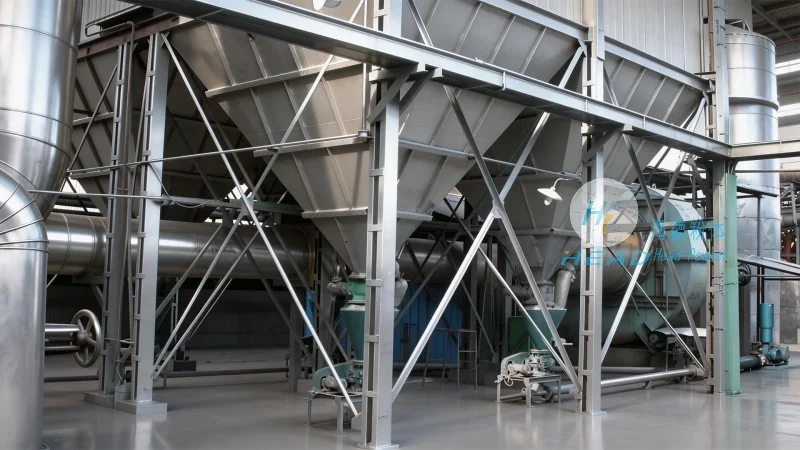
The working scene characteristics of high-pressure dense-phase pneumatic conveying systems are tailored to meet the specific demands of various industrial environments. These systems are particularly suitable for applications where material handling requires high reliability, low maintenance, and minimal product contamination. In the chemical industry, for example, they are used to transport powders and granules with high moisture content or abrasive properties, ensuring that the materials remain intact during the conveying process. In the food and pharmaceutical industries, the systems are designed to maintain strict hygiene standards, with features such as stainless steel construction and easy-to-clean components. The ability to handle a wide range of materials, from fine powders to coarse granules, makes these systems versatile and adaptable to different production lines. Additionally, the systems can be integrated with automated control systems, allowing for precise control over the conveying process and reducing human intervention. This integration enhances operational efficiency and ensures consistent material flow, which is crucial for maintaining production schedules and quality standards.
Integration and Customization
High-pressure dense-phase pneumatic conveying systems can be customized to fit the specific needs of individual industrial applications. Companies like Shandong HeadPowder Engineering Co., Ltd. offer tailored solutions that consider factors such as material properties, conveying distance, and production capacity. The systems can be designed with different components, such as variable speed feeders, pressure regulators, and material separators, to optimize performance. Additionally, the systems can be integrated with existing production lines, minimizing the need for major facility modifications. This flexibility makes them an attractive option for companies looking to upgrade their material handling capabilities while maintaining operational continuity. The company's expertise in designing and manufacturing these systems ensures that clients receive solutions that are both efficient and reliable, meeting the unique requirements of their industries.