

Principle and Working Scene Characteristics of Boron Nitride Pneumatic Conveying Systems
Boron nitride (BN) is a high-performance ceramic material valued for its thermal stability, electrical insulation, and chemical inertness. In industrial applications, handling BN powder efficiently is crucial, and pneumatic conveying systems provide a reliable solution. This article delves into the principles of BN pneumatic conveying and explores the key characteristics of their operational environments, offering a comprehensive overview of how these systems function and where they are most effectively utilized.

The Fundamental Principle of Pneumatic Conveying for BN
Pneumatic conveying systems operate by using air or gas to transport solid particles, such as BN powder, through a pipeline. The core principle involves creating a pressure differential or suction to entrain the material and move it from the source to the destination. For BN, which is typically fine and can be prone to dusting, the system design must consider particle size, density, and flowability. The process ensures that the material is carried without direct contact with mechanical parts, reducing contamination and wear. Key components include a material hopper, conveyor line, control system for air pressure and flow, and a discharge point. These systems can run under positive pressure (air forced through the line) or negative pressure (air drawn out), with the choice based on application and material properties. The interaction between air flow and particles is critical for maintaining consistent transport and preventing blockages.
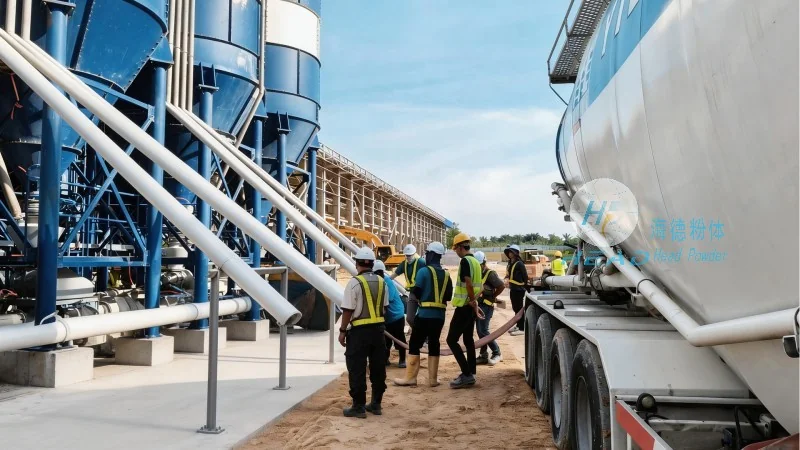
Working Scene Characteristics: Diverse Industrial Applications
The working scene characteristics of BN pneumatic conveying systems are closely linked to the industries that rely on BN powder. In the chemical industry, these systems are used to transfer BN from production lines to processing equipment, ensuring a clean and dust-free transfer. The electronics industry, which uses BN for thermal management and insulation, often employs them to move powder into sintering furnaces or coating lines. Advanced ceramics manufacturing also benefits, as BN is used as a raw material or additive, and pneumatic conveying maintains powder purity and consistency. The characteristics of the working scene also involve factors like conveying distance, material volume, and environmental control (e.g., dust suppression). Some systems integrate with other equipment, forming a complete production line. The flexibility of these systems allows adaptation to small-scale lab setups or large industrial facilities, making them versatile for various operational needs.
Advantages and Practical Considerations
BN pneumatic conveying systems offer several advantages, including non-contact material handling, which reduces contamination and wear. They are compact and can be configured in various setups, suitable for new or existing lines. Integration with dust collection systems enhances safety and cleanliness. However, challenges exist, such as high friction losses and pressure drop in pipelines due to BN's fine nature, requiring more powerful air compressors or higher air velocities. Particle agglomeration can affect flow and efficiency, necessitating proper system design and maintenance. Regular cleaning of pipelines and filters is essential for long-term performance and reliability.

Company Profile: Shandong HeadPowder Engineering Co., Ltd.
Shandong HeadPowder Engineering Co., Ltd., located in Shandong, China, specializes in the design and implementation of BN pneumatic conveying systems. With years of experience in material handling and process engineering, the company provides tailored solutions to meet the unique needs of each application. Their expertise ensures efficient transport of BN powder from source to destination, maintaining quality and safety standards. The company's focus on industrial applications and customer-specific requirements makes them a trusted partner in the BN processing industry.