

Working Principle and Characteristics of Pneumatic Conveying for Coating Powder Materials
HeadPowder, a leading enterprise in the field of material handling solutions, specializes in the design, manufacturing, and implementation of pneumatic conveying systems tailored for coating powder materials. This article delves into the fundamental working principles and key characteristics of such systems, providing a comprehensive understanding for industry professionals and potential clients.

Pneumatic conveying, as a core technology in material transport, operates by utilizing pressurized or vacuum air to move bulk materials like coating powders through a pipeline network. The process begins with the material being introduced into a hopper or feeder, where it is then drawn or pushed into the conveying line by the air flow. In pressurized systems, air is forced through the pipeline at a high velocity, creating a positive pressure that propels the powder particles forward. Conversely, vacuum systems create a negative pressure that pulls the material from the source to the destination. This method eliminates the need for mechanical components like belts or buckets, offering a more hygienic and efficient alternative for handling sensitive coating powders.
The working principle of pneumatic conveying for coating powders involves several critical steps. First, the powder is fed into the system via a hopper or a rotary valve, ensuring a consistent and controlled flow. Next, the air is introduced into the conveying line, either by a blower or a vacuum pump, depending on the system design. The air velocity is carefully controlled to maintain the powder in a suspended state, preventing blockages and ensuring smooth transport. The material travels through the pipeline to the discharge point, where it is collected in a receiving hopper or directly into the processing equipment. The system also includes components like filters and cyclones to separate the air from the powder, ensuring that the powder remains clean and free from contamination.

Key characteristics of pneumatic conveying systems for coating powders include high efficiency, flexibility, and adaptability. These systems can handle a wide range of powder types, from fine to coarse particles, with minimal degradation or agglomeration. The enclosed pipeline design prevents dust emissions, making it suitable for applications where environmental and safety standards are stringent. Additionally, pneumatic conveying offers the advantage of being able to transport materials over long distances with minimal energy consumption compared to other methods like truck or rail transport. The system can be easily integrated with existing production lines, allowing for seamless material flow and reduced downtime.

Another significant characteristic is the ability to handle varying material properties. Coating powders often have different densities, moisture contents, and flow characteristics, which can affect the conveying performance. Advanced pneumatic conveying systems, such as those developed by Shandong HeadPowder Engineering Co., Ltd., incorporate intelligent control systems that adjust air pressure and flow rates in real-time to optimize material transport. This adaptability ensures consistent performance even with fluctuating material conditions, reducing the risk of system failures or material loss.
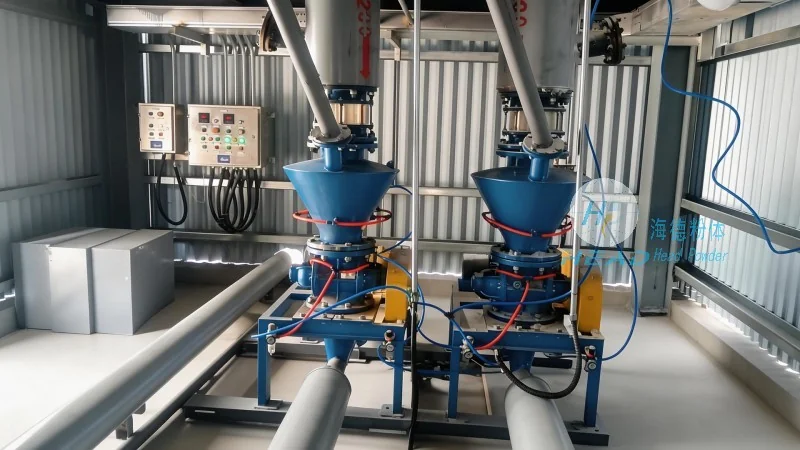
The design of pneumatic conveying systems also plays a crucial role in their effectiveness. The pipeline layout, including the number and angle of bends, the size of the conveying line, and the placement of components like filters and cyclones, all impact the system's efficiency. A well-designed system minimizes pressure losses and ensures that the powder remains in suspension throughout the transport process. For coating powders, which are often sensitive to moisture and temperature, the system's ability to maintain a dry and controlled environment is critical. This is achieved through the use of insulated pipelines and moisture-resistant materials, preventing the powder from absorbing moisture from the air and affecting its quality.
Furthermore, the maintenance and operational costs of pneumatic conveying systems are relatively low compared to other material handling methods. The absence of moving parts like belts or chains reduces the risk of wear and tear, leading to lower maintenance requirements and longer service life. The system's compact design also saves space in production facilities, making it ideal for applications where floor space is limited. However, it is important to note that the initial investment for a pneumatic conveying system can be higher than for simpler methods, but the long-term benefits in terms of efficiency, safety, and product quality often outweigh the initial costs.