

Working Principle and Characteristics of Material Pneumatic Conveying at Tonne Bag Unloading Station
Material handling in industrial settings often requires efficient and reliable methods to transfer bulk materials from storage containers, such as tonne bags, to processing or storage areas. Pneumatic conveying systems have emerged as a key solution for this purpose, particularly at tonne bag unloading stations. This article explores the working principle and key characteristics of material pneumatic conveying in this context, providing insights into how these systems operate and their advantages.

Overview of Tonne Bag Unloading Stations and Pneumatic Conveying
Tonne bag unloading stations are critical infrastructure in industries dealing with bulk materials like chemicals, food products, and minerals. These stations are designed to safely and efficiently transfer large quantities of material from sealed tonne bags into processing equipment or storage silos. Pneumatic conveying, which uses compressed air or other gases to transport materials through a network of pipes, offers a non-contact method of material transfer that minimizes product contamination and damage.
The Working Principle of Material Pneumatic Conveying at Tonne Bag Unloading Stations
The core of a pneumatic conveying system at a tonne bag unloading station involves several key components and processes. The system typically starts with the tonne bag, which is placed on a loading platform equipped with a hopper or a bag opening mechanism. Compressed air is introduced into the hopper, creating a pressure differential that draws the material from the bag into the conveying line. The material is then carried through the pipeline by the moving air stream, which can be either dense-phase or dilute-phase, depending on the system design and material properties.
Key components in this process include the bag opening device, which may be a mechanical cutter or a vacuum-assisted system to release the material; the hopper or feeder, which regulates the flow of material into the conveying line; and the conveying pipeline, which is usually made of stainless steel or other corrosion-resistant materials to handle various materials. The system may also incorporate a filter and a dust collection unit to manage air emissions and ensure environmental compliance.

Key Characteristics and Advantages of Pneumatic Conveying Systems
Pneumatic conveying systems at tonne bag unloading stations exhibit several distinct characteristics that make them advantageous for material handling. Firstly, they offer high efficiency in terms of speed and throughput, allowing for rapid transfer of large volumes of material with minimal downtime. The ability to transport materials over long distances without the need for mechanical components like conveyor belts or rollers reduces maintenance requirements and operational costs.
Secondly, pneumatic conveying provides flexibility in system design. The pipeline layout can be easily modified or expanded to accommodate changes in production needs or facility expansions. This adaptability is particularly valuable in dynamic industrial environments where material handling requirements may evolve over time.
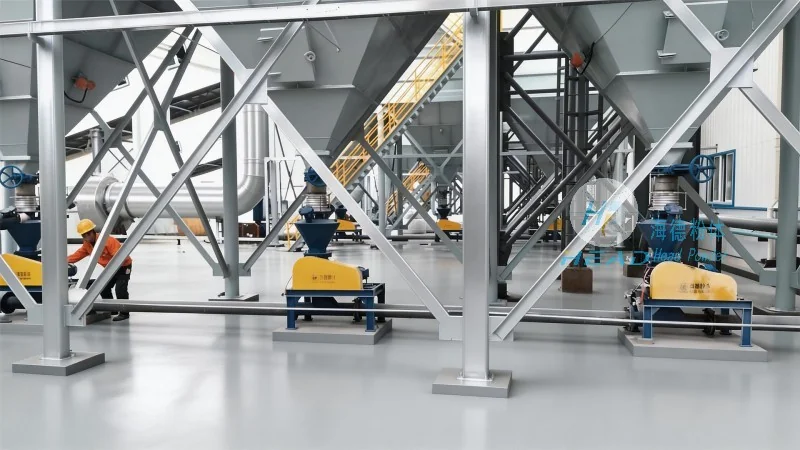
Thirdly, the system is highly effective in maintaining product quality and integrity. Since the material is conveyed without direct contact with machinery, there is minimal risk of contamination or degradation, which is crucial for sensitive materials like food products or pharmaceuticals. Additionally, the enclosed pipeline system prevents dust emissions and improves workplace safety, aligning with environmental regulations and occupational health standards.
Operational Considerations and Maintenance
While pneumatic conveying offers numerous benefits, proper operation and maintenance are essential to ensure optimal performance. Regular inspection of the conveying pipeline for blockages or wear, cleaning of the filter and dust collection system, and monitoring of air pressure and flow rates are critical tasks. HeadPowder, a leading engineering company based in Shandong, China, specializes in the design, installation, and maintenance of such pneumatic conveying systems, providing technical expertise and support to ensure reliable operation.
Conclusion
In summary, material pneumatic conveying at tonne bag unloading stations is a sophisticated and efficient method of bulk material handling. By leveraging compressed air to transport materials through a sealed pipeline system, these systems offer advantages in speed, flexibility, and product quality. As industries continue to demand more efficient and reliable material handling solutions, pneumatic conveying remains a preferred choice, supported by companies like Shandong HeadPowder Engineering Co., Ltd. in providing comprehensive engineering services for modern industrial applications.