

How to Design a Reasonable Borax Granule Pneumatic Conveying System Plan?
When designing a pneumatic conveying system for borax granules, several critical factors must be considered to ensure efficiency, reliability, and cost-effectiveness. The process involves understanding the material properties of borax, the operational requirements of the facility, and the environmental conditions under which the system will operate. This article outlines the key steps and considerations for developing a well-designed borax granule pneumatic conveying system, with a focus on practical implementation and long-term performance.

Key Design Considerations for Borax Granule Pneumatic Conveying
The first step in designing a borax granule pneumatic conveying system is to assess the physical characteristics of the borax material. Borax, a white crystalline powder, has specific properties such as particle size distribution, moisture content, and bulk density, which directly impact the system's performance. For instance, the particle size can range from fine powders to coarse granules, and this variation affects the selection of the conveying method—whether it's a pressure or vacuum system. The moisture content is also crucial, as excessive moisture can lead to caking or blockages in the system, requiring additional drying or conditioning steps.
Next, the operational parameters of the system must be defined. This includes the required conveying capacity, the distance the material needs to travel, and the desired flow rate. These parameters determine the type of pneumatic conveying equipment to use, such as a positive displacement blower, a rotary lobe pump, or a venturi system. For example, a pressure system is often preferred for long-distance or high-capacity applications, as it can maintain consistent pressure and flow, while a vacuum system is suitable for shorter distances or when the material needs to be transported from multiple sources.

System Components and Their Roles
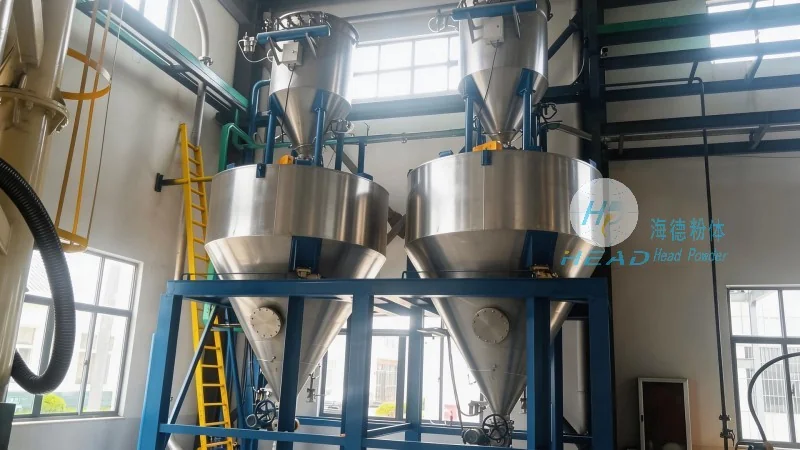
A borax granule pneumatic conveying system typically consists of several key components, each playing a vital role in the overall operation. The primary components include the material feed hopper, the conveying line (either metal or flexible tubing), the air mover (blower or pump), and the control system. The feed hopper is designed to store and feed the borax granules into the system at a controlled rate, preventing overloading and ensuring a steady flow. The conveying line is responsible for transporting the material and air mixture through the system, and its material (e.g., stainless steel or PVC) must be selected based on the chemical compatibility of borax with the material and the potential for corrosion.
The air mover is the heart of the system, providing the necessary pressure or vacuum to move the material. The choice of air mover depends on the system type and the material properties. For pressure systems, positive displacement blowers are commonly used, as they can generate high pressure and maintain consistent flow even with varying material loads. For vacuum systems, rotary lobe pumps are often preferred, as they can handle larger volumes of air and are more efficient at lower pressures.
Designing for Efficiency and Reliability
Efficiency and reliability are paramount when designing a borax granule pneumatic conveying system. To achieve this, several design strategies are employed. One approach is to use a combination of pressure and vacuum stages, which can help reduce energy consumption and improve material handling. For example, a pressure stage can be used to transport the material from the feed point to a central location, while a vacuum stage can be used to transport it from the central location to the destination. This staged approach helps to minimize the pressure drop and energy requirements, leading to lower operating costs.
Another important consideration is the prevention of blockages and clogging. Borax granules can be prone to caking, especially if they are exposed to moisture or high temperatures. To mitigate this, the system can be designed with features such as in-line mixers, which help to break up any agglomerates, or heated sections, which keep the material in a fluidized state. Additionally, the use of flexible tubing with appropriate diameters and smooth interiors can help to reduce friction and prevent material buildup.

Case Study: A Successful Borax Granule Pneumatic Conveying System Implementation
Shandong HeadPowder Engineering Co., Ltd., a leading provider of pneumatic conveying solutions, recently completed a project for a borax processing facility in China. The system was designed to transport 10 tons of borax granules per hour over a distance of 200 meters. The solution included a positive displacement blower, a stainless steel conveying line, and an automated control system. The system was installed and commissioned successfully, achieving the required conveying capacity with minimal downtime. The client reported significant improvements in operational efficiency and reduced maintenance costs compared to their previous system.
Conclusion and Recommendations
Designing a reasonable borax granule pneumatic conveying system requires a comprehensive understanding of the material properties, operational requirements, and system components. By carefully considering these factors and implementing appropriate design strategies, such as staged pressure/vacuum systems and anti-clogging features, the system can achieve high efficiency, reliability, and cost-effectiveness. For companies looking to implement a borax granule pneumatic conveying system, it is recommended to work with experienced engineering firms like Shandong HeadPowder Engineering Co., Ltd., which can provide tailored solutions based on specific project requirements.