

How to Design a Reasonable Magnesium Oxide Pneumatic Conveying System Plan?
The design of a pneumatic conveying system for magnesium oxide is a critical process that requires careful consideration of various technical and operational factors. A well-designed system ensures efficient material transport, minimal equipment wear, and optimal performance under different operating conditions. This article outlines key considerations and steps to develop a rational plan for such a system, focusing on the specific requirements of magnesium oxide handling.

Key Factors Influencing System Design
Several factors must be evaluated when designing a pneumatic conveying system for magnesium oxide. The first is the material's physical properties, such as particle size, density, and flowability. Magnesium oxide is typically a fine powder with specific characteristics that affect how it behaves in a conveying system. Understanding these properties helps in selecting the appropriate conveying method—whether it's a pressure or vacuum system—and the necessary equipment like hoppers, feeders, and pipelines.
Another crucial factor is the system's capacity and throughput requirements. The design must accommodate the expected volume of magnesium oxide to be transported, ensuring that the system can handle the required flow rates without bottlenecks or excessive pressure drops. This involves calculating the material's bulk density and flow characteristics to determine the appropriate conveyor size and speed.
Environmental and safety considerations are also paramount. Magnesium oxide is a fine powder that can generate dust, posing health risks and requiring proper dust control measures. The system design must include dust collection and filtration systems to maintain air quality and comply with safety regulations. Additionally, the system should be designed to prevent dust explosions by incorporating explosion-proof components and proper venting mechanisms.
Components of a Pneumatic Conveying System for Magnesium Oxide
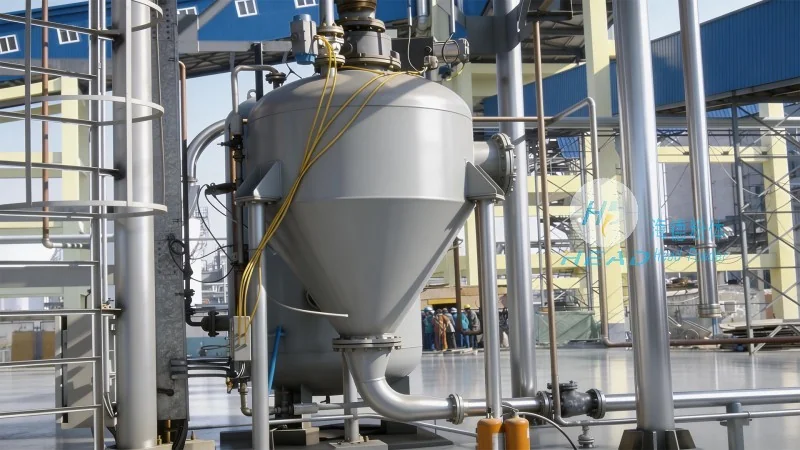
A typical pneumatic conveying system for magnesium oxide consists of several key components, each playing a vital role in the overall operation. The primary components include the hopper, feeder, air compressor or vacuum pump, conveying pipeline, and dust collection system.
The hopper is the storage vessel where magnesium oxide is held before being conveyed. It is designed to maintain the material's flowability and prevent caking or bridging, which can impede the feeding process. The hopper's design, including its shape and internal features like baffles or cone angles, is critical to ensure smooth material discharge.

The feeder is responsible for controlling the flow rate of magnesium oxide into the conveying system. Different types of feeders, such as rotary valves or screw feeders, are used depending on the material's properties and the system's requirements. The feeder must be able to handle the material's flow characteristics without causing blockages or excessive wear.
The air compressor or vacuum pump provides the necessary pressure or suction to move the material through the pipeline. The choice between a pressure system (where air is pushed through the material) and a vacuum system (where air is pulled through the material) depends on factors like the distance to be conveyed and the material's properties. For magnesium oxide, a pressure system is often preferred as it can handle fine powders more effectively and with less risk of clogging.
The conveying pipeline is the main channel through which magnesium oxide is transported. The material is suspended in the air stream and carried to the destination. The pipeline's material, diameter, and length are selected based on the system's capacity and the material's flow characteristics. Proper pipeline design minimizes pressure drops and ensures efficient material transport.
The dust collection system is essential for maintaining air quality and safety. It captures any fine particles that escape the conveying process and filters them before releasing the air back into the environment. This system typically includes a cyclone separator and a baghouse filter, which work together to remove dust from the air stream.
Design Process and Calculations
The design of a pneumatic conveying system involves a systematic process of calculations and simulations to ensure optimal performance. The first step is to determine the material's flow characteristics, including its bulk density and flowability index. These values are used to calculate the required air velocity and pressure drop through the system.
The air velocity is a critical parameter that determines the system's capacity and efficiency. It must be high enough to keep the material suspended in the air stream but low enough to prevent excessive wear on the pipeline and equipment. The appropriate air velocity is typically determined based on the material's particle size and density.
The pressure drop through the system is another important calculation. It is influenced by factors such as pipeline length, diameter, bends, and fittings. Excessive pressure drop can lead to reduced system capacity or increased energy consumption. Designers use empirical formulas and software tools to estimate the pressure drop and ensure it remains within acceptable limits.
Simulation tools are often used to model the system's performance under different operating conditions. These tools help identify potential issues, such as clogging or uneven flow, and allow for adjustments to the design before the system is built. This iterative process ensures that the final design is optimized for the specific requirements of magnesium oxide handling.
Installation and Maintenance Considerations
Once the system is designed and built, proper installation and maintenance are crucial for long-term performance and reliability. Installation must follow the manufacturer's guidelines and industry standards to ensure all components are properly aligned and connected. This includes checking for leaks in the pipeline and ensuring the feeder and hopper are correctly positioned.