

Common High-Temperature Fine Ash Conveying Methods: An Introduction to High-Temperature Fine Ash Pneumatic Conveying Systems
High-temperature fine ash, a common byproduct in industrial processes such as power generation and cement production, poses unique challenges for material handling. Efficient and reliable conveying of these hot, fine particles is critical to maintaining operational efficiency and ensuring safety in industrial facilities. This article explores common high-temperature fine ash conveying methods, with a focus on pneumatic conveying systems, and introduces the expertise of Shandong HeadPowder Engineering Co., Ltd. in providing tailored solutions for such demanding applications.

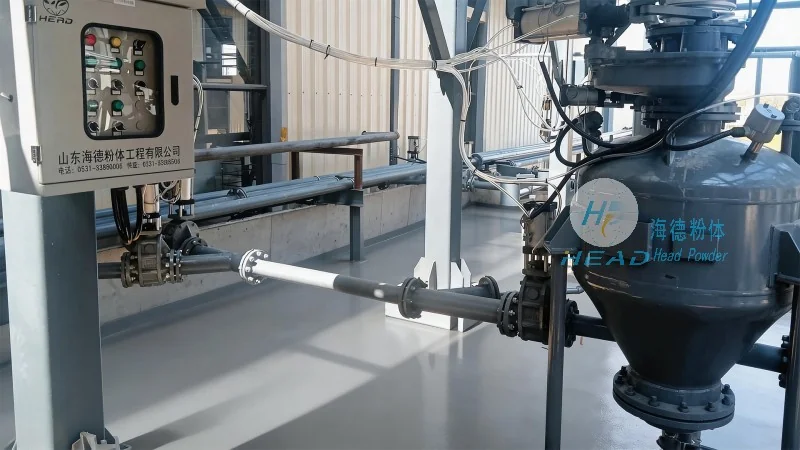
High-temperature fine ash typically consists of fine particles with temperatures ranging from 200°C to 800°C or higher, depending on the source. These particles are often abrasive and can be corrosive, making conventional mechanical conveying methods less suitable. The heat and fine particle size require specialized equipment designed to handle high temperatures, prevent material degradation, and ensure minimal dust emissions. Shandong HeadPowder Engineering Co., Ltd., a leading provider of industrial material handling solutions, specializes in designing and manufacturing systems that address these challenges effectively.
Positive Pressure Pneumatic Conveying Systems
Positive pressure systems are widely used for high-temperature fine ash conveying due to their ability to handle high temperatures and provide consistent flow rates. In a positive pressure system, air is blown into the conveying line under pressure, transporting the fine ash particles from the source to the destination. The system typically includes a blower, a hopper for material storage, and a conveying line with appropriate fittings and valves. HeadPowder's positive pressure pneumatic conveying systems are engineered to withstand high temperatures, with components made from heat-resistant materials such as stainless steel or special alloys. These systems are suitable for applications where the ash is generated in a confined space and needs to be transported to a central collection point or processing unit. The positive pressure design ensures that the material is continuously moved, reducing the risk of clogging and ensuring a steady flow. Key advantages of this method include its ability to handle abrasive materials, maintain a consistent temperature, and minimize dust leakage. HeadPowder's positive pressure systems are designed to meet the specific requirements of each industrial application, ensuring optimal performance and longevity.


Negative Pressure Pneumatic Conveying Systems
Negative pressure systems, also known as vacuum conveying systems, are another common method for high-temperature fine ash handling. In a negative pressure system, a vacuum is created at the receiving end, drawing the fine ash particles into the conveying line. The system uses a vacuum pump to maintain the pressure differential, and the material is transported from the source to the collection point. HeadPowder's negative pressure pneumatic conveying systems are ideal for applications where the ash is generated at a distance from the processing unit or where the material needs to be collected from multiple points. These systems are particularly useful when the ash is hot and needs to be transported without exposing the material to ambient air for extended periods. The negative pressure design helps in controlling dust emissions and maintaining the temperature of the ash during transport. HeadPowder's vacuum conveying systems are equipped with advanced filtration and heating elements to ensure that the fine ash is handled safely and efficiently. The systems are designed to handle high temperatures and abrasive materials, with components that can withstand the harsh conditions of industrial environments.