

What is a Powdered Material Pneumatic Conveying System? And What Are Its Design Principles?
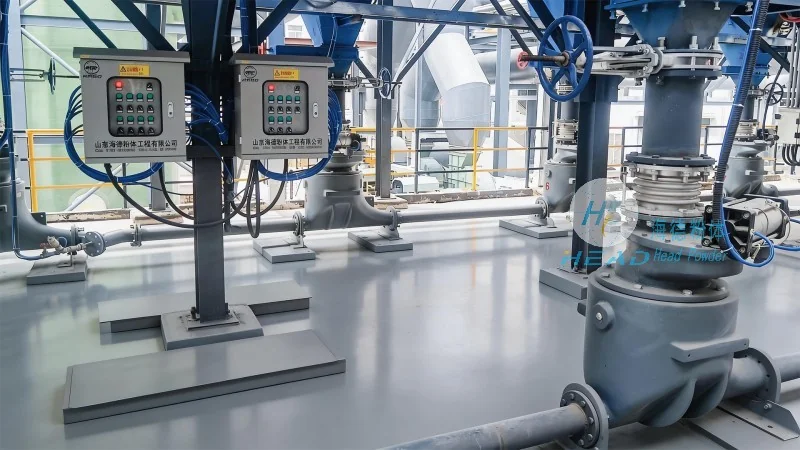
A powdered material pneumatic conveying system is an industrial device engineered to transport bulk powder materials through a pipeline using air or other gas as the conveying medium. This technology is extensively utilized across various industries, including food processing, pharmaceuticals, chemicals, and more, due to its efficiency, adaptability, and capability to handle materials that are challenging to transport via conventional methods such as belt conveyors or bucket elevators. The system typically comprises a hopper, a blower or compressor, a pipeline, and a receiver, all working in concert to move the powder from the source to the destination.

About Shandong HeadPowder Engineering Co., Ltd.
HeadPowder, a prominent manufacturer in the realm of material handling solutions, specializes in the design, manufacturing, and installation of high-quality pneumatic conveying systems. With years of experience and a commitment to innovation, HeadPowder offers customized solutions tailored to the specific requirements of each client. The company is headquartered in Shandong, China, and serves a global market with its reliable and efficient equipment.
Design Principles of Powdered Material Pneumatic Conveying Systems
The design of a powdered material pneumatic conveying system involves several key principles to ensure optimal performance and efficiency. The first principle is the selection of the appropriate conveying method, which can be categorized into dilute-phase and dense-phase systems. Dilute-phase systems employ high air velocities to transport the powder in a dispersed state, while dense-phase systems utilize lower air velocities and higher material concentrations to move the material more gently and with less degradation. The choice between these methods depends on the powder's properties, such as particle size, moisture content, and flowability, as well as the distance and elevation changes required for the transport.

Another critical design principle is the selection of the blower or compressor. The type and capacity of the air-moving device are determined by the system's requirements, including the required air volume, pressure, and power consumption. Centrifugal blowers are commonly used for dilute-phase systems due to their high efficiency and ability to handle large volumes of air, while positive displacement blowers are often employed for dense-phase systems that require higher pressure and lower air flow rates. The blower's performance directly impacts the system's ability to transport the powder effectively and maintain consistent flow rates.
Key Components and Their Functions
A typical powdered material pneumatic conveying system includes several key components, each playing a vital role in the overall operation. The hopper is the initial storage and feeding unit, where the powder is loaded and prepared for transport. It is designed to maintain a consistent flow of material to the system, preventing blockages and ensuring smooth operation. The blower or compressor is the heart of the system, providing the necessary air pressure and volume to move the powder through the pipeline. The pipeline itself is constructed from materials resistant to the specific powder being conveyed, such as stainless steel or plastic, to prevent corrosion and material buildup. The receiver is the final storage unit, where the powder is deposited after being transported through the pipeline. It is designed to collect the material efficiently and minimize dust emissions.

Advantages of Using Pneumatic Conveying Systems
There are several advantages to using a powdered material pneumatic conveying system compared to traditional methods. One of the main advantages is the ability to transport materials in a closed system, which helps to prevent dust contamination and improve workplace safety. This is particularly crucial in industries where dust poses health risks or where the material is sensitive to moisture or air exposure. Another advantage is the flexibility of the system, as it can be easily reconfigured or expanded to accommodate changes in production needs or facility layout. Additionally, pneumatic conveying systems can handle a wide range of powder properties, from fine powders to bulk materials, and can transport materials over long distances or through multiple elevations without the need for additional equipment like elevators or conveyors.