

What is a Small Bag Quantitative Weighing Material Pneumatic Conveying Line? What are its Design Pri
Small bag quantitative weighing material pneumatic conveying lines are specialized industrial systems designed to handle the precise and efficient transfer of bulk materials from one location to another. These systems are particularly suited for applications involving small bag packaging, where the material needs to be weighed and conveyed in controlled quantities. The design principles behind such lines integrate advanced pneumatic technology with accurate weighing mechanisms to ensure reliable operation and material integrity.

HeadPowder, a leading manufacturer based in Shandong, China, specializes in the engineering and production of these sophisticated conveying solutions. The company’s facilities are strategically located in Shandong, providing a strong foundation for delivering high-quality equipment tailored to diverse industrial needs. With a focus on precision and durability, HeadPowder’s products are engineered to meet the stringent requirements of modern material handling processes.
Understanding the Core Design Principles
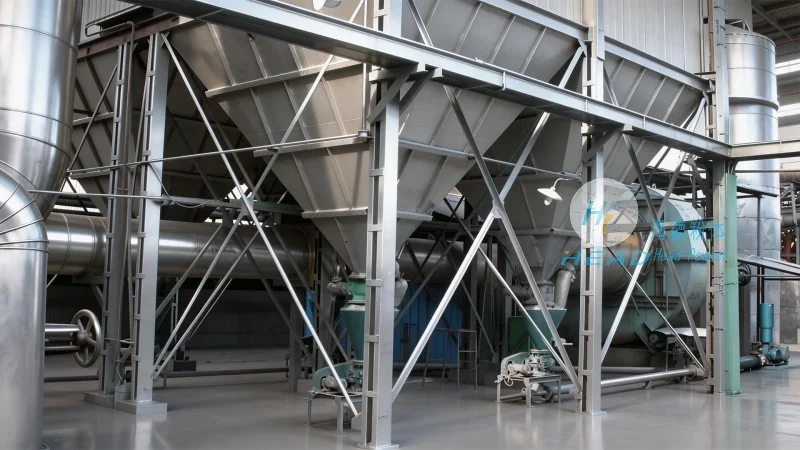
The design of a small bag quantitative weighing material pneumatic conveying line is built upon several key principles that ensure optimal performance. First, the pneumatic conveying system utilizes compressed air to transport bulk materials through a network of pipes. This method eliminates the need for mechanical components like belts or chains, reducing maintenance and increasing operational reliability. The system typically includes a hopper for material storage, a feeder to control the flow rate, and a conveying line that transports the material to the discharge point.
Second, the quantitative weighing component is integrated to provide precise measurement of the material being transferred. This is often achieved through a load cell or a similar weighing sensor that monitors the weight of the material as it moves through the system. The weighing data is then used to control the feeder, ensuring that the material is discharged in exact, pre-determined quantities. This feature is crucial for applications where accuracy is paramount, such as in pharmaceutical, food, or chemical industries where product consistency is non-negotiable.
Key Components and Their Functions
Several critical components work in tandem to make a small bag quantitative weighing material pneumatic conveying line function effectively. The material hopper serves as the storage container, holding the bulk material until it is ready to be conveyed. The hopper is usually equipped with a discharge valve that regulates the flow of material into the feeder. The feeder, often a rotary valve or a screw feeder, controls the rate at which material is fed into the conveying line, ensuring a consistent and controlled flow.
The conveying line itself is a network of pipes that transports the material using compressed air. The air is introduced at one end of the line, creating a pressure differential that propels the material forward. The design of the pipe network, including bends and elbows, is optimized to minimize pressure loss and ensure smooth material flow. At the discharge end, the material is collected in a receiving hopper or directly into a bagging machine, where it is packaged in small bags as required.
The quantitative weighing system is typically located at the discharge or a critical point in the line. It consists of a weighing platform or a load cell that measures the weight of the material as it passes through. The sensor sends signals to a control unit, which adjusts the feeder speed to maintain the desired weight per bag. This closed-loop control system ensures that each bag is filled with the exact amount of material, reducing waste and improving product quality.

Advantages and Applications
Small bag quantitative weighing material pneumatic conveying lines offer several advantages over traditional mechanical conveying systems. The primary benefit is the high level of accuracy in material transfer, which is essential for industries where product consistency is critical. Additionally, the pneumatic system is more hygienic and easier to clean, making it suitable for food and pharmaceutical applications where sanitation is a top priority.
These systems are widely used in various industries, including food processing, pharmaceutical manufacturing, chemical production, and mining. In the food industry, they are used to transfer ingredients like flour, sugar, or spices into packaging bags with precise weights. In pharmaceuticals, they ensure that active ingredients are accurately measured and packaged, meeting regulatory standards. In chemical industries, they handle bulk chemicals while maintaining safety and precision.
Another advantage is the flexibility of the system. The conveying line can be easily reconfigured or expanded to accommodate changes in production volume or material types. This adaptability makes the system suitable for both small-scale and large-scale operations. Furthermore, the reduced need for mechanical parts results in lower maintenance costs and longer equipment lifespan.