

What is a High-Pressure Dilute-Phase Pneumatic Conveying System? And What Are Its Design Principles?
High-pressure dilute-phase pneumatic conveying systems represent a sophisticated technology used for transporting bulk materials through a pipeline using pressurized air or gas. This method is particularly effective for handling fine powders, granules, and other particulate materials, offering advantages such as reduced equipment wear, lower maintenance requirements, and the ability to transport materials over long distances with minimal product degradation. Understanding the fundamental concepts and design principles of these systems is crucial for selecting the right solution for specific industrial applications.

Understanding High-Pressure Dilute-Phase Pneumatic Conveying
A high-pressure dilute-phase system operates by injecting pressurized air or gas into a pipeline containing the material to be conveyed. The material is suspended in the air stream, forming a dilute mixture that flows through the pipeline under pressure. This approach contrasts with dense-phase systems, where the material is more compacted and moves in a plug flow. The key to efficient operation lies in maintaining the correct air-to-material ratio, ensuring that the material remains suspended without settling or clogging the pipeline.
Core Design Principles of High-Pressure Dilute-Phase Systems
The design of a high-pressure dilute-phase pneumatic conveying system involves several critical principles that ensure optimal performance and reliability. First, the system must be engineered to handle the specific properties of the material being conveyed, including particle size, density, moisture content, and flow characteristics. This involves selecting appropriate equipment such as feeders, compressors, and pipeline components that can accommodate the material's behavior under pressure.
Second, the air-to-material ratio is a critical design parameter. It determines the velocity of the material-air mixture and the pressure required to maintain suspension. Engineers must calculate the optimal ratio based on the material's properties and the desired conveying distance and speed. An incorrect ratio can lead to material deposition, increased energy consumption, or system failure.
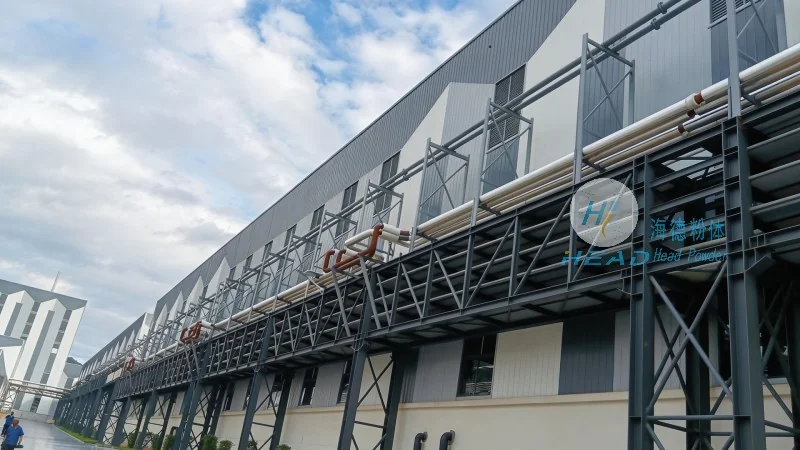
Third, the system's layout and components must be designed to minimize pressure losses and energy consumption. This includes selecting the right pipeline diameter, length, and fittings, as well as incorporating features like expansion joints, bends, and filters to maintain system efficiency. Proper design also considers the need for material recovery and dust control, as these systems often generate fine particles that need to be captured and recycled.
HeadPowder Engineering's Expertise in High-Pressure Dilute-Phase Systems
Shandong HeadPowder Engineering Co., Ltd. is a leading provider of engineering solutions for pneumatic conveying systems, with extensive experience in designing and implementing high-pressure dilute-phase solutions. The company specializes in customizing systems to meet the unique requirements of various industries, including pharmaceuticals, food processing, chemicals, and minerals. HeadPowder's team of engineers leverages advanced design software and industry best practices to develop systems that are efficient, reliable, and cost-effective.
With a strong focus on quality and innovation, HeadPowder has successfully delivered numerous high-pressure dilute-phase systems to clients worldwide. The company's expertise covers all aspects of system design, from initial material analysis and process simulation to final installation and commissioning. Clients benefit from HeadPowder's comprehensive approach, which ensures that the system meets not only technical specifications but also operational and safety requirements.

Key Advantages of High-Pressure Dilute-Phase Conveying
High-pressure dilute-phase pneumatic conveying offers several advantages over traditional conveying methods. One of the primary benefits is the ability to transport materials over long distances with minimal product degradation. The pressurized air stream keeps the material suspended, preventing agglomeration and reducing the risk of contamination. This is particularly important for sensitive materials like pharmaceutical powders or food products, where maintaining product quality is paramount.
Another advantage is the reduced equipment wear and lower maintenance costs. Since the material is suspended in the air stream, there is less direct contact with the pipeline walls, minimizing abrasion and wear compared to dense-phase or mechanical conveying systems. This leads to longer equipment life and lower operational costs over the system's lifecycle.
Furthermore, high-pressure dilute-phase systems are flexible and can be easily integrated into existing production lines. They can handle a wide range of materials and can be adapted to changing production needs. The systems are also relatively compact, allowing for installation in limited spaces, and can be designed to operate with minimal environmental impact, as they often incorporate dust collection and recycling systems.