

What is Zircon Sand Material Pneumatic Conveying Equipment? What Are Its Design Principles?
Zircon sand, a critical raw material in various industrial applications, often requires efficient and reliable transportation methods to move it from one location to another. Pneumatic conveying equipment has emerged as a preferred solution for handling zircon sand due to its ability to transport bulk materials in a dust-free environment. This article explores the fundamental aspects of zircon sand material pneumatic conveying equipment and delves into the core design principles that underpin its operation.

Understanding Zircon Sand Material Pneumatic Conveying Equipment
Zircon sand material pneumatic conveying equipment is a system designed to transport zircon sand particles through a pipeline using compressed air or other gas. The primary components of such a system typically include a material feed hopper, a conveying pipeline, a gas source (such as a blower or compressor), and a discharge unit. The equipment operates by introducing zircon sand into the hopper, where it is then drawn into the pipeline by the moving air stream. This process allows for the efficient and continuous movement of zircon sand, minimizing the need for manual handling and reducing the risk of dust exposure.
Key Design Principles of Pneumatic Conveying Systems
The design of zircon sand material pneumatic conveying equipment is governed by several critical principles that ensure optimal performance and reliability. First, the system must be capable of handling the specific characteristics of zircon sand, such as its particle size distribution, density, and moisture content. These factors influence the air velocity required to maintain particle suspension and prevent blockages in the pipeline. Engineers must carefully calculate the appropriate air velocity and pressure to achieve efficient transport without excessive energy consumption.

Second, the design must consider the material's flow properties and the potential for agglomeration or caking. Zircon sand, like many fine powders, can exhibit cohesive behavior under certain conditions, which may lead to blockages or uneven flow. To mitigate this, the system may incorporate features such as vibration feeders, agitators, or air knives to maintain consistent material flow. Additionally, the pipeline design, including bends and fittings, must be optimized to minimize pressure losses and prevent particle deposition.
Components and Their Functions in Pneumatic Conveying Equipment
Each component of a zircon sand material pneumatic conveying system plays a vital role in its overall performance. The material feed hopper is responsible for storing and feeding the zircon sand into the system. It is often equipped with a gate valve or a rotary valve to control the flow rate and prevent backflow. The conveying pipeline, typically made of stainless steel or other corrosion-resistant materials, is designed to withstand the abrasive nature of zircon sand particles and the pressure of the air stream.
The gas source, usually a positive displacement blower or a centrifugal fan, provides the necessary air pressure and volume to move the zircon sand. The selection of the gas source depends on the system's capacity and the required air velocity. The discharge unit, which may include a cyclone separator or a filter, is used to separate the zircon sand from the air stream and collect it in a storage bin or processing unit. This component is crucial for maintaining the purity of the material and preventing dust emissions.

Advantages of Using Pneumatic Conveying for Zircon Sand
Pneumatic conveying offers several advantages over traditional methods like belt conveyors or bucket elevators when handling zircon sand. One of the most significant benefits is the ability to transport materials in a closed system, which eliminates dust contamination and improves workplace safety. This is particularly important for zircon sand, which can be a respiratory hazard if inhaled. Additionally, pneumatic conveying systems can handle zircon sand at high speeds and over long distances with minimal maintenance requirements.
Another advantage is the flexibility of the system. Pneumatic conveying can be easily integrated with other processing equipment, such as grinding mills or classifiers, to form a continuous production line. The system can also be adjusted to handle varying material loads, making it suitable for both small-scale and large-scale operations. Furthermore, the enclosed nature of the system reduces the risk of material loss and contamination from external sources.
Applications of Zircon Sand Pneumatic Conveying Equipment
Zircon sand material pneumatic conveying equipment is widely used in various industries that rely on zircon sand as a raw material. In the ceramics industry, for example, zircon sand is used as a refractory material and a opacifier in glazes. Pneumatic conveying systems are used to transport zircon sand from storage silos to mixing and grinding equipment, ensuring a consistent supply of material. In the glass industry, zircon sand is used as a flux and a stabilizer, and the conveying equipment helps maintain the quality of the final product by preventing contamination.
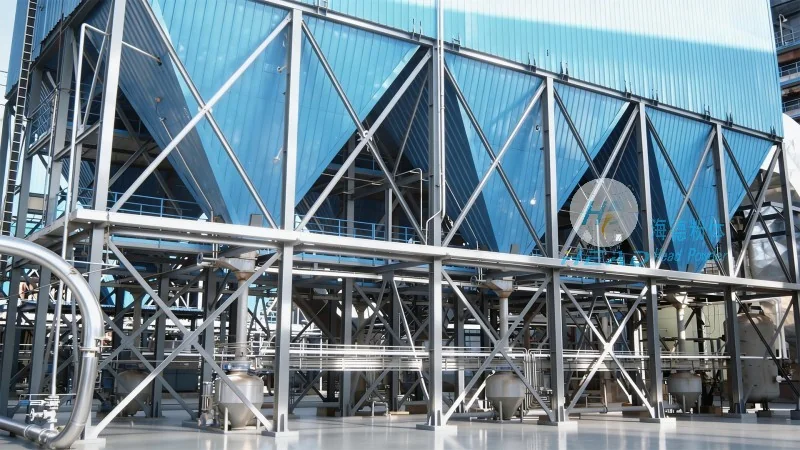
In the chemical industry, zircon sand is used as a filler in coatings and plastics. The pneumatic conveying system ensures that the zircon sand is delivered to the processing plant in a clean and controlled manner, which is essential for maintaining product quality. Additionally, the system can be used in the mining and processing of zircon ore, where it is necessary to transport the crushed and ground zircon sand to further processing stages.
Conclusion
Zircon sand material pneumatic conveying equipment is a sophisticated system that combines engineering principles with material science to efficiently transport zircon sand. The design principles, including proper air velocity, pipeline design, and component selection, are critical to the system's performance and reliability. As a leading manufacturer in this field, Shandong HeadPowder Engineering Co., Ltd. specializes in providing high-quality pneumatic conveying solutions tailored to the specific needs of zircon sand handling applications. With a focus on durability, efficiency, and safety, their equipment ensures that zircon sand is transported effectively and with minimal environmental impact. Based in Shandong, China, HeadPowder continues to innovate and improve its pneumatic conveying systems to meet the evolving demands of the industry.