

Common Red Mud Transportation Methods: An Overview of Pneumatic Conveying Systems
Red mud, a byproduct of bauxite processing in the aluminum industry, requires efficient and reliable transportation methods to manage its handling and disposal. The choice of transportation method significantly impacts operational efficiency, cost, and environmental compliance. This article explores common red mud transportation approaches, with a focus on the advantages and applications of pneumatic conveying systems.
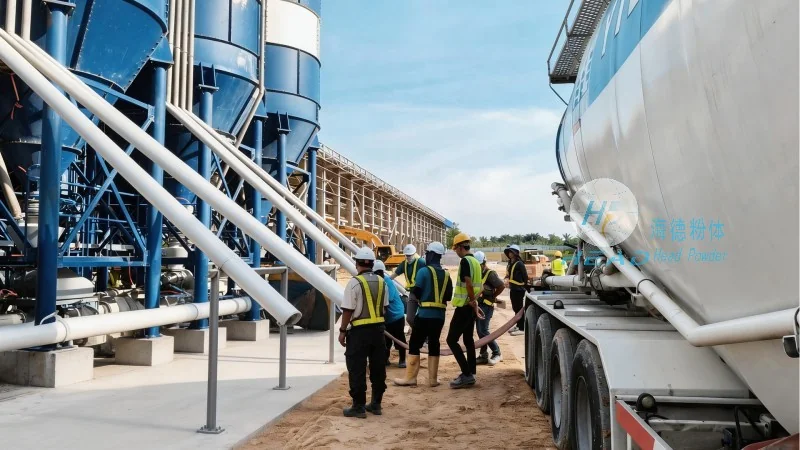
Types of Red Mud Transportation
Several methods are employed for transporting red mud, each with distinct characteristics and suitability for different industrial settings. The primary categories include hydraulic systems, mechanical conveying, and pneumatic conveying. Each method has its own set of advantages and limitations, which are crucial for selecting the most appropriate solution for a specific project.
Hydraulic Transportation Systems
Hydraulic transportation involves the use of water or other fluids to transport red mud through pipelines. This method is often used for long-distance transport and can handle high volumes of material. However, it requires significant infrastructure for water management and may face challenges with scaling and corrosion in the pipelines. The system typically includes pumps, valves, and storage tanks to control the flow and pressure of the slurry.

Mechanical Conveying Methods
Mechanical conveying relies on mechanical components such as belts, screws, or buckets to move red mud. These systems are suitable for shorter distances and can handle a wide range of particle sizes. Belt conveyors are commonly used for transporting red mud from processing plants to storage or disposal sites. Screw conveyors are ideal for vertical or inclined transport, providing a compact and efficient solution. Mechanical systems are generally lower in cost compared to pneumatic systems but may have limitations in terms of distance and material handling capacity.
Pneumatic Conveying: A Detailed Overview
Pneumatic conveying, also known as air conveying, is a method that uses compressed air to transport red mud particles through a pipeline. This technology offers several advantages, including the ability to handle fine powders and abrasive materials, minimal maintenance requirements, and the flexibility to integrate with existing industrial processes. The system typically consists of a hopper, a rotary valve, a conveying line, and a receiver. The red mud is fed into the hopper, and compressed air is introduced to create a flow that moves the material through the pipeline.

Advantages of Pneumatic Conveying for Red Mud
Compared to other transportation methods, pneumatic conveying provides several key benefits for red mud handling. Firstly, it offers a high degree of flexibility, allowing for changes in the transport route without major modifications to the system. Secondly, it can handle abrasive and fine particles without causing excessive wear on the equipment. Thirdly, the system is relatively compact, requiring less space compared to hydraulic or mechanical systems. Additionally, pneumatic conveying can be integrated with other processes, such as drying or filtration, to create a more comprehensive material handling solution.
Applications and Case Studies
Pneumatic conveying systems are widely used in the aluminum industry for transporting red mud from processing plants to disposal sites or for recycling purposes. For instance, a major aluminum producer in China has implemented a pneumatic conveying system to transport red mud over a distance of several kilometers, achieving significant cost savings and improved operational efficiency. The system has been operational for over a decade, demonstrating its reliability and effectiveness in handling large volumes of red mud.

Company Profile: Shandong HeadPowder Engineering Co., Ltd.
Shandong HeadPowder Engineering Co., Ltd., a leading provider of industrial engineering solutions, specializes in the design and implementation of red mud transportation systems. With years of experience in the aluminum industry, the company has developed expertise in pneumatic conveying technologies tailored to the unique challenges of red mud handling. The company's team of engineers and technicians works closely with clients to understand their specific requirements and provides customized solutions that meet their operational and environmental needs.
Conclusion
Choosing the right red mud transportation method is critical for the success of aluminum processing operations. While hydraulic and mechanical systems have their applications, pneumatic conveying offers a versatile and efficient solution for handling red mud. By understanding the advantages and limitations of each method, industrial facilities can select the most appropriate system to optimize their operations and ensure compliance with environmental regulations. Shandong HeadPowder Engineering Co., Ltd. continues to innovate in the field of red mud transportation, providing reliable and cost-effective solutions to its clients in China and beyond.