

What is a Powdered Lithium-Ion Battery Anode Material Pneumatic Conveying System? And What Are Its D
HeadPowder, a leading engineering firm based in Shandong, China, specializes in the design and implementation of advanced material handling systems tailored for the lithium-ion battery industry. One of their core offerings is the powdered lithium-ion battery anode material pneumatic conveying system, a critical component in the production and processing of anode materials for high-performance batteries. This system is engineered to efficiently transport fine powders, such as graphite or silicon-based anode materials, with precision and reliability, addressing the unique challenges of handling sensitive and high-value powders in battery manufacturing.

Pneumatic Conveying Systems: An Overview
A pneumatic conveying system uses compressed air or other gases to transport bulk materials like powders through a pipeline. For lithium-ion battery anode materials, this method is preferred due to its ability to handle fine particles without causing degradation or contamination. Unlike mechanical systems that rely on belts or screws, pneumatic conveying minimizes particle attrition and maintains the material's integrity, which is vital for battery performance. The system typically consists of a hopper for material storage, a feeder to control the flow rate, a conveying line, and a receiver to deposit the material at the destination. Compressed air is introduced at the inlet, creating a flow that propels the powder through the system, ensuring a consistent and controlled transport process.
The Role of Anode Materials in Lithium-Ion Batteries
Lithium-ion battery anode materials are fundamental to the battery's energy storage capacity and performance. Common anode materials include graphite, which has been the industry standard due to its stability and low cost, and emerging materials like silicon, which offers higher energy density but presents challenges in handling and stability. The anode material's particle size, shape, and distribution directly impact the battery's charge and discharge efficiency. Therefore, the pneumatic conveying system must be designed to preserve these characteristics during transport. HeadPowder's systems are optimized to handle these materials with minimal impact, ensuring that the anode powder remains in its optimal state for subsequent processing steps, such as mixing, coating, or sintering.

Design Principles of the Pneumatic Conveying System
The design of a lithium-ion battery anode material pneumatic conveying system involves several key principles to ensure efficiency, safety, and material integrity. First, the system must be tailored to the specific properties of the anode powder, including particle size distribution, moisture content, and flowability. This involves selecting the appropriate conveying line diameter, air velocity, and pressure to prevent particle agglomeration or blockages. Second, the system incorporates advanced control mechanisms to regulate the flow rate and pressure, ensuring consistent transport without overloading the pipeline. Third, safety features are integrated to prevent dust explosions, which are a significant risk in powder handling. This includes explosion-proof components, dust collection systems, and pressure relief valves. Fourth, the system is designed for easy maintenance and cleaning, with components that can be disassembled and cleaned to prevent contamination from previous batches. HeadPowder's engineers apply these principles to create customized solutions that meet the exact requirements of their clients, whether for small-scale laboratory testing or large-scale industrial production.
Key Components and Their Functions
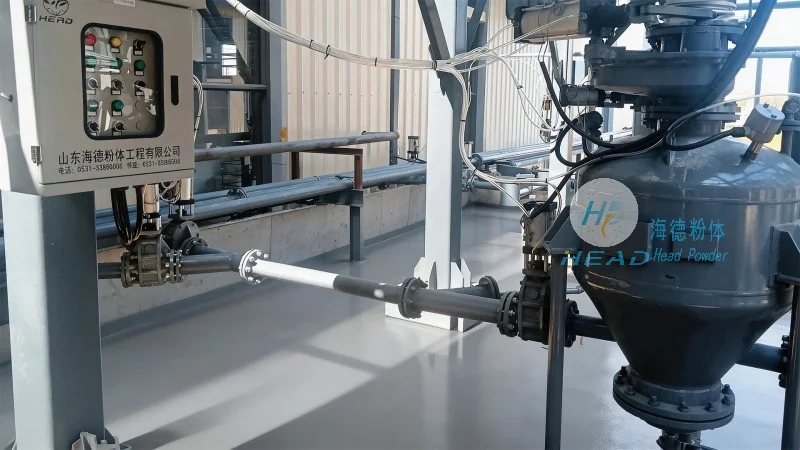
Each component of the pneumatic conveying system plays a crucial role in the overall operation. The material hopper is designed to store the anode powder in a controlled environment, often with a lid to prevent contamination from the air. The feeder, typically a rotary valve or a mass flow controller, regulates the amount of powder released into the conveying line, ensuring a steady flow. The conveying line is made of materials resistant to corrosion and wear, such as stainless steel or PTFE, to withstand the abrasive nature of the anode powder. The air compressor and blower generate the necessary pressure and volume of air to move the powder. The receiver, often a cyclone or a bag filter, separates the powder from the air stream and collects it in a container. The control panel monitors and adjusts the system parameters in real-time, providing feedback on flow rates, pressure, and temperature. These components work in harmony to create a reliable and efficient system that meets the stringent demands of lithium-ion battery manufacturing.
Benefits of Using a Pneumatic Conveying System for Anode Materials
Implementing a pneumatic conveying system for lithium-ion battery anode materials offers several advantages over traditional mechanical systems. First, it reduces the risk of contamination and degradation, as the powder is not exposed to external elements or mechanical stress. Second, it improves process efficiency by minimizing downtime and maintenance, as the system is less prone to blockages and wear. Third, it enhances safety by eliminating the need for manual handling of powders, reducing the risk of dust explosions and occupational hazards. Fourth, it allows for precise control over the material flow, ensuring consistent quality in the final battery product. HeadPowder's systems are designed to maximize these benefits, providing clients with a reliable solution that enhances their production capabilities and product quality.
Customization and Application Scenarios
HeadPowder understands that each lithium-ion battery manufacturer has unique requirements, which is why they offer customized pneumatic conveying systems. The company works closely with clients to assess their specific anode material properties, production scale, and operational environment to design a system that meets their needs. For example, a small-scale laboratory may require a compact system with lower air pressure, while a large-scale industrial plant may need a high-capacity system with higher pressure and larger conveying lines. The systems can be integrated with existing production lines or designed as standalone units, depending on the client's infrastructure. HeadPowder's engineers also consider factors such as the material's moisture content and potential for dust generation, ensuring that the system is optimized for the specific application. Whether for research and development or mass production, their pneumatic conveying systems provide a versatile solution for handling lithium-ion battery anode materials efficiently and safely.
Conclusion
The powdered lithium-ion battery anode material pneumatic conveying system is a critical technology in the battery manufacturing industry, enabling the efficient and safe transport of anode powders while preserving their quality. HeadPowder, with its expertise in engineering and material handling, provides customized solutions that adhere to the highest standards of performance and safety. By integrating advanced design principles and components, their systems enhance the production capabilities of lithium-ion battery manufacturers, contributing to the development of more efficient and sustainable battery technologies. As the demand for lithium-ion batteries continues to grow, the importance of reliable material handling systems like the pneumatic conveying system will only increase, making it a vital component in the battery supply chain.