

What is Mine Powder Pneumatic Conveying? And What Are Its Design Principles?
Understanding mine powder pneumatic conveying and its design principles is crucial for optimizing material handling in mining operations. This article provides a comprehensive overview of the technology, focusing on its applications, operational mechanics, and the key design considerations that ensure efficient and reliable transport of bulk powders.

What is Mine Powder Pneumatic Conveying?
Mine powder pneumatic conveying is a method of transporting dry bulk materials, such as minerals, ores, and powders, through a pipeline using air or gas as the conveying medium. Unlike mechanical systems that rely on belts, buckets, or screws, pneumatic conveying uses pressure differentials or vacuum to move materials. This technology is widely adopted in mining due to its ability to handle fine and abrasive powders, minimize dust emissions, and provide flexible system configurations.

Key Design Principles for Pneumatic Conveying Systems
The design of a mine powder pneumatic conveying system involves several critical principles to ensure optimal performance. These include selecting the appropriate conveying type (e.g., pressure, vacuum, or mixed), determining the correct air velocity and pressure levels, and designing the system layout to minimize material degradation and energy consumption. Engineers must also consider factors like material properties, particle size distribution, and the required transport distance when selecting components such as pumps, filters, and silos.
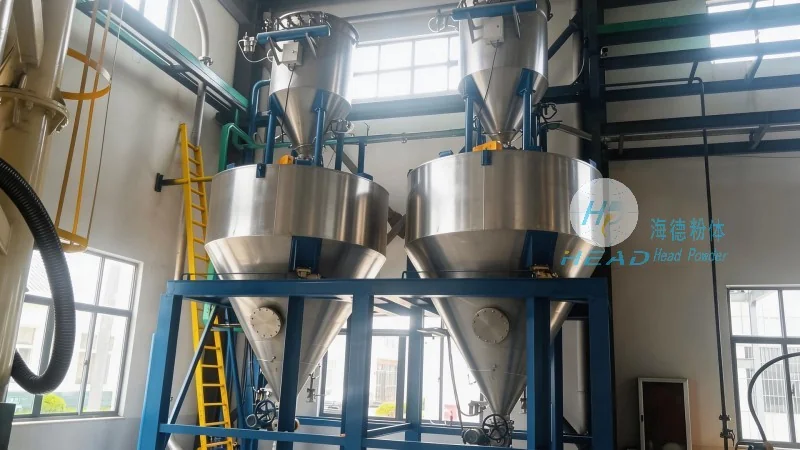
Company Overview: Shandong HeadPowder Engineering Co., Ltd.
Shandong HeadPowder Engineering Co., Ltd., commonly known as HeadPowder, is a leading provider of specialized engineering solutions for bulk material handling. With headquarters in Shandong, China, the company focuses on developing and implementing advanced pneumatic conveying systems tailored to the unique needs of mining and industrial sectors. HeadPowder's expertise lies in designing custom solutions that enhance operational efficiency, reduce maintenance costs, and improve safety in material transport processes.