

What is a Dense Phase Material Conveying Line? And What Are Its Design Principles?
A dense phase material conveying line, also known as a dense phase pneumatic conveying system, is a specialized industrial solution designed to transport bulk materials over long distances with high efficiency and minimal product degradation. Unlike traditional pneumatic conveying systems that operate in the dilute phase, where particles are suspended in air, dense phase systems use a higher air-to-material ratio, resulting in a more controlled and stable flow. This method is particularly advantageous for handling sensitive or abrasive materials, as it reduces the risk of attrition and maintains product integrity throughout the conveying process.

Key Components of a Dense Phase Material Conveying System
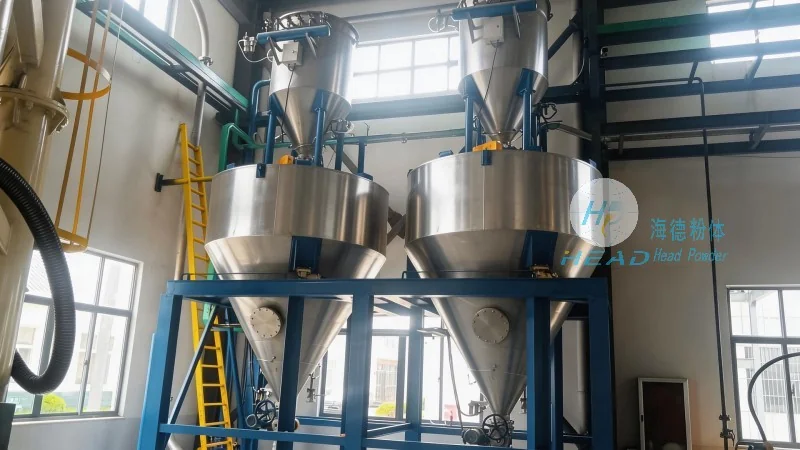
The design of a dense phase material conveying line involves several critical components that work in tandem to ensure optimal performance. These components typically include a feeding hopper, a positive displacement blower or compressor, a conveying pipeline, and a receiving hopper. The feeding hopper is responsible for storing and feeding the material into the system, while the positive displacement blower provides the necessary pressure to move the material through the pipeline. The conveying pipeline is usually made of durable materials such as stainless steel or PVC to withstand the abrasive nature of the conveyed materials. The receiving hopper collects the material at the end of the conveying line, ensuring a smooth discharge process.
Working Principle of Dense Phase Material Conveying
The operation of a dense phase material conveying system is based on the principle of creating a plug flow of material within the pipeline. In this mode, the material moves in discrete, solid-like plugs separated by air pockets. This is achieved by controlling the air flow rate and pressure, ensuring that the material is not fully suspended but rather moves in a semi-solid state. The key to this process is maintaining a consistent air-to-material ratio, which is crucial for preventing blockages and ensuring smooth transport. The system operates by alternating between phases of material and air, with the material being pushed forward by the pressure of the air, creating a stable and efficient conveying mechanism.
Design Principles and Considerations for Dense Phase Material Conveying Lines
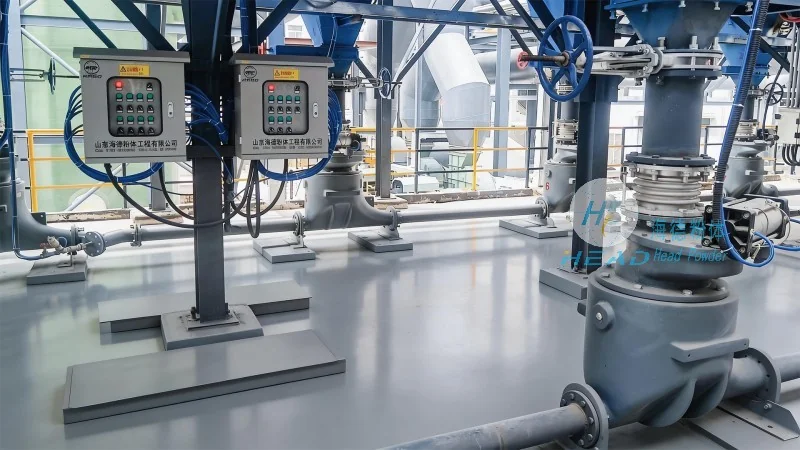
Designing an effective dense phase material conveying line requires careful consideration of several factors to ensure reliability and efficiency. One of the primary design principles is the selection of the appropriate air flow rate and pressure. This is determined by the characteristics of the material being conveyed, including its particle size, density, and flowability. For example, materials with high abrasiveness or fine particles may require higher pressure and more robust pipeline materials to prevent wear and tear. Another critical factor is the pipeline layout, which should be designed to minimize bends and changes in direction to reduce pressure losses and prevent material accumulation. The system also needs to incorporate proper sealing and filtration to maintain air quality and prevent contamination of the conveyed material.
Applications and Benefits of Dense Phase Material Conveying
Dense phase material conveying lines are widely used in various industries, including food processing, pharmaceuticals, chemicals, and mining. The primary benefits of this technology include the ability to transport materials over long distances without the need for intermediate storage or handling, reduced product degradation due to controlled flow, and improved safety by eliminating the need for manual handling of bulk materials. Additionally, dense phase systems are more energy-efficient compared to traditional methods, as they require less air volume and pressure to achieve the same conveying capacity. This makes them an attractive solution for companies looking to optimize their material handling processes while maintaining product quality and operational efficiency.

Conclusion and Company Overview
Understanding the design principles and operational aspects of dense phase material conveying lines is essential for industries that rely on efficient and reliable bulk material transport. The technology offers a robust solution for handling a wide range of materials, from fine powders to coarse granules, with minimal risk of product damage. As a leading provider in this field, Shandong HeadPowder Engineering Co., Ltd., based in China, specializes in designing and manufacturing custom dense phase material conveying systems tailored to the specific needs of clients. With a focus on quality and innovation, the company ensures that its systems meet the highest standards of performance and durability, providing long-term solutions for material handling challenges.