

What is a Potassium Carbonate Fertilizer Powder Conveying Equipment? And What Are Its Design Princip
For agricultural operations that rely on efficient and reliable handling of potassium carbonate fertilizer, specialized equipment is essential. The potash fertilizer industry, particularly in the production and distribution of potassium carbonate, requires systems that can manage the unique properties of this material. This article explores the role of powder conveying equipment in this context and delves into the design principles that underpin such systems.

Key Features of Potassium Carbonate Fertilizer Powder Conveying Equipment
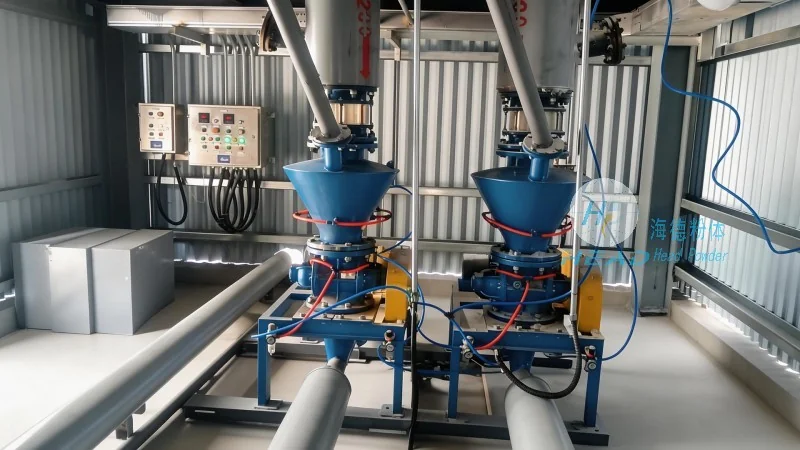
HeadPowder Engineering, a leading manufacturer based in Shandong, China, specializes in developing advanced powder handling solutions tailored to the demands of the fertilizer sector. The equipment designed for potassium carbonate fertilizer typically incorporates several critical features to ensure optimal performance. These include robust material handling components capable of dealing with the abrasive and hygroscopic nature of potassium carbonate. The systems often utilize positive displacement blowers or screw conveyors to maintain consistent flow rates, minimizing the risk of clogging or material degradation. Additionally, the equipment is engineered with corrosion-resistant materials to withstand the chemical properties of the fertilizer, ensuring longevity and operational safety.
Design Principles for Efficient Powder Conveying
The design of a potassium carbonate fertilizer powder conveying system is guided by several key principles aimed at maximizing efficiency and reliability. One fundamental principle is the maintenance of a consistent air or material flow, which is crucial for preventing blockages and ensuring uniform distribution of the fertilizer. The system must be designed to handle the specific bulk density and flow characteristics of potassium carbonate, which can vary depending on moisture content and particle size. Engineers at Shandong HeadPowder Engineering Co., Ltd. employ advanced computational fluid dynamics (CFD) and material testing to optimize the design, ensuring that the equipment operates at peak efficiency under various conditions.

Integration of Safety and Maintenance Considerations
Another critical aspect of the design is the incorporation of safety features and ease of maintenance. The equipment is equipped with sensors and alarms to detect overpressure or blockages, preventing potential hazards. Regular maintenance is facilitated by accessible components, such as quick-release clamps and easy-to-clean hopper designs. The use of wear-resistant linings and adjustable speed controls further enhances the longevity of the system, reducing downtime and operational costs for agricultural facilities.
Application in Fertilizer Production and Distribution
Potassium carbonate fertilizer powder conveying equipment plays a vital role in the entire supply chain, from manufacturing to distribution. In production facilities, the equipment ensures that raw materials are efficiently transported to processing units, while in storage and distribution centers, it maintains the integrity of the fertilizer during transfer. The reliability of these systems directly impacts the quality of the final product, as any contamination or degradation can affect the effectiveness of the fertilizer for crops. By adhering to rigorous design standards and using high-quality components, manufacturers like HeadPowder Engineering help ensure that agricultural operations can rely on consistent and high-performance fertilizer delivery.

Conclusion and Company Overview
In summary, the potash fertilizer industry relies on sophisticated powder conveying equipment to handle potassium carbonate efficiently and safely. The design principles, including material handling, flow control, and safety features, are carefully considered to meet the demanding requirements of agricultural applications. Shandong HeadPowder Engineering Co., Ltd., with its expertise in powder engineering, provides tailored solutions that enhance operational efficiency and product quality. By focusing on robust design and user-friendly maintenance, the company supports the agricultural sector in delivering essential nutrients to crops, contributing to sustainable farming practices.