

What is a Caustic Soda Pneumatic Conveying System? And What Are Its Design Principles?
Caustic soda, also known as sodium hydroxide (NaOH), is a highly caustic and reactive chemical widely used in various industrial applications, including chemical manufacturing, paper production, and water treatment. The efficient and safe handling of caustic soda is crucial for industrial operations, and one of the most effective methods for this is through a pneumatic conveying system. This article will explore what a caustic soda pneumatic conveying system is and delve into its fundamental design principles.

Understanding Caustic Soda Pneumatic Conveying Systems
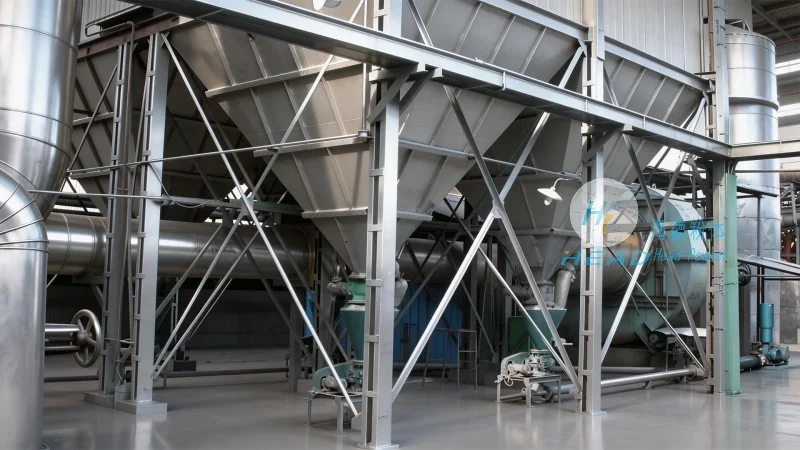
A caustic soda pneumatic conveying system is a mechanical system designed to transport caustic soda from a source, such as a storage tank or hopper, to a destination, like a processing unit or storage area, using compressed air or other gas as the driving force. Unlike traditional methods like belt conveyors or bucket elevators, pneumatic conveying systems offer several advantages, including the ability to handle fine powders, reduce dust exposure, and minimize material contamination. The system typically consists of several key components, including a hopper, a rotary airlock valve, a conveying line, and a receiver or discharge unit.
Key Components of a Caustic Soda Pneumatic Conveying System
Each component in a caustic soda pneumatic conveying system plays a critical role in ensuring efficient and safe operation. The hopper serves as the initial storage and feeding point for the caustic soda, providing a controlled environment to prevent material degradation or moisture absorption. The rotary airlock valve, located at the outlet of the hopper, regulates the flow of caustic soda into the conveying line, preventing backflow and maintaining consistent material feed. The conveying line, usually made of corrosion-resistant materials like stainless steel or polyethylene, transports the caustic soda particles through the system. The receiver or discharge unit at the end of the line collects the material and can be connected to the next processing step. Compressed air or another suitable gas is introduced into the system to create a pressure differential that propels the caustic soda particles through the line.

Design Principles for Caustic Soda Pneumatic Conveying Systems
The design of a caustic soda pneumatic conveying system must consider several factors to ensure optimal performance and safety. First, the system must be constructed from materials that are resistant to corrosion and chemical attack, as caustic soda is highly corrosive. Stainless steel, polypropylene, or other specialized alloys are commonly used for components that come into direct contact with the material. Second, the system must be designed to handle the specific properties of caustic soda, such as its moisture content and particle size. The design should account for the material's flow characteristics and potential for agglomeration or caking. Third, the system must incorporate safety features to prevent accidental release or exposure to the caustic soda, including proper sealing, pressure relief valves, and emergency shutdown mechanisms. Additionally, the system should be designed for easy maintenance and cleaning to prevent material buildup and ensure long-term reliability.

Advantages of Using a Caustic Soda Pneumatic Conveying System
Implementing a caustic soda pneumatic conveying system offers numerous benefits for industrial operations. One of the primary advantages is the reduction in dust exposure, which improves workplace safety and compliance with environmental regulations. The enclosed system also minimizes material contamination, ensuring that the caustic soda remains pure and free from foreign substances. Another key benefit is the ability to transport caustic soda over long distances without the need for multiple transfer points, which can increase efficiency and reduce operational costs. The system also allows for precise control over the flow rate and pressure, enabling better process control and consistency in downstream operations. Furthermore, pneumatic conveying systems are generally more compact and require less floor space compared to traditional bulk handling equipment, making them suitable for facilities with limited space.
Applications of Caustic Soda Pneumatic Conveying Systems
Caustic soda pneumatic conveying systems are widely used in various industries that rely on caustic soda as a key chemical. In the chemical manufacturing industry, these systems are used to transport caustic soda to reactors and processing units, where it is used in the production of other chemicals, such as sodium carbonate and sodium chlorate. In the paper industry, caustic soda is used in the pulping process to break down wood fibers, and pneumatic conveying systems help transport the caustic soda to the pulping equipment. In water treatment facilities, caustic soda is used to adjust pH levels and remove impurities from water, and the conveying system ensures the safe and efficient delivery of the chemical to the treatment tanks. Additionally, these systems are used in the food and beverage industry for certain processing steps that require caustic soda, such as in the production of certain food additives.
Conclusion
In conclusion, a caustic soda pneumatic conveying system is a vital piece of equipment for industries that handle caustic soda, providing an efficient, safe, and reliable method for material transport. The design principles of these systems focus on corrosion resistance, material compatibility, and safety, ensuring that they can handle the harsh conditions of caustic soda while maintaining operational efficiency. As industries continue to rely on caustic soda for various applications, the importance of well-designed pneumatic conveying systems will only grow, making them an essential component of modern industrial operations. Shandong HeadPowder Engineering Co., Ltd., a leading manufacturer in this field, specializes in providing high-quality caustic soda pneumatic conveying systems tailored to the specific needs of their clients, ensuring optimal performance and safety in caustic soda handling operations.