

What is a PVC Pneumatic Conveying System? What are its Design Principles?
Welcome to Shandong HeadPowder Engineering Co., Ltd., a leading provider of industrial solutions specializing in PVC pneumatic conveying systems. This article aims to provide a comprehensive overview of what these systems are and the fundamental design principles that underpin their operation.

Understanding PVC Pneumatic Conveying Systems
A PVC pneumatic conveying system is a type of equipment used to transport bulk materials through a pipeline using air or other gases as the conveying medium. Unlike traditional mechanical conveyors, which rely on mechanical components like belts or screws, pneumatic systems utilize the force of compressed air to move materials. The use of PVC (Polyvinyl Chloride) in the construction of these systems offers several advantages, including corrosion resistance, durability, and flexibility, making them suitable for a wide range of industrial applications.
Key Components of a PVC Pneumatic Conveying System
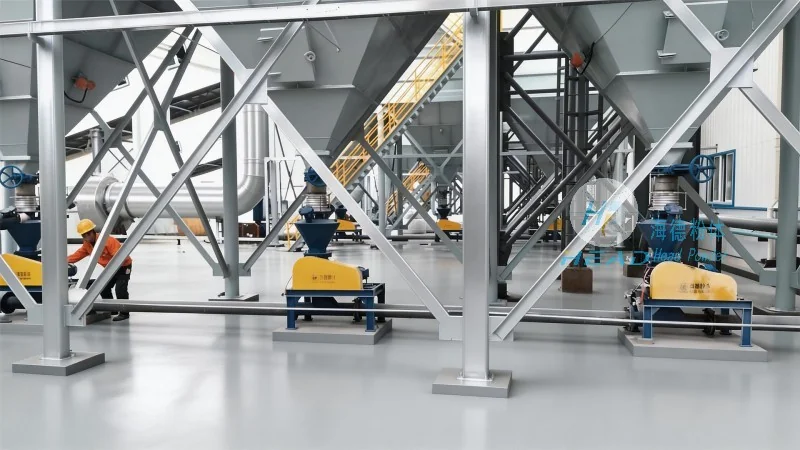
At the core of any PVC pneumatic conveying system are several key components that work in tandem to ensure efficient material transport. These components typically include a material hopper or feeder, which holds the bulk material; a compressor or air source that generates the necessary air pressure; a pipeline network that transports the material; and a receiver or discharge hopper where the material is deposited. Additionally, the system may incorporate accessories such as filters, cyclones, and pressure regulators to maintain optimal performance and protect the equipment from contamination or damage.
Design Principles and Operational Mechanics
The design of a PVC pneumatic conveying system is governed by several critical principles that ensure efficient and reliable operation. One of the primary principles is the balance between the air velocity and the material's properties, such as its density and particle size. The air velocity must be sufficient to lift and transport the material without causing excessive wear or degradation of the material itself. This is often achieved by calculating the required air pressure and flow rate based on the material's characteristics and the system's layout.
Another crucial design principle is the consideration of pressure drop and energy efficiency. The system's design must minimize pressure losses along the pipeline to reduce energy consumption and operating costs. This involves selecting appropriate pipe diameters, using smooth interior surfaces to reduce friction, and incorporating appropriate bends and fittings that minimize turbulence. The use of PVC materials in the pipeline and components helps to reduce friction and maintain consistent air flow, contributing to overall energy efficiency.

Advantages of PVC Pneumatic Conveying Systems
PVC pneumatic conveying systems offer numerous advantages over traditional mechanical conveyors, making them a preferred choice for many industries. These advantages include the ability to transport materials over long distances without the need for multiple transfer points, the flexibility to handle a wide variety of materials, including powders, granules, and fine particles, and the reduced risk of material contamination due to the enclosed system design. Additionally, PVC systems are easy to install and maintain, with components that are readily available and simple to replace, reducing downtime and maintenance costs.

Applications and Industries
PVC pneumatic conveying systems are widely used across various industries, including food processing, pharmaceuticals, chemicals, and minerals. In the food industry, for example, these systems are used to transport ingredients like flour, sugar, and spices, ensuring a hygienic and efficient process. In the pharmaceutical industry, the enclosed design of PVC systems helps to maintain product purity and prevent contamination, which is critical for meeting regulatory standards. The chemical industry also benefits from the corrosion resistance of PVC, as it can handle corrosive materials without degradation.
Conclusion
In conclusion, PVC pneumatic conveying systems are sophisticated and efficient solutions for bulk material transport. By understanding the design principles and components that make up these systems, industries can select the most appropriate solution for their specific needs, ensuring optimal performance, reliability, and cost-effectiveness. Shandong HeadPowder Engineering Co., Ltd. specializes in providing customized PVC pneumatic conveying systems tailored to meet the unique requirements of each client, ensuring that businesses can achieve their operational goals with minimal downtime and maximum efficiency.