

What Are the Conveying Methods for Corn Flour? An Introduction to HeadPowder's Pneumatic Conveying Solutions
When it comes to efficiently handling and transporting corn flour, selecting the right conveying method is crucial for maintaining product quality and operational efficiency. Corn flour, with its fine particles and hygroscopic nature, requires specialized equipment to prevent caking, segregation, and degradation during transport. This article explores the various conveying methods available for corn flour, with a focus on the advanced pneumatic conveying solutions offered by Shandong HeadPowder Engineering Co., Ltd., a leading manufacturer in the field.

Understanding Corn Flour Handling Challenges
Before delving into specific conveying methods, it's essential to understand the unique challenges associated with corn flour. As a fine powder, corn flour is prone to static electricity, which can cause particles to cling to equipment surfaces and create dust hazards. Additionally, its hygroscopic properties mean it can absorb moisture from the air, leading to clumping and reduced flowability. These factors make traditional gravity or mechanical conveying methods less effective and often result in product loss or contamination. Therefore, modern processing facilities increasingly turn to pneumatic conveying systems for reliable and hygienic corn flour transport.
HeadPowder's Pneumatic Conveying Solutions
Shandong HeadPowder Engineering Co., Ltd. specializes in designing and manufacturing high-performance pneumatic conveying systems tailored to the specific needs of corn flour processing. Their solutions are engineered to address the challenges of corn flour handling while ensuring optimal performance, energy efficiency, and compliance with industry standards. The company's expertise lies in creating customized systems that can handle varying flow rates, particle sizes, and moisture content, making them suitable for a wide range of applications, from small-scale production to large industrial operations.
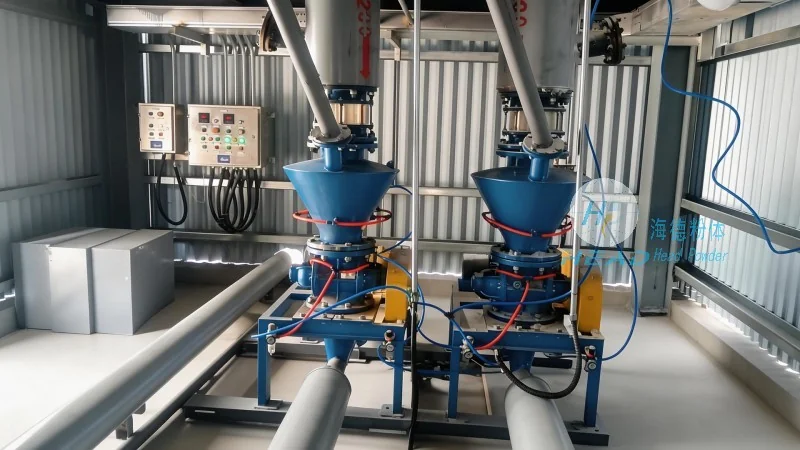
Key Features of HeadPowder's Pneumatic Conveying Systems
HeadPowder's pneumatic conveying systems incorporate several key features that set them apart in the market. Firstly, their systems utilize positive pressure or negative pressure (vacuum) to move corn flour through pipelines, eliminating the need for mechanical components that can cause wear and tear or product contamination. This design minimizes product exposure to external elements and reduces the risk of cross-contamination. Secondly, the company employs advanced materials, such as stainless steel and food-grade plastics, to ensure the equipment is durable, hygienic, and compliant with food safety regulations. These materials are resistant to corrosion and easy to clean, making them ideal for handling sensitive products like corn flour.

Customization and Scalability
One of the significant advantages of HeadPowder's pneumatic conveying solutions is their ability to be customized to meet specific operational requirements. The company works closely with clients to understand their production volumes, space constraints, and budget considerations, then designs a system that maximizes efficiency while minimizing costs. Whether a facility needs a compact system for a small-scale operation or a large-scale system for high-volume production, HeadPowder can provide a solution that fits the need. Additionally, their systems are scalable, allowing for easy expansion as production needs grow over time.

Operational Benefits and Performance
Implementing HeadPowder's pneumatic conveying systems offers several operational benefits for corn flour processing facilities. Firstly, the systems provide a continuous and uniform flow of corn flour, reducing downtime and improving production throughput. This is particularly important in industries where consistent product quality is essential, such as food manufacturing. Secondly, the systems are energy-efficient, using less power compared to traditional mechanical conveying methods. This not only reduces operational costs but also contributes to a more sustainable operation. Furthermore, the hygienic design of the equipment ensures that corn flour remains free from contaminants, maintaining its quality and safety for end-users.
Conclusion
Choosing the right conveying method for corn flour is critical to the success of any processing operation. While traditional methods may fall short in addressing the unique challenges of corn flour handling, pneumatic conveying systems, such as those offered by Shandong HeadPowder Engineering Co., Ltd., provide a reliable and efficient solution. With their expertise in designing customized, hygienic, and scalable systems, HeadPowder helps facilities maintain product quality, improve operational efficiency, and meet industry standards. By investing in advanced pneumatic conveying solutions, corn flour processors can ensure smooth operations and deliver high-quality products to their customers.