

Technical Parameters and Conveying System Process of Silica Fume Powder
At Shandong HeadPowder Engineering Co., Ltd., we specialize in providing high-quality silica fume powder and its associated conveying systems. Silica fume, also known as microsilica, is a byproduct of silicon metal production or ferrosilicon production, characterized by its extremely fine particle size and high surface area. Understanding the technical parameters of silica fume is crucial for optimizing its application in various industrial processes, particularly in concrete production where it enhances durability and strength.

The technical parameters of silica fume powder include particle size distribution, specific surface area, bulk density, and moisture content. These parameters directly influence the performance of the material in end-use applications. For instance, a narrower particle size distribution ensures better dispersion in concrete mixtures, while a high specific surface area contributes to improved pozzolanic activity. Our company adheres to strict quality control measures to ensure that each batch of silica fume meets the required standards for these parameters, guaranteeing consistent performance for our clients.
One of the key aspects of working with silica fume is the efficient handling and conveying of the powder. The conveying system process is designed to minimize dust generation, maintain product integrity, and ensure safe operation. Our conveying systems utilize advanced technologies such as pneumatic conveying, which involves transporting the powder through a network of pipes using compressed air. This method is particularly effective for handling fine powders like silica fume, as it reduces the risk of clogging and ensures a smooth flow.

The pneumatic conveying system typically consists of several components, including a hopper for material storage, a rotary valve for controlled discharge, a filter to remove any entrained air or dust, and a series of pipes with appropriate fittings. The system is designed to handle varying flow rates and pressures, allowing for flexibility in different industrial settings. Additionally, the use of positive displacement blowers or rotary lobe pumps can enhance the conveying efficiency, especially for materials with higher bulk density or cohesive properties.

Another important consideration in the conveying process is the prevention of material degradation and contamination. Silica fume is sensitive to moisture and can clump if exposed to humid conditions, which can affect its performance in concrete. Therefore, the conveying system is equipped with moisture control measures, such as desiccant units or heated pipes, to maintain the material's dryness. Furthermore, the system is constructed from materials that are resistant to corrosion and wear, ensuring long-term reliability and minimal maintenance.
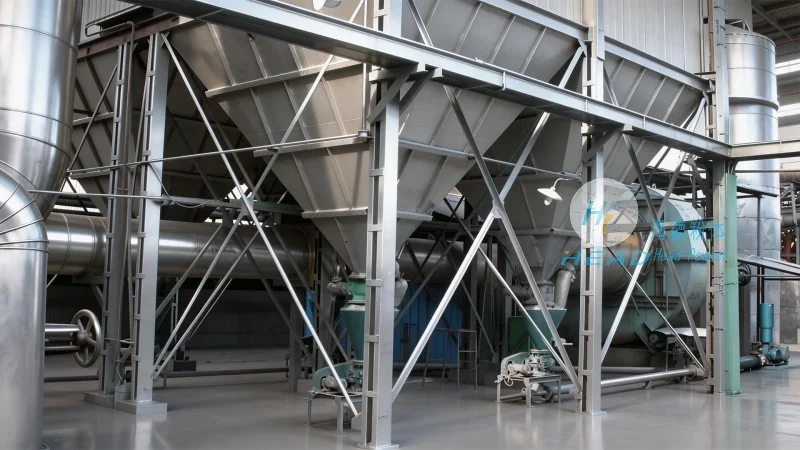
At Shandong HeadPowder Engineering Co., Ltd., we understand that the success of silica fume applications depends not only on the quality of the material but also on the efficiency of the conveying system. Our team of experts works closely with clients to customize conveying solutions that meet their specific requirements, whether it's for small-scale laboratory applications or large-scale industrial production. We provide comprehensive support, from system design and installation to ongoing maintenance and troubleshooting, ensuring that our clients can maximize the benefits of silica fume in their operations.
By combining advanced technology with rigorous quality control, Shandong HeadPowder Engineering Co., Ltd. delivers silica fume powder and conveying systems that meet the highest industry standards. Our commitment to excellence and customer satisfaction has made us a trusted partner for businesses worldwide, helping them achieve superior performance and reliability in their silica fume applications. Whether you are a concrete producer, a construction company, or a research institution, our products and services are tailored to meet your needs and enhance your operational efficiency.