

Types and Practical Applications of Pneumatic Conveying Systems for Dust Collection Ash Transport
Efficient and reliable transport of dust collection ash is a critical aspect of industrial operations, particularly in sectors such as power generation, cement production, and metallurgy. Pneumatic conveying systems have emerged as a preferred solution for this task due to their ability to handle fine particulate materials with minimal environmental impact and operational flexibility. This article explores the various types of pneumatic conveying systems used for dust collection ash transport and their practical applications, highlighting the expertise of Shandong HeadPowder Engineering Co., Ltd. in designing and implementing these systems.
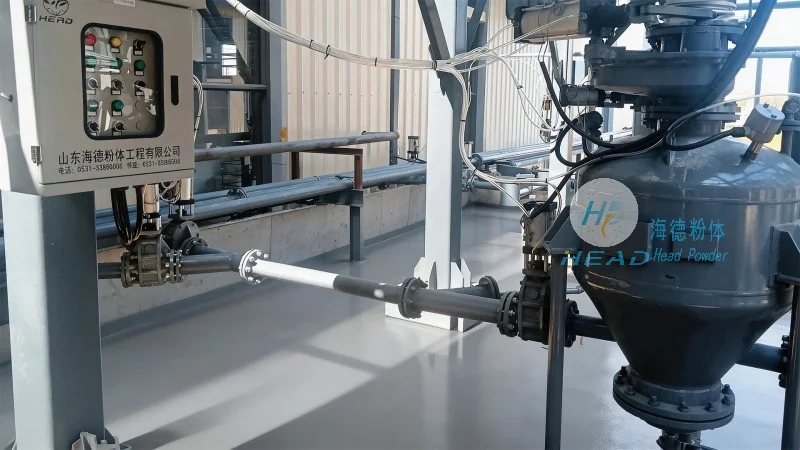
Overview of Pneumatic Conveying Systems for Dust Collection Ash Transport
Pneumatic conveying systems utilize air or gas to transport bulk materials like dust collection ash through a pipeline network. These systems are categorized based on the pressure differential between the conveying line and the ambient environment. The two primary types are positive pressure systems and negative pressure (or vacuum) systems. Each type has distinct characteristics that make it suitable for different operational requirements and material properties.
Types of Pneumatic Conveying Systems
Positive Pressure Conveying Systems
Positive pressure systems operate by generating air pressure within the conveying line, typically using a blower or compressor. The material is introduced into the system at the inlet, where it is mixed with the pressurized air and carried through the pipeline to the discharge point. This method is particularly effective for transporting materials over longer distances and at higher flow rates. The high pressure ensures that the material remains suspended in the air stream, minimizing blockages and ensuring consistent flow. Positive pressure systems are often preferred for applications where the material is abrasive or has a high moisture content, as the pressurized air helps to maintain material integrity and prevent degradation.
Negative Pressure (Vacuum) Conveying Systems
Negative pressure systems, also known as vacuum systems, operate by creating a vacuum within the conveying line. The material is drawn into the system at the inlet, where it is entrained by the suction created by a vacuum pump. The material is then transported through the pipeline to the discharge point. This method is well-suited for applications where the material needs to be collected from multiple sources or where the system is located in an enclosed area. Negative pressure systems are generally more suitable for shorter distances and lower flow rates compared to positive pressure systems. They are also effective for handling materials that are sensitive to pressure or that require a more controlled environment.
Other Variations and Hybrid Systems
Beyond the basic positive and negative pressure systems, there are several variations and hybrid systems that offer enhanced performance and flexibility. For instance, the dense phase conveying system is a type of positive pressure system that operates at lower velocities, resulting in a more compact and stable material flow. This method is ideal for transporting sensitive materials that are prone to degradation or for applications where blockages are a concern. Another variation is the dilute phase system, which operates at higher velocities and is suitable for longer distances and higher flow rates. Hybrid systems, which combine elements of both positive and negative pressure, can be used to optimize performance for specific operational conditions, such as varying material properties or distance requirements.
Practical Applications of Pneumatic Conveying Systems
The practical applications of pneumatic conveying systems for dust collection ash transport are diverse and widespread across various industries. In power plants, for example, these systems are used to transport fly ash from the electrostatic precipitators (ESPs) to storage silos or to other processing facilities. The ability to handle fine particulate materials efficiently and with minimal environmental impact makes pneumatic conveying an attractive option for power generation facilities. Similarly, in cement plants, pneumatic systems are used to transport raw materials and finished products, including cement clinker and gypsum. The consistent and reliable transport of these materials is crucial for maintaining production efficiency and quality.

In the metallurgical industry, pneumatic conveying systems are employed to transport dust and particulate materials from various stages of the production process, such as smelting and refining. The systems help to maintain a clean and safe working environment by removing dust from the production area and transporting it to designated disposal or processing locations. The use of pneumatic conveying in metallurgy also contributes to energy savings and reduced material loss, as the systems minimize the need for manual handling and reduce the risk of material contamination.
Another significant application is in the waste management sector, where pneumatic systems are used to transport ash and other solid waste materials from incineration plants to disposal sites or for further processing. The systems help to streamline the waste management process by providing an efficient and environmentally friendly method of material transport. The ability to handle large volumes of material and transport it over long distances makes pneumatic conveying an ideal solution for waste management facilities.
Key Considerations for Selecting the Right Pneumatic Conveying System
When selecting a pneumatic conveying system for dust collection ash transport, several factors need to be considered to ensure optimal performance and efficiency. The first and most critical factor is the material properties of the ash, including its particle size, density, moisture content, and abrasiveness. These properties will determine the type of system that is most suitable, as different systems are designed to handle specific material characteristics. For example, a dense phase system may be preferred for handling abrasive materials, while a dilute phase system may be more appropriate for fine, low-density materials.
Another important consideration is the distance and flow rate requirements. The system must be capable of transporting the material over the required distance at the desired flow rate without causing excessive pressure drops or material degradation. The choice between positive and negative pressure systems will depend on the distance and the need for material handling flexibility. Longer distances and higher flow rates typically favor positive pressure systems, while shorter distances and multiple collection points may require negative pressure systems.
The system's capacity and scalability are also crucial factors. The system should be able to handle the expected volume of material and be scalable to accommodate future increases in production or material handling needs. This ensures that the investment in the system is cost-effective and that it can adapt to changing operational requirements over time.

Environmental and safety considerations are also essential. Pneumatic conveying systems should be designed to minimize emissions and noise pollution, and to ensure the safety of personnel operating the system. Proper filtration and dust collection measures should be incorporated into the system design to prevent air pollution and maintain a safe working environment. Additionally, the system should be equipped with safety features such as pressure relief valves and emergency shut-off mechanisms to prevent accidents and ensure operator safety.
Case Study: Implementation by Shandong HeadPowder Engineering Co., Ltd.
Shandong HeadPowder Engineering Co., Ltd., a leading provider of pneumatic conveying solutions, has successfully implemented various types of pneumatic systems for dust collection ash transport in numerous industrial applications. One notable case study involves a power plant in Shandong, China, where the company designed and installed a positive pressure dense phase conveying system to transport fly ash from the ESPs to the storage silos. The system was designed to handle the plant's high ash production rate and long transport distance, ensuring efficient and reliable material transport. The system has been in operation for over five years, with minimal maintenance and high performance, demonstrating the effectiveness of the positive pressure dense phase system for this application.
In another case study, the company provided a negative pressure system for a cement plant in the same region. The system was used to transport raw materials, including limestone and clay, from the quarry to the grinding mills. The negative pressure system was chosen due to the need to collect material from multiple sources and the relatively short transport distance. The system has been operating efficiently, with consistent flow rates and minimal blockages, contributing to the plant's increased production capacity and reduced material handling costs.
These case studies highlight the expertise of Shandong HeadPowder Engineering Co., Ltd. in designing and implementing pneumatic conveying systems tailored to the specific needs of industrial clients. The company's approach involves a thorough analysis of the material properties, operational requirements, and environmental considerations to select the most appropriate system type and configuration. This ensures that the final system is not only efficient and reliable but also cost-effective and sustainable in the long term.
Conclusion
Pneumatic conveying systems play a vital role in the efficient and environmentally friendly transport of dust collection ash in various industrial applications. The choice of system type—whether positive pressure, negative pressure, or a hybrid variant—depends on factors such as material properties, distance, flow rate, and operational requirements. By carefully evaluating these factors and selecting the appropriate system, industrial facilities can achieve optimal performance, reduced operational costs, and improved environmental compliance. Shandong HeadPowder Engineering Co., Ltd. continues to be a trusted partner in providing customized pneumatic conveying solutions that meet the evolving needs of industrial clients, ensuring reliable and sustainable material transport for years to come.