

Technical Analysis of Organic Salt Pneumatic Conveying Systems: A Comparison of Positive and Negativ
Organic salt pneumatic conveying systems are critical for efficient material handling in various industrial applications, particularly in the chemical and food processing sectors. These systems enable the transport of organic salts through the use of air or other gases, eliminating the need for mechanical components like conveyor belts or buckets. The technology has evolved significantly over the years, with two primary modes of operation dominating the market: positive pressure and negative pressure conveying. This technical analysis aims to provide a comprehensive comparison of these two modes, highlighting their advantages, limitations, and suitability for organic salt handling.
Understanding Organic Salt Pneumatic Conveying Systems
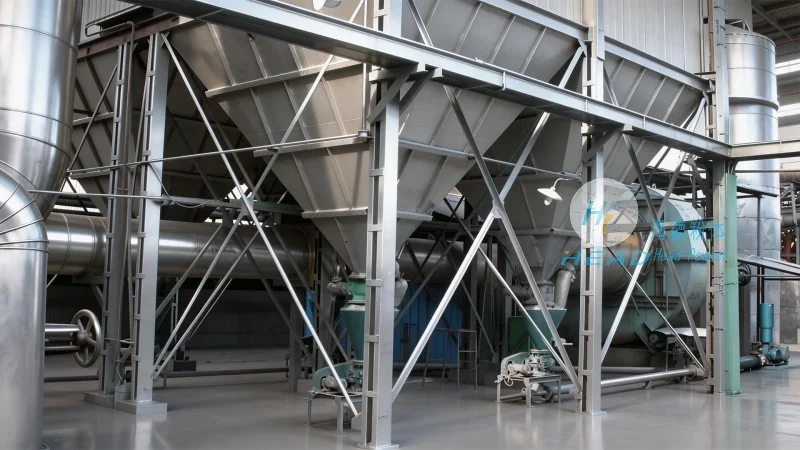
Organic salts, such as sodium bicarbonate, potassium chloride, or various organic acid salts, are widely used in pharmaceuticals, food additives, and chemical manufacturing. Traditional handling methods often involve manual or mechanical conveying, which can be labor-intensive, time-consuming, and prone to contamination. Pneumatic conveying systems offer a more hygienic, efficient, and automated solution. These systems work by creating a pressure differential to move the material through a pipeline using air or gas. The key components typically include a hopper, a feeder, a conveying line, and a receiver. The choice of conveying mode—positive or negative pressure—significantly impacts the system's performance, cost, and operational requirements.
HeadPowder: A Leader in Pneumatic Conveying Solutions
Shandong HeadPowder Engineering Co., Ltd., commonly known as HeadPowder, is a renowned manufacturer specializing in custom pneumatic conveying systems. With a strong presence in China, particularly in Shandong, the company has built a reputation for delivering high-quality, reliable equipment tailored to the specific needs of organic salt handling. HeadPowder's expertise lies in designing systems that ensure minimal product degradation, maintain product integrity, and comply with industry standards. The company's commitment to innovation and customer satisfaction has made it a trusted partner for businesses seeking efficient material transport solutions.

Positive Pressure Conveying Mode: Advantages and Applications
Positive pressure conveying operates by blowing air or gas into the conveying line, creating a pressure higher than the ambient air pressure. This method pushes the material through the pipeline, making it suitable for long-distance and high-capacity transport. One of the primary advantages of positive pressure systems is their ability to handle abrasive or corrosive materials without causing excessive wear on the equipment. Additionally, positive pressure systems are generally more energy-efficient for long-distance conveying, as they require less pressure to maintain flow. However, they may pose challenges in terms of air leakage and the need for proper filtration to prevent dust contamination. For organic salts, positive pressure systems are particularly effective when dealing with fine powders or materials that are prone to caking. The high pressure ensures that the material is kept in suspension, reducing the risk of blockages and ensuring consistent flow rates.

Negative Pressure Conveying Mode: Advantages and Applications
Negative pressure conveying, also known as suction conveying, works by creating a vacuum in the conveying line, drawing the material from the source. This method is ideal for short-distance or low-capacity transport, as it requires less energy compared to positive pressure systems. One of the key benefits of negative pressure systems is their ability to handle materials that are sensitive to pressure changes or that may be affected by high air velocities. For example, organic salts that are prone to degradation due to heat or friction may benefit from the lower air velocities associated with negative pressure conveying. Additionally, negative pressure systems are often more compact and require less space for installation. However, they have limitations in terms of material capacity and the need for effective dust collection to prevent air pollution. The vacuum created can also lead to higher energy consumption for maintaining the vacuum level, especially over longer distances.

Comparative Analysis: Positive vs. Negative Pressure Conveying
When selecting between positive and negative pressure conveying for organic salt handling, several factors must be considered. The primary decision points include the distance of transport, the material's properties (such as particle size, moisture content, and flowability), and the required capacity. For long-distance transport of large quantities of organic salts, positive pressure systems are generally more suitable due to their higher capacity and energy efficiency. They are ideal for applications where the material needs to be transported over several hundred meters or more. On the other hand, negative pressure systems are better suited for short-distance transport, such as within a factory or between adjacent processing units. They are particularly effective for handling fine powders or materials that are sensitive to pressure changes. Another critical factor is the environmental impact. Positive pressure systems may require more robust filtration to prevent dust emissions, while negative pressure systems may need additional air filtration to maintain indoor air quality. The choice also depends on the available space and infrastructure, as positive pressure systems typically require more space for the air compressor and filtration units.
Key Considerations for Organic Salt Pneumatic Conveying
Regardless of the chosen conveying mode, several key considerations are essential for the successful operation of organic salt pneumatic conveying systems. First, the material's properties must be thoroughly understood, including its particle size distribution, moisture content, and flowability. These factors influence the system's design, such as the type of feeder and the conveying line diameter. Second, the system must be designed to maintain product integrity. This includes using materials that are compatible with the organic salts, avoiding contamination, and minimizing temperature changes that could affect the material's quality. Third, proper maintenance is crucial to ensure the system's longevity and efficiency. Regular cleaning of the conveying line, replacement of filters, and inspection of components are necessary to prevent blockages and ensure consistent performance. Finally, compliance with industry standards and regulations is essential, especially in sectors like pharmaceuticals and food processing, where product safety and hygiene are paramount.