

Lithium Hydroxide Pneumatic Conveying Technology: Principles, Applications, and Development Trends
HeadPowder, a leading enterprise in the field of powder processing and conveying systems, specializes in advanced solutions for handling lithium hydroxide. This article delves into the principles, practical applications, and future trends of pneumatic conveying technology for lithium hydroxide, providing a comprehensive overview of the technology's significance and operational advantages.
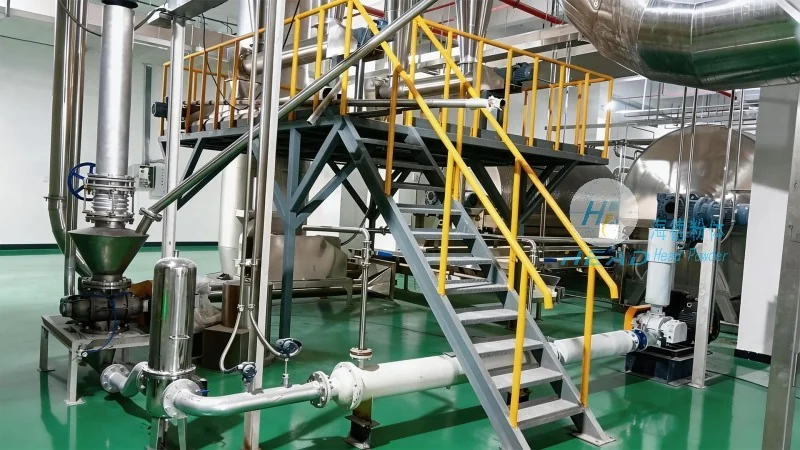
Principles of Pneumatic Conveying for Lithium Hydroxide
The core principle of pneumatic conveying involves transporting solid materials, such as lithium hydroxide, through a pipeline using a gas stream, typically air or other gases. This method eliminates the need for mechanical components like belts or buckets, offering a more efficient and flexible approach to material transport. The technology relies on the creation of a pressure differential within the pipeline, where the gas flow propels the powder particles forward. Key factors influencing the effectiveness of this process include the particle size distribution, moisture content, and flow rate of the gas. For lithium hydroxide, which is often in a fine powder form, the selection of an appropriate conveying system is crucial to maintain material integrity and prevent clogging or degradation.
Applications in Industrial Processes
Lithium hydroxide is widely used in various industries, including battery manufacturing, chemical production, and pharmaceuticals. The pneumatic conveying technology enables seamless integration of lithium hydroxide into these processes, ensuring consistent and reliable material delivery. In battery production, for instance, lithium hydroxide is a critical component in lithium-ion battery cathodes. The ability to convey this material efficiently and safely is vital for maintaining production line throughput and product quality. Similarly, in chemical manufacturing, the technology supports the handling of lithium hydroxide in reaction processes, where precise dosing and uniform distribution are essential. The versatility of pneumatic conveying also makes it suitable for applications in research and development labs, where small-scale handling of lithium hydroxide is required.

Advantages of Pneumatic Conveying Systems
Compared to traditional conveying methods, pneumatic systems offer several advantages for lithium hydroxide transport. These include reduced equipment wear and tear, as there are no moving parts in direct contact with the powder. This leads to lower maintenance costs and longer equipment lifespan. Additionally, pneumatic conveying allows for the transport of materials over longer distances without significant loss of material quality or performance. The system's ability to handle varying material flow rates and particle sizes makes it adaptable to different production requirements. Furthermore, the enclosed pipeline design helps in controlling dust emissions, ensuring a safer working environment and compliance with environmental regulations. For lithium hydroxide, which can be hygroscopic and reactive under certain conditions, the sealed system minimizes exposure to moisture and air, preserving the material's properties and preventing degradation.

Technological Developments and Future Trends
The field of pneumatic conveying technology is continuously evolving, with advancements aimed at improving efficiency, safety, and sustainability. Recent developments include the integration of automation and control systems, which enable real-time monitoring of conveying parameters and adjust flow rates dynamically. This enhances process control and reduces operational errors. Another trend is the adoption of more energy-efficient gas sources, such as compressed air systems with variable speed drives, which optimize energy consumption while maintaining conveying performance. The use of advanced materials in pipeline construction, such as corrosion-resistant alloys and high-strength plastics, further enhances the durability and longevity of the conveying systems. For lithium hydroxide applications, future trends may also involve the development of more specialized conveying solutions tailored to specific industrial needs, such as high-purity or low-dust requirements. Additionally, the integration of IoT (Internet of Things) technologies allows for remote monitoring and predictive maintenance, reducing downtime and improving overall system reliability.
Conclusion
HeadPowder Engineering Co., Ltd., based in Shandong, China, remains at the forefront of developing and implementing advanced pneumatic conveying solutions for lithium hydroxide. By leveraging the principles of pneumatic transport and incorporating the latest technological advancements, the company ensures that its systems meet the highest standards of efficiency, safety, and reliability. As the demand for lithium hydroxide in industries such as battery manufacturing continues to grow, the importance of effective and reliable conveying technology becomes increasingly critical. HeadPowder's expertise in this field positions it as a key partner for businesses seeking to optimize their material handling processes and enhance overall operational performance.