

Design Considerations for Ceramic Powder Pneumatic Conveying Systems
Ceramic powder handling in industrial applications often requires efficient and reliable transport solutions. Pneumatic conveying systems offer a versatile method for moving fine ceramic powders, which are typically characterized by their high purity, abrasive nature, and potential for dust generation. The design of such systems is critical to ensure optimal performance, minimize material degradation, and maintain operational safety. This article outlines key design considerations for ceramic powder pneumatic conveying systems, emphasizing the importance of selecting appropriate equipment, material handling principles, and system integration.

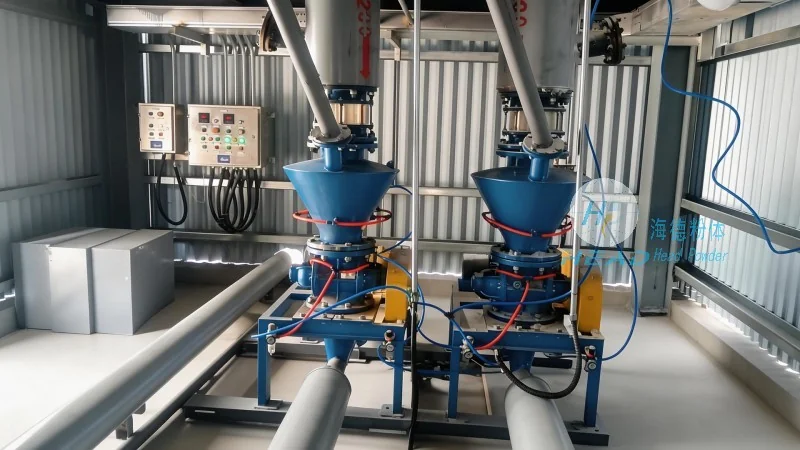

Material Properties and Their Impact on System Design
The unique properties of ceramic powders significantly influence the design of pneumatic conveying systems. Ceramic powders are often fine-grained, with particle sizes ranging from sub-micron to several microns. This fineness leads to high surface area, which can affect flow characteristics and potential for agglomeration. Additionally, many ceramic powders are abrasive, requiring wear-resistant components to extend system life and maintain product integrity. The density and bulk density of the powder also play a role in determining the required air velocity and pressure for effective transport. For example, powders with lower bulk density may need higher air velocities to achieve consistent flow. Understanding these material properties is essential for selecting the right type of pneumatic conveying system—whether it is a pressure or vacuum system—and for specifying the appropriate equipment, such as cyclones, filters, and material handling components. Specific examples include alumina powders, which are commonly used in refractory applications, and silica powders, often employed in glass manufacturing. These materials vary in their hardness and chemical reactivity, necessitating tailored system designs. For instance, alumina powders are more abrasive and may require higher air pressures and more robust components compared to less abrasive silica powders. The moisture content of the powder is another critical factor; powders with higher moisture levels can lead to caking and blockages, requiring additional drying or anti-caking measures in the system design.
System Type Selection: Pressure vs. Vacuum Conveying
When designing a ceramic powder pneumatic conveying system, the choice between pressure and vacuum systems is a critical decision. Pressure systems use compressed air to push the material through the pipeline, while vacuum systems use a vacuum to pull the material. The selection depends on several factors, including the distance to be covered, the height of the material lift, and the nature of the powder. For short horizontal distances or low vertical lifts, pressure systems are often more economical and straightforward. They typically involve a positive displacement blower or compressor, which delivers air at a higher pressure than the ambient. The compressed air is introduced at the material feed point, and the powder is conveyed through the pipeline to the discharge point. Pressure systems are well-suited for abrasive materials like ceramic powders, as they can handle higher air pressures without excessive wear on components. On the other hand, vacuum systems are ideal for long horizontal distances or when the material needs to be lifted vertically. They use a vacuum pump to create a negative pressure in the pipeline, drawing the powder from the source to the destination. Vacuum systems are often preferred for applications where the material is sensitive to pressure or where the source is at a higher elevation than the destination. The choice of system type directly impacts the overall cost, energy consumption, and operational efficiency of the conveying process. For instance, pressure systems may be more cost-effective for short-distance transport of non-abrasive powders, while vacuum systems are preferred for long-distance or vertical transport of abrasive ceramic powders.