

Design Key Points for Paddy Grain Pneumatic Conveying System
When designing a pneumatic conveying system for paddy grain, several critical factors must be considered to ensure efficiency, reliability, and cost-effectiveness. This document outlines key design considerations that professionals in the agricultural processing industry should evaluate when developing such systems.

Key Design Considerations for Paddy Grain Pneumatic Conveying
Several critical aspects must be addressed during the design phase of a paddy grain pneumatic conveying system. These include the selection of appropriate conveying equipment, the determination of system pressure and flow rates, and the integration of necessary components like airlocks, separators, and storage vessels. Each of these elements plays a vital role in the overall efficiency and reliability of the system. For instance, the type of grain (e.g., moisture content, bulk density) directly influences the choice of conveying method and equipment specifications. A well-designed system should also account for potential variations in grain quality and processing requirements to maintain consistent performance.
System Components and Their Functions
A pneumatic conveying system for paddy grain typically consists of several key components, each serving a specific function to facilitate the transport of grain. The primary components include a material feed hopper, an airlock or rotary valve to control the flow of grain into the system, a conveying pipeline, a positive displacement blower or centrifugal fan to generate the necessary air pressure, and a dust separator or cyclone to remove particles from the air stream. Additionally, a storage silo or discharge hopper may be included to manage the final output of the system. The selection of each component is critical and must be matched to the specific characteristics of the paddy grain being conveyed. For example, the airlock or rotary valve must be designed to handle the grain's bulk density and flowability, while the blower must provide sufficient pressure to overcome pipeline resistance and maintain the desired flow rate.

Material Flow and Pressure Considerations
Proper material flow and pressure management are essential for the successful operation of a paddy grain pneumatic conveying system. The system operates by creating a pressure differential between the inlet and outlet of the conveying pipeline. The pressure required depends on factors such as the length and diameter of the pipeline, the number of bends, and the height of the vertical sections. A common approach is to use a positive displacement blower, which provides a consistent flow rate and pressure, ensuring stable material transport. The pressure drop across the system components, including the feed hopper, airlock, and pipeline, must be carefully calculated to avoid excessive energy consumption or system failure. Engineers often use computational fluid dynamics (CFD) simulations to model the flow and pressure distribution within the system, allowing for optimization of component sizes and system layout.
Separation and Filtration Systems
Efficient separation and filtration are crucial in maintaining the quality of paddy grain during pneumatic conveying. As grain is transported through the system, fine particles, dust, and other contaminants can be entrained in the air stream. These particles must be removed to prevent clogging of equipment and to protect downstream processing equipment. The most common separation method is the use of a cyclone separator, which uses centrifugal force to separate larger particles from the air. The cyclone's design, including its diameter, cone angle, and inlet velocity, is critical to its effectiveness. In addition to cyclones, some systems may incorporate bag filters or cartridge filters to capture finer particles and ensure clean air discharge. The choice of separation equipment depends on the grain's particle size distribution and the required level of purity. Proper maintenance of these components is also essential to ensure long-term system performance.
System Sizing and Capacity Planning
Accurately sizing the pneumatic conveying system is vital to meet production demands while minimizing energy consumption and operational costs. The system's capacity is determined by the required flow rate of paddy grain, which is typically expressed in terms of mass per hour or volume per hour. The flow rate depends on factors such as the processing line's throughput, storage capacity, and downstream processing requirements. Engineers must consider both the maximum and minimum flow rates to ensure the system can handle variations in production. The pipeline diameter and length are selected based on the expected flow rate and pressure drop calculations. For example, a larger diameter pipeline may be required for high flow rates to reduce pressure losses, while shorter pipelines may be used for lower flow rates. The blower or fan capacity is matched to the system's pressure and flow requirements to ensure adequate performance under all operating conditions.
Installation and Maintenance Considerations
The successful implementation of a paddy grain pneumatic conveying system requires careful installation and regular maintenance to ensure long-term reliability. Proper installation involves aligning components correctly, ensuring proper sealing to prevent air leaks, and verifying that all connections are secure. Air leaks can significantly reduce system efficiency and increase energy consumption, so thorough testing is essential before operation. Maintenance of the system includes regular inspection of components such as the airlock, cyclone separator, and blower, as well as cleaning of filters and replacement of worn parts. The frequency of maintenance depends on the system's operating hours and the grain's characteristics. For example, systems handling high-moisture paddy grain may require more frequent cleaning of the cyclone separator to prevent clogging. Proper maintenance not only extends the system's lifespan but also ensures consistent performance and reduces downtime.
Case Study: Application of Paddy Grain Pneumatic Conveying System by Shandong HeadPowder Engineering Co., Ltd.
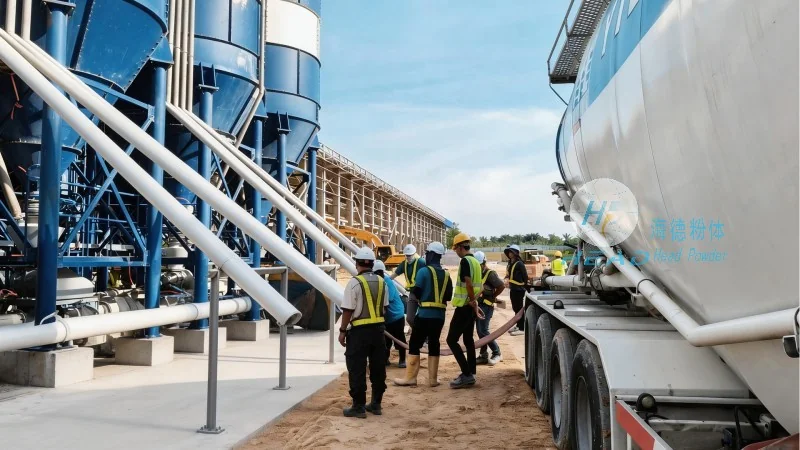
Shandong HeadPowder Engineering Co., Ltd., a leading provider of engineering solutions for agricultural processing, has successfully implemented paddy grain pneumatic conveying systems in various rice mills and processing facilities. One notable project involved the design and installation of a system for a large-scale rice processing plant in China. The system was designed to handle 200 tons of paddy grain per hour, with a conveying distance of 150 meters and a vertical lift of 20 meters. The system utilized a positive displacement blower with a capacity of 15 kW, a cyclone separator with a 500 mm diameter, and a pipeline diameter of 200 mm. The design process involved detailed calculations of pressure drop, flow rate, and component sizing, ensuring the system met the client's production requirements. The system has been in operation for over two years, demonstrating high efficiency and reliability. The client reported a significant reduction in labor costs and energy consumption compared to traditional gravity-based systems. This case study highlights the importance of proper design and engineering in achieving optimal performance for paddy grain pneumatic conveying systems.