

Introduction to the Pneumatic Conveying of Manganese Carbonate and Its Structural Principles
HeadPowder, a professional engineering company based in Shandong, China, specializes in the design and implementation of pneumatic conveying systems for manganese carbonate. This article provides an overview of the technology, focusing on the structural principles and operational aspects of such systems.

Understanding Pneumatic Conveying Systems for Manganese Carbonate
Pneumatic conveying is a method used to transport bulk materials like manganese carbonate through a pipeline using air or other gases. The system typically consists of a hopper, a feeder, a conveying line, and a receiver. The hopper stores the material, while the feeder controls the flow rate into the conveying line. The conveying line transports the material, and the receiver collects it at the destination. This process is efficient for handling fine powders and can be adapted to various industrial applications.
Structural Components and Their Functions
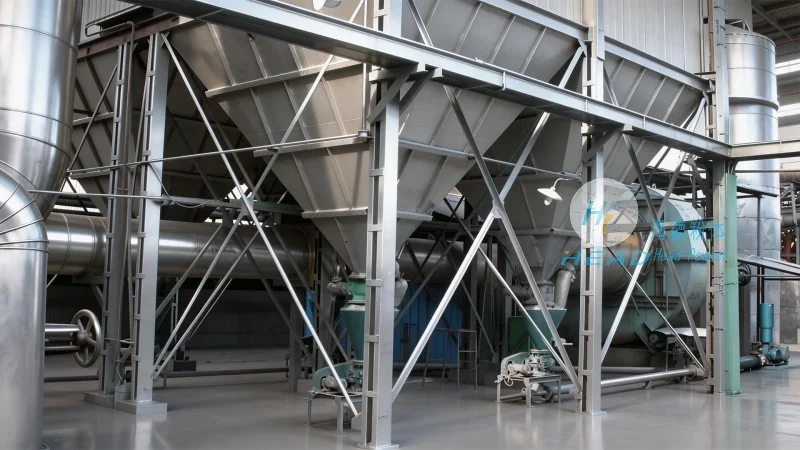
The core components of a pneumatic conveying system for manganese carbonate include the material hopper, which is designed to hold the bulk of the manganese carbonate. The hopper is equipped with a discharge valve or feeder that regulates the material flow into the conveying line. The conveying line itself is made of materials resistant to corrosion and abrasion, such as stainless steel or special alloys, to ensure durability and prevent material degradation. The receiver at the end of the line collects the conveyed material and may include a dust collection system to maintain air quality and comply with environmental regulations.
Operational Principles and Flow Control
The operation of the pneumatic conveying system relies on the creation of a pressure differential between the hopper and the receiver. Air is introduced into the system, either by a blower or a vacuum pump, to create the necessary flow. The flow rate and pressure are carefully controlled to ensure efficient and consistent transport of the manganese carbonate. Proper flow control is crucial to prevent blockages, which can occur if the material flow is too high or the air pressure is insufficient. The system may also include sensors and control devices to monitor and adjust the flow parameters in real-time, enhancing operational reliability.
Advantages of Pneumatic Conveying for Manganese Carbonate
Compared to traditional methods like belt conveyors or bucket elevators, pneumatic conveying offers several advantages for manganese carbonate. It is more flexible in terms of layout, as the conveying line can be installed in various configurations to fit the plant layout. The system is also more hygienic and can be enclosed to prevent dust contamination, which is important for materials used in pharmaceutical or food industries. Additionally, pneumatic conveying can handle fine powders that are difficult to transport with other methods, reducing the risk of material loss and improving overall efficiency.

Applications and Industrial Use Cases
Pneumatic conveying systems for manganese carbonate are widely used in various industries, including battery manufacturing, chemical processing, and mining. In battery production, manganese carbonate is a key raw material for lithium-ion batteries, and efficient transport is essential to maintain production throughput. In chemical processing, the material is used in the production of manganese compounds, and the conveying system ensures a consistent supply of raw material to the processing units. The mining industry also utilizes these systems to transport manganese ore and concentrate, which may be processed into manganese carbonate for further use.
Company Overview: Shandong HeadPowder Engineering Co., Ltd.
HeadPowder, as a leading engineering company based in Shandong, China, has extensive experience in designing and manufacturing pneumatic conveying systems. The company specializes in custom solutions tailored to the specific needs of clients, ensuring that the systems are optimized for the handling of manganese carbonate and other bulk materials. With a focus on quality and reliability, HeadPowder provides comprehensive services, including system design, installation, and maintenance, to support its clients in achieving efficient material transport and process optimization.