

Several Solutions for Foundry Sand Pneumatic Conveying
Foundry sand, a critical material in the casting industry, requires efficient and reliable transportation systems to ensure smooth production processes. Pneumatic conveying is a widely adopted method for handling foundry sand due to its ability to transport materials in a closed system, minimizing dust and contamination. This article explores several effective solutions for pneumatic conveying of foundry sand, highlighting the key considerations and benefits of each approach.
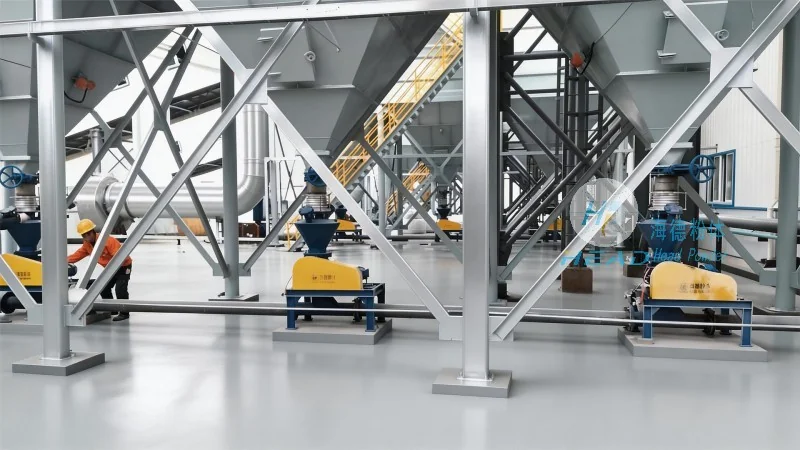
Understanding the Challenges of Foundry Sand Conveying
Foundry sand is typically characterized by its abrasive nature, varying particle sizes, and sometimes high moisture content. These factors can pose significant challenges for traditional conveying methods such as belt conveyors or bucket elevators. Abrasive materials can wear down equipment components quickly, while moisture can lead to clogging and reduced flow rates. Pneumatic conveying addresses these issues by using air to move the sand through a pipeline, offering a more controlled and efficient transport solution.
Key Considerations for Selecting a Pneumatic Conveying System
When choosing a pneumatic conveying system for foundry sand, several factors must be considered to ensure optimal performance and longevity. The first consideration is the material's properties, including particle size distribution, density, and moisture content. These characteristics influence the type of conveying system best suited for the application. For instance, fine or dusty sand may require a high-pressure system to maintain flow, while larger or coarser particles might be better suited for low-pressure systems. Additionally, the distance and layout of the conveying line, as well as the required flow rate, play crucial roles in system selection. The choice of system also impacts operational costs, maintenance requirements, and environmental compliance.

Option 1: Positive Pressure Conveying Systems
Positive pressure systems, also known as pressure or blow-through systems, are commonly used for foundry sand applications. In this method, air is supplied under pressure to the material, forcing it through the pipeline. The system typically includes a blower or compressor at the inlet, a hopper to feed the sand, and a discharge point at the receiving end. Positive pressure systems are effective for short to medium-distance conveying and are particularly suitable for handling abrasive materials like foundry sand. They offer high flow rates and can handle a wide range of particle sizes. However, they may require more maintenance due to the higher air pressure and the potential for wear on components. The system is also more complex to install and may have higher energy consumption compared to other options.
Option 2: Negative Pressure (Vacuum) Conveying Systems
Negative pressure systems, or vacuum systems, operate by creating a vacuum at the inlet to draw the material into the pipeline. The air and material are then transported to the discharge point, where the air is filtered and the sand is collected. This method is ideal for applications where the material needs to be transported from multiple points or over longer distances. Negative pressure systems are generally more energy-efficient for long-distance conveying and can handle larger volumes of material. They are also less complex to install and maintain compared to positive pressure systems. However, they may not be as effective for very abrasive or fine materials, as the vacuum can sometimes lead to clogging or reduced flow rates. The system's performance is also dependent on the air filtration system, which must be designed to handle the dust and particles from the foundry sand.

Option 3: Hybrid (Combination) Conveying Systems
Hybrid or combination systems combine elements of both positive and negative pressure systems to leverage the benefits of each approach. These systems often use a positive pressure section for the initial boost and a negative pressure section for the final transport. This configuration allows for efficient handling of both short and long-distance conveying requirements. Hybrid systems are particularly useful when the material needs to be transported over varying distances or when the system must handle different types of materials. They offer flexibility and can adapt to changing production needs. However, the design and maintenance of hybrid systems are more complex, requiring expertise in both pressure and vacuum technologies. The cost of implementation may also be higher due to the need for specialized components and controls.

Advantages and Considerations for Each System
Each pneumatic conveying system for foundry sand has its own set of advantages and considerations. Positive pressure systems excel in high-flow applications and are effective for abrasive materials, but they may require more maintenance and energy. Negative pressure systems are energy-efficient for long distances and simpler to install, yet they may struggle with fine or very abrasive sand. Hybrid systems provide flexibility and can handle diverse applications, but they come with higher complexity and costs. The choice ultimately depends on the specific requirements of the foundry, including the distance of transport, material properties, and operational budget. It is essential to evaluate these factors carefully to select the most suitable system for optimal performance and cost-effectiveness.
Conclusion: Choosing the Right Pneumatic Conveying Solution
Efficient pneumatic conveying is crucial for the smooth operation of foundry facilities, ensuring that foundry sand is transported safely and effectively. By understanding the challenges of foundry sand and the characteristics of different pneumatic conveying systems, foundries can make informed decisions about the best solution for their needs. Whether opting for a positive pressure, negative pressure, or hybrid system, the key is to align the system with the material's properties and the operational requirements of the facility. With the right system in place, foundries can improve productivity, reduce maintenance costs, and enhance overall operational efficiency. Shandong HeadPowder Engineering Co., Ltd. specializes in providing tailored pneumatic conveying solutions for foundry sand applications, leveraging years of experience and expertise to deliver reliable and efficient systems that meet the unique needs of each client. Based in Shandong, China, the company offers comprehensive services, including system design, installation, and maintenance, to support foundries in optimizing their material handling processes.