

Operation Process and Working Principle of Barium Sulfate Material Pneumatic Conveying Line
Barium sulfate, a critical industrial material used in various applications such as paint, coatings, and pharmaceuticals, requires efficient and reliable transportation methods to maintain its quality and prevent contamination. The pneumatic conveying line developed by Shandong HeadPowder Engineering Co., Ltd. addresses these needs by providing a robust and automated solution for handling barium sulfate. This system is engineered to handle the material's characteristics, including its density and flowability, ensuring smooth and safe operation in industrial settings. The design of the system prioritizes efficiency, safety, and durability, making it suitable for long-term use in demanding environments.

About Shandong HeadPowder Engineering Co., Ltd.
Headpowder, a leading manufacturer in the field of material handling equipment, is dedicated to providing high-quality solutions for industrial applications. With its headquarters located in Shandong, China, the company has built a strong reputation for innovation and customer satisfaction. Headpowder specializes in the design and manufacturing of pneumatic conveying systems, as well as other processing equipment, tailored to the unique requirements of clients. The company's team of experienced engineers and technicians ensures that each product meets the highest standards of performance and reliability. By focusing on customer needs and technological advancements, Headpowder continues to deliver solutions that enhance operational efficiency and safety in various industries.

Key Components of the Pneumatic Conveying Line
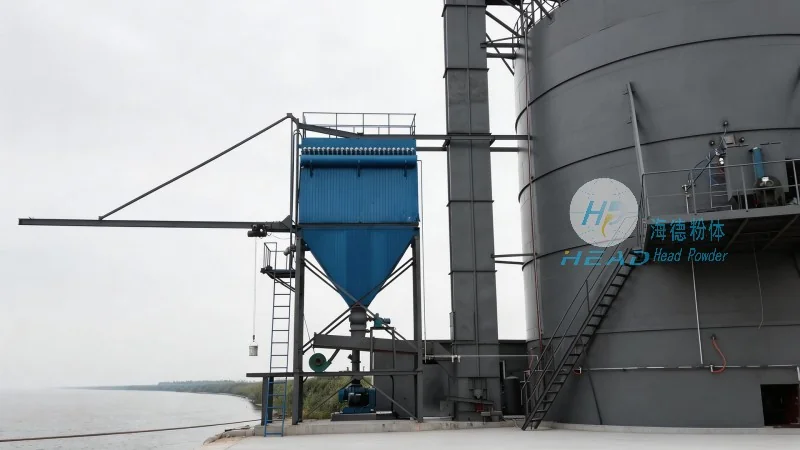
The pneumatic conveying line for barium sulfate consists of several essential components that work together to facilitate material transport. The primary components include a material hopper for storage, a rotary airlock valve for controlled discharge, a conveying pipeline system, a dust collector for air filtration, and a control panel for automated operation. The hopper is designed to hold a sufficient quantity of barium sulfate, ensuring a continuous supply to the system. The rotary valve regulates the flow of material into the pipeline, preventing backflow and maintaining consistent material delivery. The conveying pipeline is constructed from durable materials, such as stainless steel or special alloys, to withstand the abrasive nature of barium sulfate and resist corrosion. The dust collector is equipped with high-efficiency filters to capture airborne particles, protecting the environment and ensuring compliance with safety regulations. The control panel allows operators to monitor and adjust the system parameters, such as air pressure and material flow rate, to optimize performance.

Working Principle of the Pneumatic Conveying Line
The operation of the barium sulfate pneumatic conveying line is based on the principle of pneumatic transport, where compressed air is used to move the material through a pipeline. The process begins with the material being fed from the hopper into the rotary valve. The valve then opens to allow the material to enter the conveying pipeline at a controlled rate. Compressed air is introduced into the pipeline, creating a flow that propels the barium sulfate particles forward. The system utilizes positive pressure, where air is forced into the pipeline, ensuring that the material is transported efficiently over long distances. The pipeline is designed with appropriate bends and fittings to minimize pressure loss and maintain a consistent flow. At the receiving end, the material is deposited into a storage tank or processing equipment. The dust collector continuously operates, capturing any particles that escape the pipeline, preventing contamination and maintaining a clean environment. The control system monitors the entire process, providing real-time feedback on pressure, flow rate, and material level, allowing for quick adjustments to maintain optimal operation.