

Operation Process and Working Principle of Purified Fly Ash Material Pneumatic Conveying Line
Shandong HeadPowder Engineering Co., Ltd., situated in Shandong, China, specializes in the development and implementation of advanced pneumatic conveying systems for industrial applications. A key product in their portfolio is the purified fly ash material pneumatic conveying line, a sophisticated system engineered to efficiently transport and process fly ash while ensuring stringent air purification and material integrity standards.
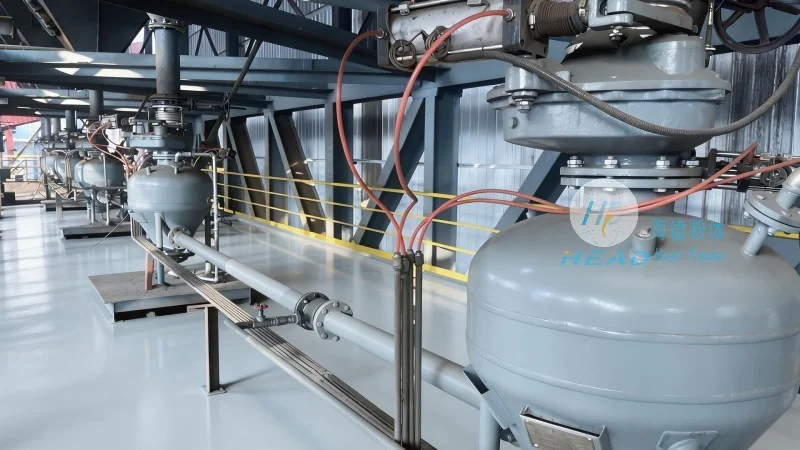
System Overview and Core Components
The purified fly ash material pneumatic conveying line is a closed-loop system that utilizes compressed air to transport fly ash from its source to a designated destination, such as a storage silo or processing unit. This system is designed to minimize dust emissions and maintain a clean, controlled environment throughout the material handling process. The primary components of the system include a hopper for material storage, a rotary valve for controlled discharge, a conveying pipeline, a filter system for air purification, and a receiver for the transported material. Each component is strategically integrated to ensure seamless operation and optimal performance.

Working Principle of Pneumatic Transport
The operation of the purified fly ash material pneumatic conveying line is based on the principle of pneumatic transport, where the material is suspended in a stream of air and propelled through the pipeline. The process begins with the material being fed into the hopper from the source, such as a boiler or storage bin. A rotary valve then regulates the flow of fly ash into the conveying pipeline, ensuring a consistent and controlled discharge rate. Compressed air is introduced into the pipeline, creating a high-velocity air stream that lifts and transports the fly ash particles. The air and ash mixture travels through the pipeline to the receiving hopper or processing unit. At the receiving end, a filter system separates the fly ash from the air, purifying the exhaust and preventing dust contamination in the surrounding environment. This closed-loop design ensures that no material is lost to the atmosphere, maintaining environmental compliance and operational efficiency.

Key Operational Steps and Process Flow
The entire operation of the purified fly ash material pneumatic conveying line follows a systematic sequence of steps to ensure efficient and reliable material transport. Initially, the system is prepared by checking the air supply pressure, verifying the integrity of the pipeline and components, and ensuring that all safety measures are in place. Once the system is ready, the material is fed into the hopper, and the rotary valve is activated to start the discharge process. Compressed air is then turned on, creating the necessary pressure differential to initiate the conveying process. The fly ash particles are carried through the pipeline by the air stream, with the filter system continuously removing any fine particles from the exhaust air. The receiving hopper collects the transported fly ash, and the process repeats as needed. The system is designed to operate continuously or in batch mode, depending on the application requirements, and includes automatic controls to monitor and adjust the flow rate and air pressure as needed. This automation enhances operational efficiency and reduces the need for manual intervention.
Advantages and Benefits
The purified fly ash material pneumatic conveying line offers several advantages over traditional material handling methods, such as belt conveyors or manual handling. One of the primary benefits is the reduction of dust emissions, which is achieved through the closed-loop design and integrated filter system. This not only improves air quality in the workplace but also complies with environmental regulations. Additionally, the system provides a high degree of material containment, preventing spillage and contamination. The pneumatic transport method also allows for the handling of materials with high moisture content or abrasive properties, which can be challenging for other systems. The system's compact design and flexibility make it suitable for various industrial settings, including power plants, cement factories, and waste management facilities. Furthermore, the automated controls and monitoring systems enhance operational efficiency and reduce labor costs, leading to increased productivity and lower overall operational expenses.

Application and Customization
Shandong HeadPowder Engineering Co., Ltd. offers customized solutions for the purified fly ash material pneumatic conveying line to meet the specific needs of different industrial applications. The system can be tailored to handle varying material characteristics, such as particle size, density, and moisture content, by adjusting the air pressure, pipeline diameter, and component design. For example, in power plants, the system is often used to transport fly ash from the boiler to a storage silo or to a cement production facility for further processing. In cement factories, the system may be integrated with the raw material handling process to transport fly ash as a supplementary cementitious material. The company also provides installation and maintenance services to ensure the long-term performance and reliability of the system. By leveraging their expertise in pneumatic conveying technology, Shandong HeadPowder Engineering Co., Ltd. helps industrial clients improve their material handling processes, reduce operational costs, and enhance overall efficiency. Their commitment to quality and innovation ensures that clients receive a system that meets both current and future operational demands.