

Operation Process and Working Principle of Regenerated Sand Powder Pneumatic Conveying Machine
Shandong HeadPowder Engineering Co., Ltd., based in Shandong, China, specializes in the design, manufacturing, and supply of advanced pneumatic conveying systems for various industrial applications. This article provides a detailed overview of the operation process and working principle of a regenerated sand powder pneumatic conveying machine, highlighting its key components, operational steps, and technical advantages.

Overview of the Regenerated Sand Powder Pneumatic Conveying Machine
The regenerated sand powder pneumatic conveying machine is a specialized equipment used to transport fine powders, such as regenerated sand, through a pipeline using air pressure. It is widely employed in foundries, casting industries, and other sectors where efficient and dust-free material handling is essential. The system combines the principles of pneumatic conveying with advanced control technologies to ensure reliable and continuous material transport.
Key Components of the Pneumatic Conveying System
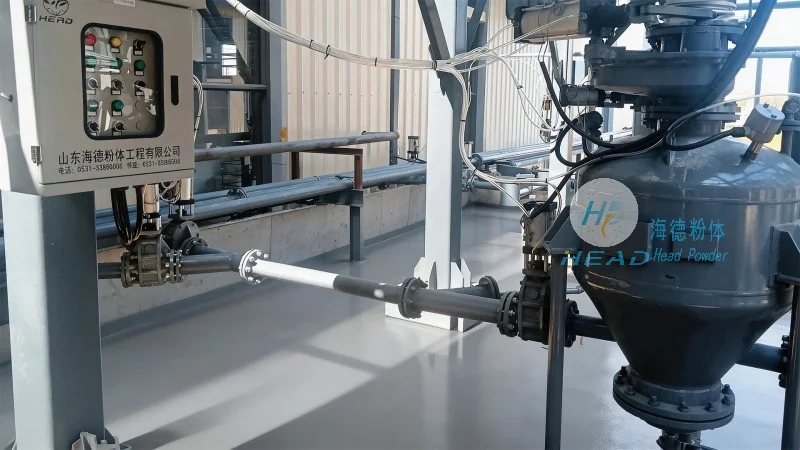
The pneumatic conveying machine typically consists of several critical components that work in tandem to facilitate the transport of powder. These include the material hopper, air compressor, conveying pipeline, control valve, and dust collection system. Each component plays a vital role in the overall operation, ensuring optimal performance and minimal downtime.

Operation Process of the Regenerated Sand Powder Pneumatic Conveying Machine
The operation process of the machine involves several sequential steps that ensure the smooth and efficient transport of regenerated sand powder. The process begins with the loading of the material into the hopper. The hopper is equipped with a feeding mechanism that controls the flow rate of the powder into the conveying pipeline. Simultaneously, the air compressor generates a high-pressure air stream that is introduced into the pipeline. The air stream creates a negative pressure in the pipeline, which draws the powder particles into the conveying line.
Once the powder is drawn into the pipeline, it is carried along with the air stream to the destination point. The control valve regulates the air pressure and flow rate to maintain the optimal conveying conditions. The system is designed to handle varying powder characteristics, such as particle size, moisture content, and density, ensuring consistent performance.
Working Principle of the Pneumatic Conveying Machine
The working principle of the regenerated sand powder pneumatic conveying machine is based on the fundamental concept of pneumatic transport. The machine utilizes the force of compressed air to move the powder particles through the pipeline. The air stream creates a pressure differential between the hopper and the destination point, which drives the powder forward. The system can operate in either positive or negative pressure modes, depending on the application requirements.
In the positive pressure mode, the air compressor supplies high-pressure air to the pipeline, pushing the powder forward. In the negative pressure mode, the air is drawn from the pipeline, creating a vacuum that pulls the powder into the conveying line. The choice of mode depends on factors such as the distance to be covered, the powder characteristics, and the need for dust control.

Technical Advantages and Applications
The regenerated sand powder pneumatic conveying machine offers several technical advantages that make it an ideal solution for industrial material handling. These include high conveying efficiency, minimal material degradation, and reduced dust emissions. The system is also capable of handling abrasive materials, such as regenerated sand, without causing wear and tear to the equipment. It is widely used in foundries for transporting sand, in casting processes for feeding molds, and in other industries where fine powders need to be transported over long distances.
Maintenance and Operational Considerations
To ensure the longevity and reliability of the pneumatic conveying machine, regular maintenance is essential. This includes checking the air compressor performance, inspecting the conveying pipeline for blockages or leaks, and cleaning the dust collection system. Proper operational considerations, such as maintaining the correct air pressure and flow rate, are also crucial for optimal performance. By adhering to these guidelines, users can maximize the efficiency and lifespan of the equipment.