

Operation Process and Working Principle of Ferric Sulfate Powder Conveying Line
For industrial applications that require the efficient and reliable transport of ferric sulfate powder, specialized conveying systems are essential. The ferric sulfate powder conveying line, as offered by Shandong HeadPowder Engineering Co., Ltd., represents a sophisticated solution designed to meet the demands of various processing environments. This article delves into the operational process and underlying working principles of such a system, highlighting key components, operational mechanics, and the benefits of using a dedicated powder conveying line for ferric sulfate.
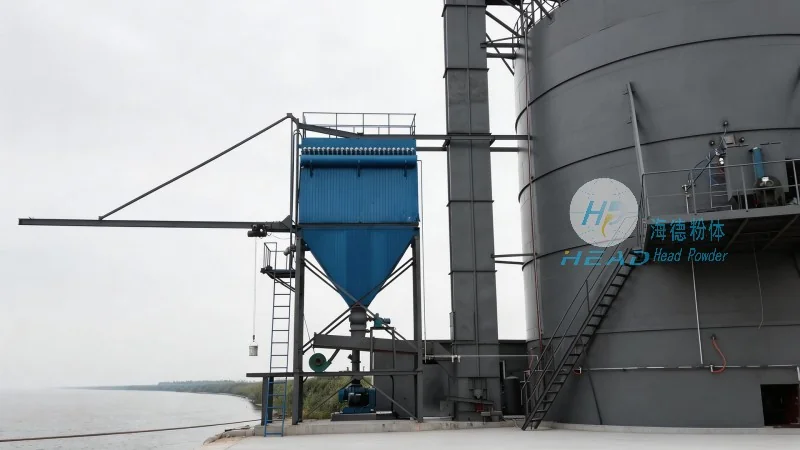
Key Components of the Ferric Sulfate Powder Conveying Line
The ferric sulfate powder conveying line typically consists of several critical components that work in tandem to ensure smooth material handling. These components include feed hoppers, conveyor belts or screw conveyors, pneumatic systems (if applicable), and control panels. The feed hopper is responsible for storing and feeding the ferric sulfate powder into the system, ensuring a consistent flow rate. The conveyor mechanism, whether mechanical or pneumatic, transports the powder from the feed point to the discharge point. Control panels allow operators to monitor and adjust the system parameters, such as speed and pressure, to maintain optimal performance. Each component is engineered to handle the specific characteristics of ferric sulfate, including its particle size, moisture content, and potential tendency to agglomerate.

Operation Process of the Ferric Sulfate Powder Conveying Line
The operation of the ferric sulfate powder conveying line follows a systematic sequence that ensures efficient material transport. The process begins with the loading of ferric sulfate powder into the feed hopper. The hopper is designed with a sloped bottom to facilitate the flow of powder into the conveyor. Once the powder is in the hopper, it is fed into the conveyor system. In a mechanical conveyor setup, the screw or belt rotates, pushing the powder forward. In a pneumatic system, compressed air is used to create a flow of powder through a pipeline. The conveyor transports the powder to the discharge point, where it is collected in a storage tank or directly fed into the next processing stage. Throughout the operation, the control panel monitors the system's performance, adjusting parameters as needed to maintain a consistent flow rate and prevent blockages. The entire process is designed to minimize material loss, reduce dust generation, and ensure the safe handling of ferric sulfate.

Working Principle of the Ferric Sulfate Powder Conveying Line
The working principle of the ferric sulfate powder conveying line is based on the principles of fluidization and mechanical transport. For mechanical conveyors, the principle involves the use of a rotating screw or belt to move the powder. The screw's rotation creates a forward thrust, pushing the powder along the conveyor path. The design of the screw, including its pitch and diameter, is optimized to handle the specific properties of ferric sulfate, ensuring efficient transport without excessive friction or wear. For pneumatic conveyors, the principle relies on the creation of a gas-solid flow. Compressed air is introduced into the pipeline, creating a flow that carries the powder particles. The velocity of the air is carefully controlled to ensure that the powder is transported without settling or causing blockages. The system may also include cyclone separators or filters to separate the powder from the air stream, allowing for the recovery of the powder and the recycling of the air. The working principle is engineered to be energy-efficient and reliable, providing a consistent supply of ferric sulfate to downstream processes.
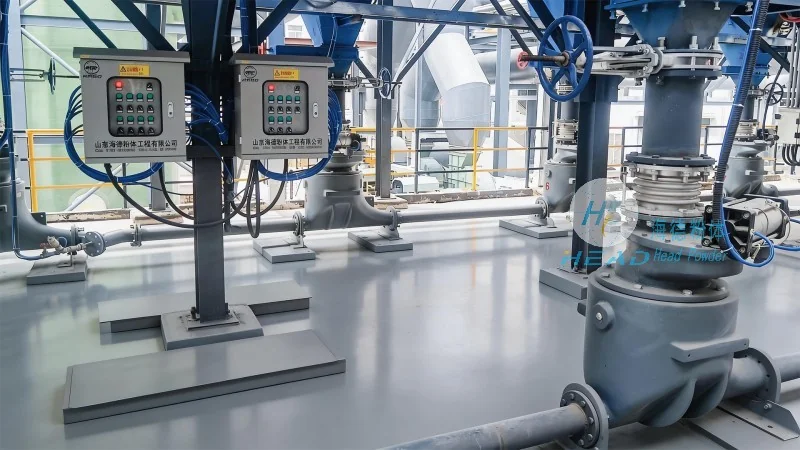
Benefits and Applications of the Ferric Sulfate Powder Conveying Line
The ferric sulfate powder conveying line offers several advantages for industrial applications. It provides a reliable and efficient method for transporting ferric sulfate, reducing the risk of material loss and contamination. The system is designed to handle the specific challenges associated with ferric sulfate, such as its tendency to agglomerate or generate dust. By using a dedicated conveying line, companies can improve their production efficiency, reduce labor costs, and enhance workplace safety. The system is also scalable, allowing it to be customized to meet the specific needs of different applications, from small-scale laboratory operations to large-scale industrial production. The ferric sulfate powder conveying line is widely used in industries such as water treatment, where ferric sulfate is used as a coagulant, and in chemical manufacturing, where it is used as a raw material. The system's ability to handle the material safely and efficiently makes it an essential component of many industrial processes.